Mental health and self-care
This page will explore ways to support your mental health and wellbeing. We have included areas that current students have told us that they struggle with. This is not an exhaustive list.
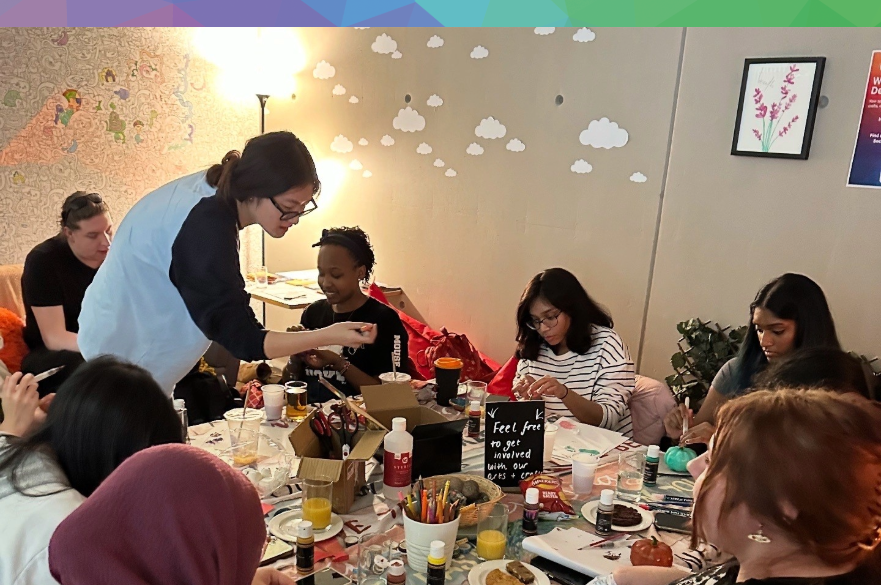
Your Mental Health and Wellbeing
What is mental health?
When we talk about how we are feeling, the academic term used is ‘mental health’. The World Health Organization defines mental health “as a state of mental well-being that enables people to cope with the stresses of life, realise their abilities, learn and work well, and contribute to their community”.
Not all communities or people will identify with the term ‘mental health’. You can think of ‘mental health’ as your feelings, mood, state of mind, or simply how you are doing and feeling.
Just like we all have physical health, we all have mental health, and it can fluctuate day to day and across our life. You can think of it as a continuum or scale, where sometimes we are doing great and managing things and other times we might be struggling. It is completely normal for mental health to go up and down throughout our day and our lives.
As a student, you will experience many things, positive and challenging, that may impact your mental health. This webpage details some things that students have told us that have had an impact on their mental health and some tips for helping you manage them.
Practicing ‘self-care’ or things that we enjoy and make us feel good helps us manage our mental health throughout life’s challenges.
Feeling lonely at NTU?
We're all affected by loneliness at times in our lives. We can feel lonely in a busy city or rural location, on social media or spending time on our own or with others. According to Student Minds, 23% of students state that they feel lonely ‘most’ or ‘all of the time’.
Sometimes the first step is admitting that you feel lonely and trying to understand why you might be feeling that way.
This NHS guidance gives a good overview of understanding loneliness and why we might be feeling lonely.
We’ve put together tips in the below ‘Self-Care’ section on advice for getting involved, making friends at NTU, and practicing self-care, which can help with loneliness.
Below are also two articles with tips and advice for overcoming loneliness at university:
Eating disorders
An eating disorder is a mental health condition where you use the control of food to cope with feelings and other situations (NHS England). Eating disorders can affect anyone of any age, gender, or background. There are many types of eating disorder. They range from anorexia, bulimia and binge-eating disorder to body dysmorphia and pica.
Lots of people worry about the way they look and have tried going on a diet at some point. This does not mean they have an eating disorder.
Eating disorders are serious and everyone who has one deserves care and support. Find out more below about how to get help for yourself or a friend.
Local support and advice for NTU students
You can get help from the First Rapid Early Intervention for Eating Disorders (FREED) service. FREED is for 16 to 25-year-olds who've have had an eating disorder for three years or less. These include:
- anorexia nervosa
- bulimia nervosa
- binge eating disorder
- any other eating disorder.
FREED can give you rapid access to specialised treatment and support you with challenges you may face in the early stages of an eating disorder.
To access support from FREED, make an appointment with your GP. They'll be able to refer you to the service. Visit FREED for more information.
National support and advice for students
- Beat: Beat provides helpline, support and advocacy for people with eating disorders and their families. Learn more about Beat's mission, values and company information. Beat have also created a leaflet that you can bring to a GP appointment to support you.
- Beat Helpline: Helplines are open from 3–8 pm Monday to Friday. Support on the Helpline is available by phone, email, webchat: through our social media accounts and by letter. Calls to the helpline are free from landlines and mobile phones within the UK and do not appear on itemised bills.
- Peace Pathway: An organisation created to support people who have both an eating disorder and autism. The website has resources and information to support you on your journey.
- ARFID Awareness UK: A registered charity dedicated to raising awareness and furthering information about Avoidant/Restrictive Food Intake Disorder (ARFID).
- BodyWHYS: A resource for students struggle with body image. Body image refers to the thoughts and feelings a person has about their body. Having a healthy body image is about respecting yourself and others, realising body image is only one part of who you are and treating your body well.
- First Steps ED | Eating Disorder Support & Recovery Charity: First Steps ED is an Eating Disorder Support & Recovery Charity that offers early help, therapy, and lived experience support for children, young people, and adults across the U.K.
- FREED Guide for Preparing for University: FREED has created a guide for students who are recovering from an eating disorder on how to prepare for university life
Tips for supporting someone with an eating disorder
If you are worried about a friend and think that they may have an eating disorder, but they haven’t shared this with you directly, this can be a difficult subject to approach with them. Here are some tips to have a conversation or to refer to support if you are worried about their safety.
- Find a private place to have a conversation. Sometimes sitting next to each other or chatting while out for a walk can feel less intimidating, as you are next to them and not staring directly at them. It can make it easier for your friend to share their feelings.
- If you are approaching your friend for the first time, the way you approach the conversation will be important. Try your best not to focus on food or weight (i.e. You look too thin / you’re not eating). Instead, try and focus on how they are feeling (You seem stressed, etc)
- Let them know you are here for them and have had some concerns, without making them feel like you’ve been watching them or judging them.
- Don’t worry if you don’t have all the answers or the conversation doesn’t go perfectly. It can be common for someone with an eating disorder to become defensive or be surprised at the conversation. You are not expected to be a therapist for your friend or solve a problem. You can signpost to the services above.
If you are concerned for your friends immediate safety, in regard to an eating disorder (extreme malnourishment, passing out, self-harm), you can fill out the Support and Wellbeing form, even without your friends consent, and our team can reach out.
If a friend discloses to you that they are concerned they might have an eating disorder, this can be shocking or difficult to hear. Thank them for sharing with you, let them guide the conversation and describe what they need and follow the tips above to offer them support.
This website provides a more exhaustive list of tips to support a friend or family member and NottAlone - Eating Disorders provides advice on how to support someone, with a focus on local services in Nottingham.
Loss and grief
Grief is a reaction to loss of any kind. This includes bereavement and significant events like the end of a relationship, changes to health, financial hardship and other major life transitions.
Everyone will experience some form of loss and grief in their lifetime and it's important to remember there's no "right" way to grieve; it is an entirely individual experience. We all process things differently, and our feelings can change from day to day depending on a range of factors.
What is grief?
Grief refers to the thoughts and feelings we experience when trying to come to terms with a loss, often used when talking about ways to cope with a person's death. Grief can make it more difficult to:
- Concentrate, remember information and make decisions
- Stay motivated or engage with our studies or coursework
- Attend lectures or placements
- Manage deadlines and assessments
- Connect with friends or participate in university life
- Keep up with your normal routine – grief can be exhausting
Supporting someone who is grieving
Very intense emotions are a normal part of the grieving process, but that doesn't mean someone has to go through it alone.
Signs a grieving person might need extra support:
- struggling to focus or concentrate
- lack of energy
- staying in their room
- feelings of depression or anxiety
- panic attacks
- losing interest in things they used to love
- Using less healthy coping mechanisms such as drugs or alcohol
Different things will work for different people. Many of us bottle up grief which can leave to feeling 'stuck'. As hard as it can be, talking to someone supportive to express your grief can be incredibly helpful. Reaching out early can also help you access both practical and emotional support.
Support
At NTU, you can get support if you are grieving through our chaplaincy service. This service is available to all students, individuals of any faith as well as individuals without any individual beliefs. You can book an appointment here.
HealthyNTU Loss and Grief Blog Post
NHS - Grief after Bereavement or Loss
Mental health training
To support you and your mates’ mental health and your learning while at NTU, HealthyNTU recommends the below training.
Staff Zero Suicide Prevention Module
This 20-minute online suicide awareness training will help you gain skills and confidence to help someone who may be considering suicide.
Anyone can learn how to have a potentially life-saving conversation.
What you’ll learn
- How to spot suicide warning signs
- How to have a conversation with someone you’re worried about
- Where to signpost to for further support
- Suicide is preventable
Take the free online module here.
‘How are you, really?’ Workshop
This 60-minute workshop created by NTU and NTSU supports you to understand how you are feeling, provides an overview of what students struggle with, how to recognise when you or a friend may be struggling, and where you can get support.
Workshops are offered throughout the year online and face-to-face. To book on to a workshop or organise a workshop for a class, please email HealthyNTU@ntu.ac.uk.
Internal and external support
Complete our support and wellbeing referral form if you need some additional support and guidance to help you with personal circumstances you are facing, or to support you with concerns you have about your mental health and wellbeing. Our team can connect you with internal and external resources to support you. If you are worried about another student, you can fill out the form on their behalf.
Below are a list of local external resources and support. This is not an exhaustive list.
Harmless provides a range of services and support about self-harm and suicide, including individual support for people needing support. Harmless has launched Oasis Drop-In Support – an open door drop-in clinic to mitigate the impact of wait times on getting support
Home – Wellness in Mind is a free and same-day service for mental health support.
Hub of Hope is the UK’s largest mental health support directory and can link you in with services to support you or someone you know who is struggling
NottAlone offers local mental health advice and support. It's available to young people in Nottingham and Nottinghamshire.
Nottingham and Nottinghamshire Talking Therapies is a free and confidential NHS service designed to help with common mental health problems such as stress, anxiety and depression. Anyone aged 18 years or over and registered with a GP can access support, though a GP referral is not necessary as you can self-refer.
Nottinghamshire Crisis Sanctuaries provide mental health crisis support to the communities of Nottinghamshire.
Self Help UK empowers individuals and communities through guidance, connection, and peer support to create a healthier society. They provide a range of services, including a directory of peer support groups and resources.
Your Notts Directory helps you to explore services and topics that can support your physical and mental health
Self-care
What is self-care?
Self-care means taking steps to protect and improve your physical and mental wellbeing. It’s about making choices that help you feel balanced, healthy, resilient and happy. In short, doing things that you enjoy and that make you feel good.
Downloadable guides and worksheets
Download these guides and resources designed to support your mental, emotional, and physical wellbeing throughout your student journey.
Your wellbeing team has put together the following guides to support you:
- Tips for hobbies and self-care
- Staying Motivated
- Managing negative thoughts
- Tackling low mood
- Managing stress
The below guides, created by The Blurt Foundation, give you an opportunity to record and prioritise your self-care.
HealthyNTU Self-Care Booklet: This booklet gives you activities, planners, and tips to prioritise self-care all in one place. We are currently updating the booklet, check back soon!
Action for Happiness monthly calendars with daily tips to prioritise self-care.
Self-care resources
Action for Happiness
Get daily actions and inspiration on your phone and connect with a like-minded community. The app is like having a little personal action coach in your pocket who:
- Gives you friendly 'nudges' with an action idea each day
- Sends you inspiring messages to give you a boost
- Helps you connect & share ideas with like-minded people
- Links to resources, such as podcasts, calendars, and articles
You can read more on their website: Action for Happiness
Mindapples
Mindapples, a registered charity, has designed tools to help you manage your mind better. The app helps you learn about your mind and decide how you want to take care of yourself. It provides audio clips and tips.
You can read more about the app on their website: Mindapples
Calm
Calm is the #1 app for sleep, meditation, and relaxation. The Calm app has sleep stories, music, and meditations and mindfulness programmes for you to follow along with.
Visit the Calm website to learn more.
Practice Mindfulness and meditation
Meditation and breathing exercises are a quick and simple way to make you feel calmer. They can help you de-stress if you're feeling anxious or worried.
Student Minds
Student Minds is the UK’s student mental health charity, created by students, and provides a range of helpful information and resources. Explore a range of trusted information, services and tools created for you to help you with the challenges of student life. Visit the Student Minds website.
Making friends and getting involved
We know that making friends at university isn’t always easy. Having healthy friendships is linked to improved mental health and wellbeing and can help you feel less lonely.
Below are some reminders when trying to make friends:
- It’s okay to be nervous about meeting people! New friendships take time to grow.
- There are loads of different types of friendships we can have; not everyone will be an immediate best friend; we might meet people on our course, through our house; through different activities, and through others and they can all add value to our lives in different ways.
- Sometimes the easiest way to make a friend is to start a conversation with someone knew:
- Hi, my name is….
- What are you studying?
- How are you finding uni so far?
- Have you explored the city yet?
- Use opportunities to start conversations like before seminars; in communal areas of your building; at events across the uni or in the city
- Remind yourself that other people may be just as nervous as you
- We have created this guide to challenge some of your anxiety when making friends.
Below are some places where you can meet new people and get involved across NTU.
- HealthyNTU Events & Activities: Our team organises free events and activities across the year on all campuses. It’s a great way to try new things and meet new people. Visit our events page to see the latest opportunities.
- What’s On at the Uni: You can see all NTU events and activities on the ‘What’s on’ page
- HealthyNTU Student Blogs: Current NTU students and alumnus have written blogs with their top tips on making friends at NTU
- CALM (Campaign Against Living Miserably) : Tips on how to make friends at uni
- NTU has lots of different ways to get involved and connect with other students. The Student Life highlights different student groups such as sport clubs, societies, and NTU Faith
- NTSU Events Page : your Students’ Union also organises different events across the year for you to check out
- NTU Global Lounges are dedicated spaces for chilling, learning something new and getting involved in opportunities and events.
- NTU Arts puts on activities from bands to book clubs, crafting to concerts, exhibitions to excursions to arts organisations across the city. You can find out about the upcoming creative events by signing up to the NTU Arts Mailing List.
- Nottingham Green Guardians is a volunteering programme offering a range of opportunities to help you be greener, happier and heathier.
Below are some articles with some tips on making friends and keeping friends.