How AI is helping farmers grow crops and protect fish
From deciding when strawberries need watering to spotting unusual behaviour in farmed fish, researchers at Nottingham Trent University are exploring how AI can help farmers monitor food production and respond to problems earlier.
By Julia Head | Published on 19 October 2026
Categories: Press office; Research;
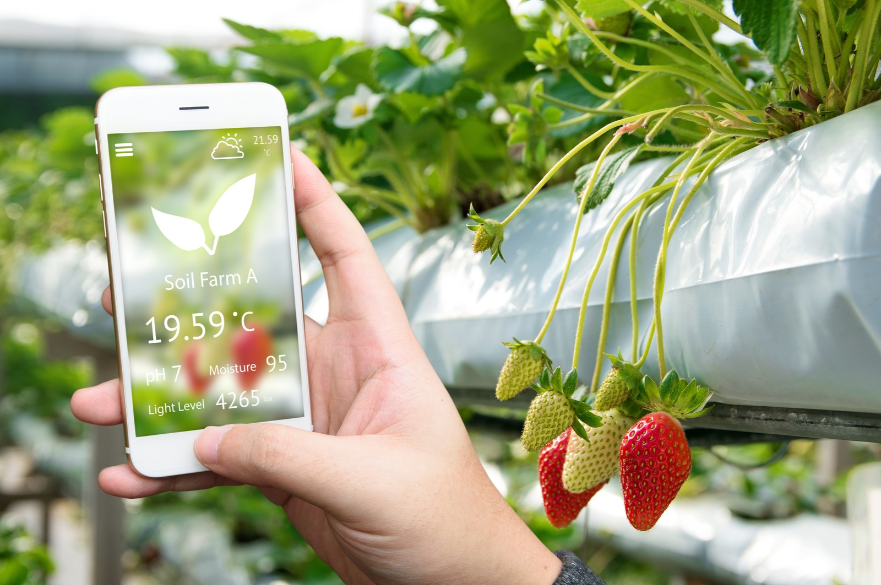
Artificial intelligence in farming can mean something much more practical than autonomous robots or futuristic machinery. It can also involve using sensors and cameras to continuously monitor crops, animals and their environment – and AI to make sense of the information they collect.
Our research at Nottingham Trent University (NTU) is applying this approach in two very different settings.
On strawberry farms in Nigeria, AI is being used to monitor growing conditions and help farmers make decisions about irrigation and plant health.
In aquaculture, our researchers are developing technology that analyses the behaviour of fish to identify potential signs of stress or disease.
Both contribute to ENVIROBRAIN, an AI-driven research programme led by NTU researchers Dr Pedro Machado and Dr Isibor Kennedy Ihianle from the School of Science and Technology.
ENVIROBRAIN also forms part of NTU's work to demonstrate the wider impact of its research, bringing together expertise in artificial intelligence, intelligent sensing and environmental monitoring. The research explores how these technologies can help farmers better understand environmental conditions and make more informed decisions.
What you need to know
NTU researchers are using AI to help farmers monitor growing conditions, improve crop production and identify potential problems earlier.
The SmartBerry project in Nigeria has increased strawberry yields by 40% and reduced post-harvest waste by 15%.
AI-powered underwater monitoring could help fish farmers detect early signs of stress or disease by analysing changes in fish behaviour.
How AI is finding its place on farms
Farming involves making decisions in environments that are constantly changing.
Temperature, humidity, water availability and the health of crops or animals can all affect production, and monitoring those changes continuously can be difficult, particularly across large farms.
AI can help by analysing information collected by sensors and monitoring equipment and identifying patterns within the data. Sensors and connected devices, often referred to as the Internet of Things (IoT), can continuously collect information about growing conditions, and then the AI can then analyse this data, identify patterns and help farmers make more informed decisions.
For farmers, the aim is to turn that information into practical decisions: when a crop needs water, when growing conditions should be adjusted or when an animal's behaviour could indicate a developing health problem.
One example is a research project at NTU that is part of ENVIROBRAIN called SmartBerry, which is applying AI, sensors and edge computing to strawberry cultivation in Nigeria.
How our AI is helping strawberry farmers in Nigeria
How do you grow strawberries when favourable growing conditions last for only part of the year?
That's one of the challenges facing strawberry farmers in Nigeria, where managing temperature, water and plant health can make a significant difference to production.
The technology is already delivering results through SmartBerry, an Africa Agriculture Knowledge Transfer Partnership, supported by £245,725 Innovate UK funding, and led by Nottingham Trent University in collaboration with Ashley's Strawberry Farms Limited and Covenant University in Nigeria.
The partnership has delivered a 40% increase in strawberry yield and a 15% reduction in post-harvest waste. The proportion of market-grade fruit has also increased from approximately 70% to 88%, while the business's turnover has grown from around £18,000 to £32,000.
The recently completed project also received an 'Outstanding' (A) grade in its final report, recognising its commercial, academic and societal impact.
How can our AI systems help farmers use water more efficiently?
Knowing exactly when crops need water can be difficult, particularly when growing conditions change throughout the day.
Strawberry farmers in Nigeria can rely on manual assessment and blanket irrigation, where crops are watered without precise information about how much water they need.
SmartBerry is exploring a more targeted approach.
Sensors installed inside and outside greenhouses continuously measure factors including temperature, humidity, soil moisture and light intensity. AI can then analyse this information to help farmers understand how growing conditions affect their strawberry plants.
Instead of watering crops according to a fixed schedule, the system can support irrigation decisions based on whether plants actually need water.
The aim is to reduce unnecessary water use while maintaining the conditions crops need to grow. The project has also supported strawberry fruiting during less favourable growing seasons, suggesting the technology could help farmers extend the period in which strawberries can be produced.
Spotting problems with crops earlier
A strawberry plant might be getting too little water, experiencing unsuitable temperatures or developing signs of disease. If these problems go unnoticed, they can affect the quality and quantity of fruit a farmer can harvest.
SmartBerry is exploring how AI can help farmers spot potential problems before they become more serious.
By combining information about temperature, humidity, light and soil moisture with AI-based plant health monitoring, the system can identify changes that might indicate a plant is under stress or developing a disease.
This could give farmers an opportunity to respond earlier, whether by adjusting growing conditions or investigating signs of poor plant health, rather than waiting until the damage becomes more visible.
The researchers describe the system as a form of “digital agronomist”, providing farmers with information based on live growing conditions to support decisions that could protect their crops and improve harvests.
Through SmartBerry, we're showing how AI can help strawberry farmers in Nigeria use water more efficiently, identify problems earlier and improve growing conditions. It's exciting to see how this technology is making a real difference, helping farmers improve productivity, increase their income and build more sustainable businesses.
Dr Isibor Kennedy Ihianle, Associate Professor in NTU's Department of Computer Science
Using AI in fish farming to identify disease outbreaks
Fish farming, also known as aquaculture, plays an important role in food production. But disease outbreaks can have serious consequences for fish welfare, farmers and the wider industry.
Monitoring fish health is challenging. Early signs of illness can be difficult to recognise, particularly when fish are being raised in large numbers underwater. By the time a problem becomes apparent, disease may already have spread.
Disease surveillance and control also come at a significant financial cost. Research has estimated annual expenditure of £17.6 million across the public and private sectors, with private businesses accounting for around 80% of that spending.
Our research at Nottingham Trent University is investigating whether artificial intelligence could help farmers identify potential problems earlier, before they develop into serious outbreaks.
Monitoring fish health
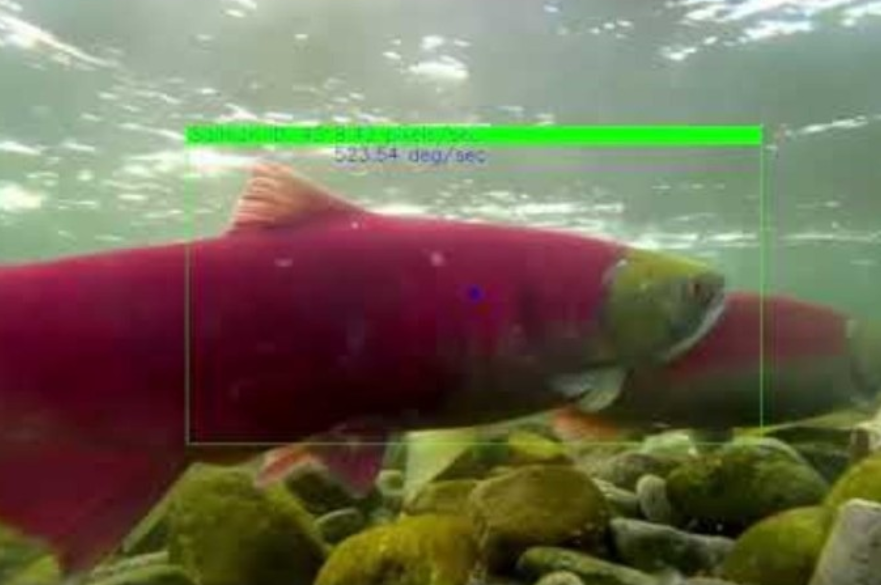
Through ENVIROBRAIN, NTU researchers are investigating whether changes in fish behaviour can provide an early warning of stress or disease.
Underwater cameras and hydrophones – underwater microphones – capture video and sound without the need to handle or disturb the fish. AI models analyse this information to recognise normal patterns of behaviour, including swimming, feeding and group movement.
If those patterns change – for example, if fish become unusually inactive or begin swimming erratically – the system can flag the behaviour as a potential sign of stress or disease.
The technology isn't designed to replace veterinary diagnosis. Instead, it aims to alert farmers to potential problems sooner, giving them an opportunity to investigate and respond before conditions worsen.
By identifying these changes earlier, the researchers hope to improve fish welfare and reduce the economic impact of disease outbreaks.
Why the AI needs to work directly on the farm
An important part of the research is where the information is processed.
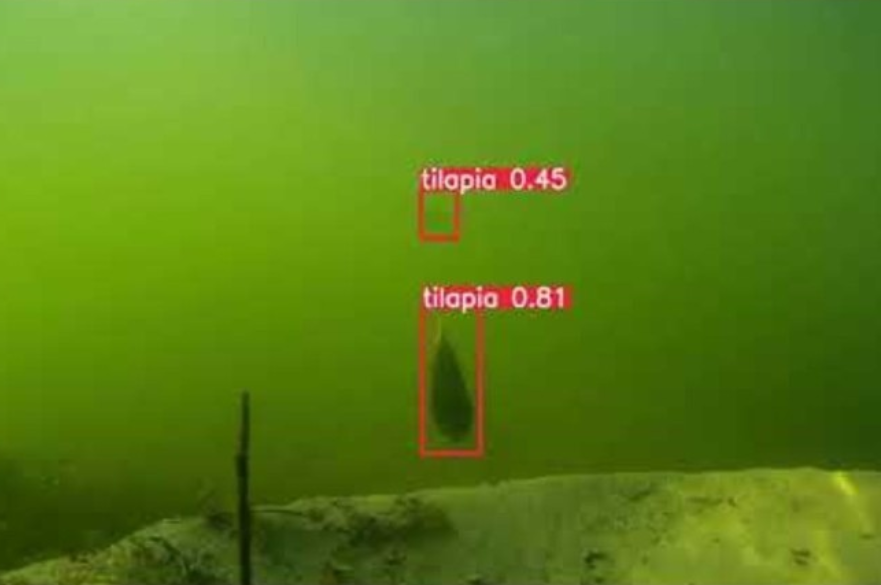
ENVIROBRAIN uses edge computing, which means the AI can analyse information close to where it is collected, rather than continually sending large amounts of data elsewhere for processing.
The researchers are developing specialised computing devices, known as Field-Programmable Gate Arrays (FPGAs), that allow AI models to run locally.
This could be particularly useful for fish farms in remote areas where internet connectivity is limited, allowing the system to analyse behaviour and identify potential problems without relying on a constant internet connection.
The research team is also investigating low-power and renewable-energy approaches to make the technology more suitable for these environments.
Aquaculture is a vital source of food and income globally, but disease outbreaks in fish farms cause major economic losses and animal welfare issues, costing millions annually. Our team is motivated by the need to make fish farming more sustainable, affordable and humane.
Dr Pedro Machado, Associate Professor of Neuromorphic Computing
What could AI monitored farming look like in the future?
Although strawberries and fish might appear to have little in common, the two projects are addressing a similar question: can farmers understand what is happening in their growing environment earlier and in greater detail?
The researchers want to develop SmartBerry towards more autonomous farm management, including predictive climate modelling, greenhouse control and AI-based yield forecasting. They are also investigating whether the technology could be applied to other crops.
Potential future applications could extend beyond fish farms to environmental monitoring, including invasive species and marine litter detection.
Across both land and water, the principle remains the same: using AI to interpret information from the environment quickly enough to help people make better-informed decisions about how food is produced.
The research brings together expertise in artificial intelligence, computing, agriculture and aquaculture, with collaborators including Covenant University and Ashley’s Strawberry Farms in Nigeria, alongside aquaculture and technology partners.