Elderly people could live independently for longer thanks to new home sensor system which detects emergencies
By Chris Birkle | Published on 8 October 2026
Categories: Press office; Research; School of Architecture, Design and the Built Environment;
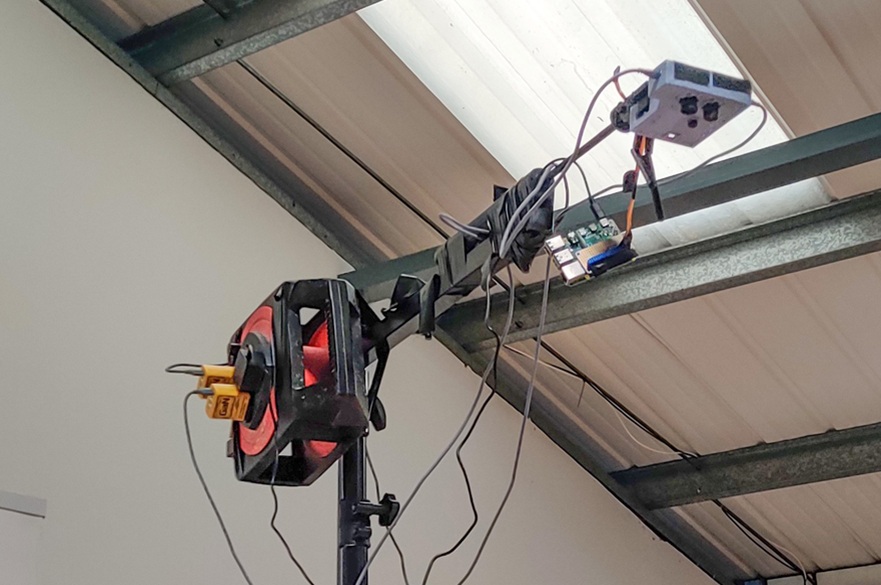
Older people could be monitored safely in their own homes without the need for intrusive cameras or wearable devices thanks to new research by Nottingham Trent University (NTU).
A study, in collaboration with Integrated System Technologies Ltd, has led to the development of a low-cost monitoring system that combines radar, heat sensors and smart plugs to track daily routines while protecting privacy.
The system incorporates artificial intelligence (AI) to combine data from the three monitoring technologies to identify possible health events, such as a falls, heart attacks, strokes or other critical illness.
Dr Yangang Xing, leader researcher from NTU’s School of Architecture, Design and the Built Environment, said: “This technology aims to support the growing number of older adults who wish to remain in their own homes for longer, rather than moving into residential care.
“By combining these three technologies, we can establish a complete picture of how someone is coping at home. As well as detecting emergencies, it could provide an early warning if a person's mobility or daily routine begins to deteriorate.”
The system uses millimetre-wave radar as a low-cost way to detect movement in a property, with multiple sensors placed discreetly about the home at chosen locations.
Smart plugs – that connect to ordinary house appliances and Wi-Fi - are used to monitor behavioural patterns linked to everyday tasks such as making a cup of tea, preparing food or spending time at a desk.
Thermal sensors - that identify body posture without revealing facial features or personal identity - are used to recognise sitting, standing, walking and lying down, but are highly pixelated and kept low-resolution to prevent more intricate movements or images being displayed to protect privacy.
The AI learns an individual’s behaviour patterns over time in order to spot anything out the ordinary, such as an emergency health event, or a gradual deterioration in a person’s health.
Should an emergency be detected, care professionals and loved ones are notified to allow checks to be made on the wellbeing of the inhabitant, either remotely or in person.
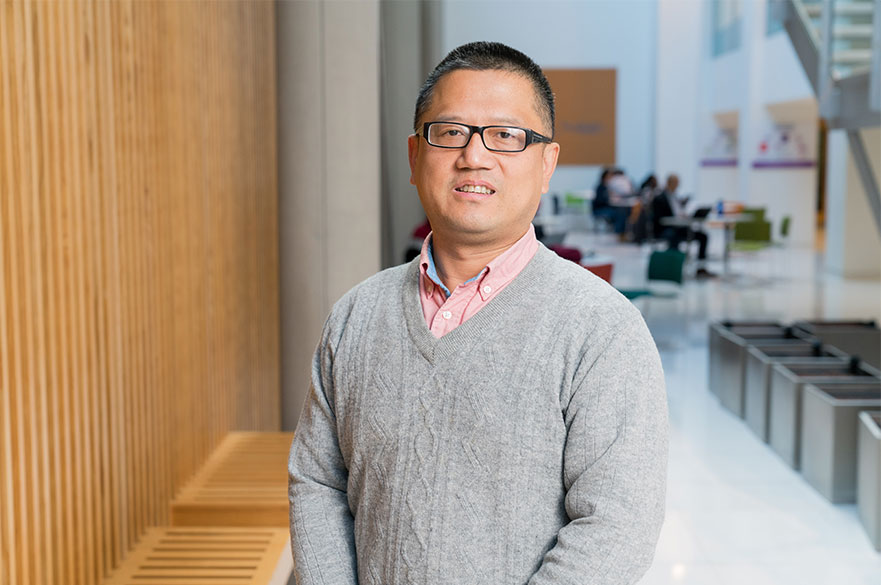
Dr Yangang Xing of NTU's School of Architecture, Design and the Built Environment
For the study, the team tested the sensors in a mock domestic environment featuring six different room layouts, including bedrooms and living areas with varying furniture arrangements.
A series of activities was carried out and recorded to assess how accurately the system could identify movement and posture.
Researchers found that combining information from all sensors improved performance, suggesting the technologies worked best when used together rather than as standalone monitoring tools.
The research team included Dr Geoff Archenhold, Bilal Mohammed and Martin Harris of Integrated System Technologies Ltd; and Dr Jordan J. Bird and Dr Isibor Kennedy Ihianle of NTU’s School of Science and Technology.
The study, titled Privacy-Preserving Ambient Sensing for Activities of Daily Living: Multimodal Radar-Thermal Human Activity Recognition and Smart Plug Appliance Recognition, has been published in the journal Sensors.
Dr Archenhold, chief executive officer of Integrated System Technologies Ltd, said: “We believe that this system could form part of an ambient assisted living environment, where homes quietly monitor residents' wellbeing in the background and alert carers when unusual behaviour occurs. Changes in mobility, prolonged inactivity, altered sleep patterns or the absence of normal household routines could all potentially indicate emerging health concerns.
“The technology could ultimately allow older people to stay in their own homes for longer, giving them confidence to go about their daily business while feeling secure in the knowledge that their health and wellbeing is monitored without infringing on their privacy.”
Notes for Editors
Press enquiries please contact Chris Birkle, Public Relations Manager, on telephone +44 (0)115 848 2310, or via email.
Nottingham Trent University (NTU) has been named UK ‘University of the Year’ five times in six years, (Times Higher Education Awards 2017, The Guardian University Awards 2019, The Times and Sunday Times 2018 and 2023, Whatuni Student Choice Awards 2023) and is consistently one of the top performing modern universities in the UK.
Students have voted us first in the UK for course quality, top five in the UK for employability and third best University in the UK (Uni Compare 2027). We are ranked in the top 25 universities in the country (The Guardian University Guide 2026).
We have over 35,000 students and more than 4,000 staff located across five campuses. It has an international student population of over 5,000 and an NTU community representing over 160 countries.
NTU owns two Queen’s Anniversary Prizes for outstanding achievements in research (2015, 2021). The Research Excellence Framework (2021) classed 83% of NTU’s research activity as either world-leading or internationally excellent.
NTU was awarded GOLD in the national 2023 Teaching Excellence Framework (TEF) assessment.
NTU is a top 10 for sport (British Universities and Colleges Sport league table 2025) and was named as Sports University of the Year (Daily Mail University Guide 2025).
NTU is a holder of the University Mental Health Charter, recognising the commitment an institution has shown towards continuous improvement in the area of mental health and wellbeing.
NTU is the most environmentally sustainable university in the UK and third in the world (UI Green Metric University World Rankings, 2025).