Everything in Flux? First Recovery, then Stagnation: The Status of Biodiversity in European Waters
A long-term study has shown that the recovery of European freshwater biodiversity has stalled since the 2010s.
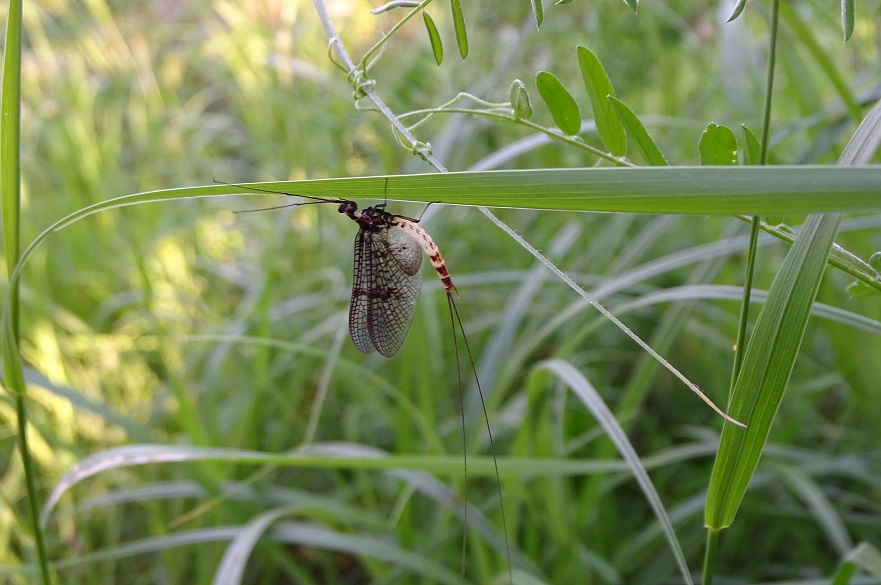
An international team of researchers, led by the Senckenberg Research Institute and Natural History Museum Frankfurt and involving Nottingham Trent University, has examined the state and development of invertebrate biodiversity in European inland waters.
They show that biodiversity in river systems from 22 European countries increased significantly over a period from 1968 to 2020. However, the team of scientists warns that this positive trend has stagnated since 2010 and that many river systems have not been able to fully regenerate. They are calling for additional measures to revive the recovery of biodiversity in inland waters – freshwater ecosystems that are and continue to be exposed to serious pressures such as pollution, invasive species, and climate change.
Mayflies, stoneflies, and caddisflies are among the diverse group of invertebrates that spend a large part of their lives in the water as larvae.
The study’s first author, Prof Dr Peter Haase of Senckenberg, said: “These and many other invertebrates contribute to important ecosystem processes in freshwater bodies. They decompose organic matter, filter water, and transport nutrients between aquatic and terrestrial environments. Such invertebrates have long been a cornerstone of water quality monitoring."
He said: “Such monitoring is immensely important because rivers and lakes are subject to major anthropogenic pressures and are among the ecosystems most threatened by biodiversity loss.”
Inland waters are exposed to various anthropogenic pressures from agricultural and urban land use. They receive pollutants including sewage and runoff contaminated by fine sediments, inorganic nutrients and pesticides. These ecosystems are further threatened by human impacts such as dams, water withdrawal, non-native invasive species, and climate change.
Senior author Dr Ellen A. R. Welti, formerly a Senckenberg scientist and now a Research Ecologist in the US with Smithsonian’s Conservation Ecology Center, said: “In response to the poor condition of water bodies in the 1950s and 1960s, important countermeasures were taken to restore freshwater habitats. For example, with the US Clean Water Act of 1972 and the more recent EU Water Framework Directive of 2000.
She said: “These measures led to a significant reduction in organic pollution and acidification, beginning around 1980. Over the past 50 years, these steps have contributed to the containment of wastewater pollution and resulted in improvements in freshwater biodiversity. Unfortunately, as the number and impact of stressors continue to increase worldwide, the improvements resulting from past legislation are lessening and freshwater systems remain degraded in many places.”
Together with a large international team, including Nottingham Trent University, Haase and Welti analyzed a comprehensive dataset of 1,816 time series collected between 1968 and 2020 in river systems in 22 European countries, comprising 714,698 invertebrates from 2,648 taxa in 26,668 samples. The analyses show significant increases in biodiversity over the 53-year period. The number of unique taxa increased by 0.73% per year, the number of groups of taxa performing different ecological roles increased by 2.4% per year, and the total abundance of invertebrates increased by 1.17% per year.
“However, these increases occurred mainly prior to 2010 and, unfortunately, biodiversity has remained at more or less constant levels since then. While the increases in biodiversity in the 1990s and 2000s likely reflect the effectiveness of water quality improvements and restoration projects, the stagnant trend that followed suggests that past actions have been exhausted,” adds Haase.
According to the study, freshwater communities downstream of dams, urban areas, and farmland recovered less rapidly. The fauna at sites with more rapid warming also had smaller increases in the number of taxa, the number of groups of taxa performing different ecological roles, and total abundance.
Dr Welti adds, “Around 70% of the 1,816 studied sites had higher-resolution data, allowing identification of non-native taxa. Within this subset, we found that about 70% of river segments had non-native taxa and that non-native taxa comprised an average of 4.9% of the number of taxa and 8.9% of individuals. Non-native species are often better able to cope with stressors in urban areas including higher temperatures and pollution inputs compared to native fauna. This could lead to a loss of rare and sensitive native species.”
Substantial investments are needed to expand wastewater networks and improve wastewater treatment plants. Targeted efforts are needed to prevent wastewater treatment plants from overflowing during heavy rainfall, and to more effectively remove micropollutants, nutrients, salts, and other pollutants from freshwater systems, the authors say.
In addition, the research team advocates for freshwater ecosystem recovery through reducing the input of fertilizers and pesticides from agricultural land, connecting floodplains to reduce destructive flooding, and adapting our river systems to future climatic and hydrological conditions.
“In the future, biodiversity monitoring should be tightly coupled with the concurrent collection of environmental data. This is the only way we can effectively describe temporal changes within biodiversity, identify environmental drivers and high-risk areas, and maximize biodiversity protection!", said Professor Haase.
Rachel Stubbington, Professor of River Ecology at Nottingham Trent University, who was involved in the study, said: “Investment in better wastewater treatment and wider pollution control is crucial in countries including the UK, where sewage effluent and agricultural and urban runoff continue to reduce the health of river ecosystems, including our globally rare chalk streams, data from which were included in this study.”
The research is published in the journal Nature.