3D printed model hearts and lungs to help train transplant surgeons
Diseased model hearts and lungs - which can breathe and bleed like the real organs - have been created by experts at NTU.
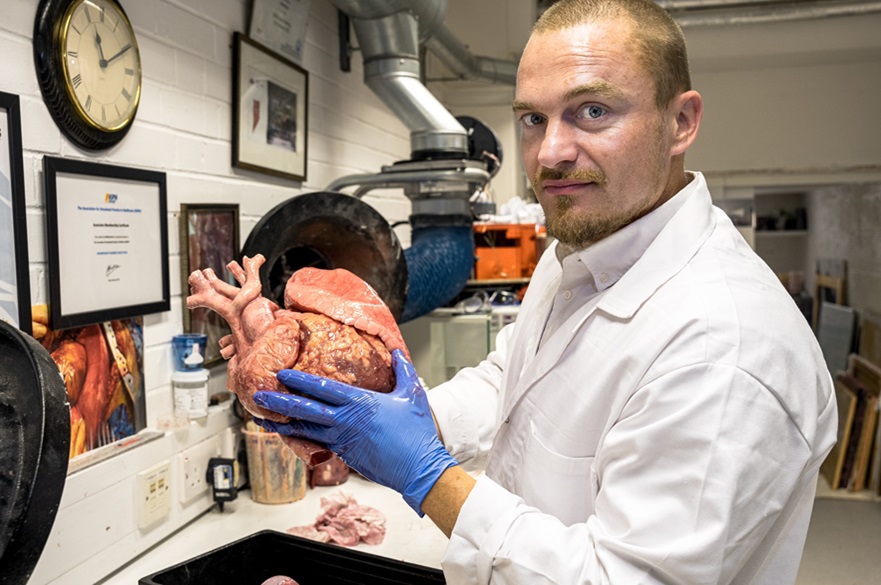
Diseased model hearts and lungs - which can breathe and bleed like the real organs - have been created by experts at Nottingham Trent University (NTU) to help train surgeons for performing heart transplants.
Led by senior research fellow Richard Arm, scan data from a heart failure patient and from a healthy donor heart have been used to 3D print true-to-life models to allow surgeons to practice heart transplant surgery.
Featuring the tactile qualities of human hearts - with differing levels of tissue hardness - the models will allow surgeons to practice incisions through the pericardium and the blood vessels which connect the heart to the lungs and the rest of the body.
The models - made from silicone gels, fabrics and fibres - will allow surgeons to learn how to carefully and safely implant a healthy donor heart of a different size and shape to the diseased one.
The models feature bleeding vessels to simulate the experience of clamping them to stem any blood flow, before incisions are made to remove the diseased organ.
The new heart can be sutured into place with real surgical instruments, and the process then repeated to allow for multiple mock operations as the models are repairable and re-useable.
“The aim is to give surgeons the opportunity to learn the technical aspects of organ transplant surgery and experience the tactile aspects of removing a failing heart and connecting a different healthy one, identifying and suturing the vessels that keep the donor heart in place,” said Richard, of the Nottingham School of Art & Design.
“This technology can simulate bleeding like a normal heart to provide the actual experience and limited visibility that surgeons must face on the operating table.
“The model is designed to be affordable, reusable and portable, to maximise access to the technology, allowing for increased risk-free training opportunities for transplant surgeons around the country.”
The project was funded by Freeman Heart and Lung Transplant Association and was presented at the Society for Cardiothoracic Surgery on 18 March 2024.
Adele Lambert, chairperson at the Freeman Heart and Lung Transplant Association (FHLTA), said: “The FHLTA are proud to help fund this project as we look to the future of transplantation, we know that this innovative research will help to improve surgeons' techniques for organ transplantation.”