Role
Prof. Cave teaches on the following modules:
- CHEM10171: Inorganic Bonding and Solid-State Materials
- CHEM20221: Chemistry of Modern Day Materials
- CHEM30309: Nano and Green Tech
- CHEM40341: Inorganic Chemistry Beyond the Molecule
He also supervises BSc, MSc and MRes projects, and contributes to the training programme for the Centre for Doctoral Training (CDT) in Resilient Chemistry: Feedstock to Function (F2F).
Research areas
Professor Gareth Cave specialises in nanotechnology and its applications across health, agriculture and materials science. His work focuses on developing sustainable nanomaterials for human health, spanning medical imaging agents, targeted drug delivery and novel approaches to neurodegenerative diseases, alongside innovative solutions for animal health and wellbeing.
He leads research into food security through crop disease control, biofortification, and seed technologies, as well as sustainable animal feed systems. His expertise also extends to functional materials, including semiconductors, phosphors, advanced coatings, and cosmetics, with a particular emphasis on antimicrobial and anti-pathogenic technologies.
Cave’s research team is highly interdisciplinary, combining chemistry, biotechnology and materials science to deliver impactful solutions with direct industrial, medical and societal applications.
His Advancing Nanotechnology for Global Impact research embraces environmentally sustainable approaches to cost-effective high throughput synthetic routes to a range of innovative materials that have found industry applications across seven verticals:
- Human Health – Development of medical contrast agents, targeted drug delivery systems, anti-glycation therapies, and nanotechnology approaches for Alzheimer’s, Parkinson’s and dementia.
- Animal Health & Wellbeing – Creation of advanced nutritional supplements and veterinary applications for poultry, ruminants, pigs, equine, insects and companion animals.
- Food Security & Plant Science – Research into crop disease control, biofortification, seed coating technologies, and vertical farming to enhance yield, nutrition and sustainability.
- Green & Sustainable Nanomaterials – Design of environmentally friendly nanotechnologies to support health, agriculture and industrial applications.
- Electronics & Advanced Materials – Innovation in phosphors, semiconductors, printable electronics and functional coatings.
- Anti-Pathogenic Solutions – Development of antimicrobial respirators, surface coatings, and filtration systems to combat infection and improve public health.
- Cosmetics & Consumer Applications – Nanotechnology for sunscreens, pigments and advanced formulations in skincare and beauty products.
Opportunities to carry out postgraduate research towards an PhD by research exist in all the areas identified above. Further information may be obtained from the NTU Graduate School.
External activity
- Fellow of Higher Education Academy (2015 - present)
- Fellow of Royal Society of Chemistry (1998 - present)
- Member of the Institute of Nanotechnology (2004 - present)
- Member of the American Chemical Society (2004 - present)
- Member of the Green Chemistry Network (2001 - present)
- Member of the International Union of Crystallography (2001 - present)
Sponsors and collaborators
- Engineering and Physical Sciences Research Council
- Biotechnology and Biological Sciences Research Council
- Innovate UK
- Eranda Rothschild Foundation
- The Marmont Foundation
- JustGiving
- Alzheimer’s, Dementia and Parkinson’s (ADP)
Recent projects
- Flexible Laboratory Unit for Integrated Dynamic In Vitro Culture
- CDT in Resilient Chemistry: Feedstock to Function (CDT-F2F)
- Prevention and treatment of borrelia bacterial infection using nanomedicine
- Alzheimer’s, Dementia and Parkinson’s (ADP)
- Nutritional-enhancement of waste and Black Soldier Fly Meal to make the UK a world-leader in industry economics
- KTP: NTU & Micromix Ltd
Publications
Selected publications
- Quantification of MRI sensitivity to Quasi-monodisperse microbubble contrast agents for spatially resolved manometry. Bencsik M, Al-Rwaili A, Morris R, Fairhurst DJ, Mundell V, Cave G, McKendry J, Evans S, Magn Reson Med, 2013, 70 (5), 1409-18
- Microwave-assisted synthesis of resorcin[4]arene and pyrogallol[4]arene macrocycles. Cave GWV, Funck M and Guest DP, Tetrahedron Letters, 2010, 51 (49), 6399-6402
- Towards MRI microarrays. Hall A, Mundell VJ, Blanco-Andujar C, Bencsik M, Mchale G, Newton MI, Cave GWV, Chemical Communications, 2010, 46 (14), 2420
- The dynamic chemistry of molecular borromean rings and solomon knots. Meyer CD, Forgan RS, Chichak KS, Peters AJ, Tangchaivang N, Cave GWV, Cantrill SJ, Stoddart JF, Chemistry - A European Journal, 2010, 16 (42), 12570-12581
- Artificial exosomes as tools for basic and clinical immunology. De la Pena H, Madrigal JA, Rusakiewicz S, Bencsik M, Cave GWV, Selman A, Rees R, Travers PJ, Dodi IA, Journal of Immunological Methods, 2009, 344 (2), 121-132
- Molecular borromean rings. Chichak KS, Cantrill SJ, Pease AR, Chiu SH, Cave GWV, Atwood JL, Stoddart JF, Science, 2004, 304, 1308-1310
- Recent advances in solventless organic reactions: towards benign synthesis with remarkable versatility. Cave GWV, Raston CL, Scott JL, Chemical Communications, feature article, 2001, 2159-2169
For full list click 'Go to Gareth Cave's publications' link above.
Press expertise
- Food supplements / fortification
- Drug delivery
- Medical imaging
- Biofuels
- Hydrogen storage
- Lab scale up
- Nanoscience
- Nanotechnology
- Green technologies
Press
-

NEWS
Implanted medical devices coated with copper nanoparticles could reduce infection risk, study suggests
27 February 2025Scientists have developed copper oxide nanoparticles which can be coated onto implanted medical devices to reduce the risk of infection after operations.
ntu.ac.uk/about-us/news/news-articles/2025/02/implanted-medical-devices-coated-with-copper-nanoparticles-could-reduce-infection-risk,-study-suggests
-
NEWS
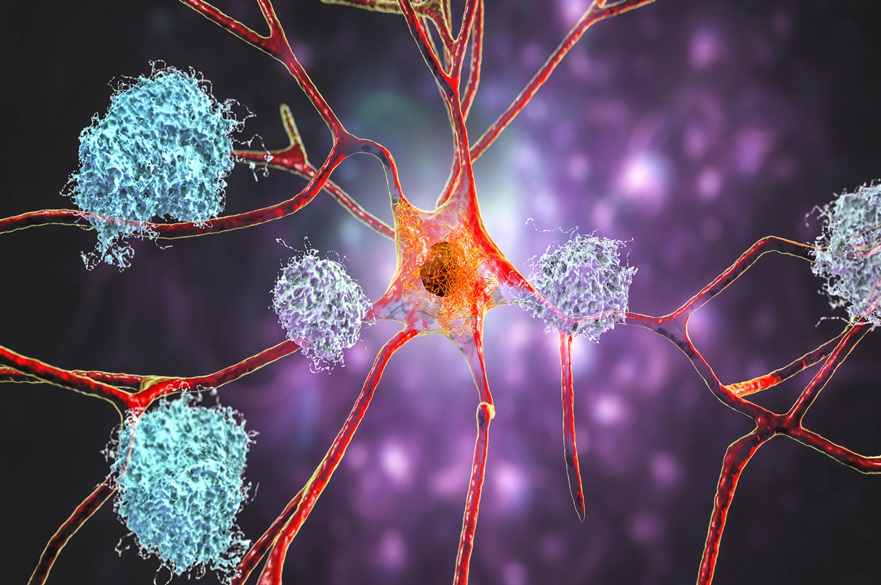
£1 million funding from Eranda Rothschild Foundation to investigate novel, non-invasive treatment for Alzheimer’s, dementia and Parkinson’s
23 September 2024Researchers are embarking on a first of its kind study to utilise ultrasound and light therapies to investigate a non-invasive and targeted treatment of Alzheimer’s, dementia and Parkinson’s.
ntu.ac.uk/about-us/news/news-articles/2024/09/1-million-funding-from-the-eranda-rothschild-foundation-to-investigate-novel,-non-invasive-treatment-for-alzheimers,-dementia-and-parkinsons
UN Sustainable Development Goals
Our research embraces environmentally sustainable approaches to cost-effective high throughput synthetic routes to a range of innovative materials that have found industry applications across seven verticals (i) Healthcare, (ii) Animal Health & Wellbeing, (iii) Agriculture, (iv) Food & Drink, (v) Cosmetics, (vi) Functional Coatings, and (vii) Printable Electronics.