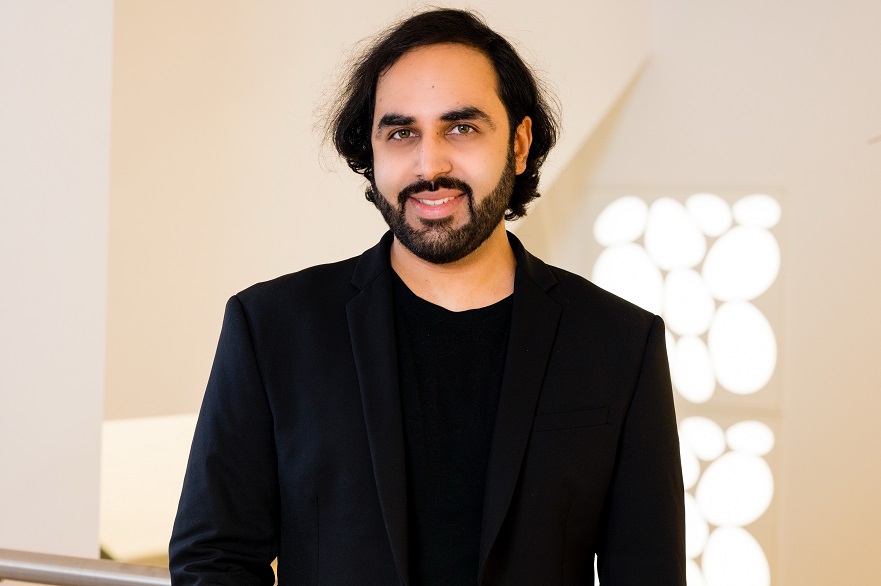
Role
Senior Lecturer in Psychology
Career overview
Mohammed completed his undergraduate studies in Psychology at the University of Bradford in 2011, before progressing to an MRes in Research Methods for the Social Sciences at the same institution in 2014. He subsequently undertook doctoral research at Manchester Metropolitan University, where he was awarded a PhD in Psychology in 2018. His thesis, Male Body Image across the Life Course: A Mixed-Methods Study, offered a substantive contribution to the understanding of male embodiment and identity across developmental stages.
His academic career began with an appointment as Lecturer in Psychology at the University of Bradford (2018–2019), followed by a lectureship at the University of Central Lancashire (2019–2020). In 2020, he joined Nottingham Trent University as a permanent Lecturer in the Department of Psychology, where he continues to contribute to both teaching and research.
Mohammed’s teaching portfolio spans a wide spectrum of psychological disciplines, including research methods, developmental and health psychology, and the study of individual differences. He has extensive experience delivering lectures, seminars, and laboratory-based teaching at both undergraduate and postgraduate levels, and he has supervised research projects across multiple stages of academic progression. His contributions extend to curriculum design, pedagogical innovation, and the enhancement of student learning and support within the department.
In addition to his core teaching responsibilities, Mohammed has developed and now leads a specialist Level 6 module in Appearance Psychology, currently in its third year of delivery. He has also established and led a dedicated Project Lab in this emerging area, supervising numerous undergraduate research projects over the past three years. Through this work, he has played a central role in shaping the department’s growing expertise in appearance‑related psychological research.
Research areas
Dr. Mohammed Malik is a member of the Groups, Identities, and Health research group at Nottingham Trent University (GIHNTU). His research interests primarily focus on community mental health, well-being, and promoting positive health outcomes within groups. While his doctoral research examined the trajectory of body image across the life course, with a particular emphasis on middle-aged individuals, his current work is centered on understanding and enhancing mental health in community settings. Dr. Malik has employed both qualitative and quantitative methods in his research to explore factors that influence psychological well-being and to develop strategies for supporting mental health across diverse populations.
External activity
Mohammed has held membership within the British Psychological Society (BPS) and previously served as the Equality, Diversity, and Inclusion (EDI) Lead for the Qualitative Methods in Psychology section during his tenure from 2020 onward. In this role, he contributed to the advancement of inclusive practices and the strengthening of representation within the section’s strategic and scholarly activities. He has also engaged in a range of cross‑institutional collaborations with universities across the UK and internationally, supporting methodological development and fostering wider academic exchange.
Publications
Fino, E., Jemmett‐Skinner, T., Evans‐Miller, R., Perkins, J., Malik, M., Robinson, M., & Webb, G. (2024). Dispositional traits, characteristic adaptations, and narrative identity reconstructions in individuals with depersonalization and derealization. Journal of Personality. https://doi.org/10.1111/jopy.12976
Bryant, E.J., Malik, M.S., Whitford-Bartle, T., & Waters G.M. (2019). The effects of bariatric surgery on psychological aspects of eating behaviour and food intake in humans. Appetite. https://doi.org/10.1016/j.appet.2019.104575
Malik, M., Grogan, S., Cole, J., & Gough, B. (2019). Men’s reflections on their body image at different life stages: A thematic analysis of interview accounts from middle-aged men. Journal of Health Psychology. https://doi.org/10.1177/1359105319871640