Researchers warn of growing threats to sleep health across Europe
Sleep is being increasingly impacted by climate change, urban living, digital misinformation and modern working patterns, according to an international team of sleep researchers.
By Helen Breese | Published on 20 October 2026
Categories: Press office; Research; School of Social Sciences;
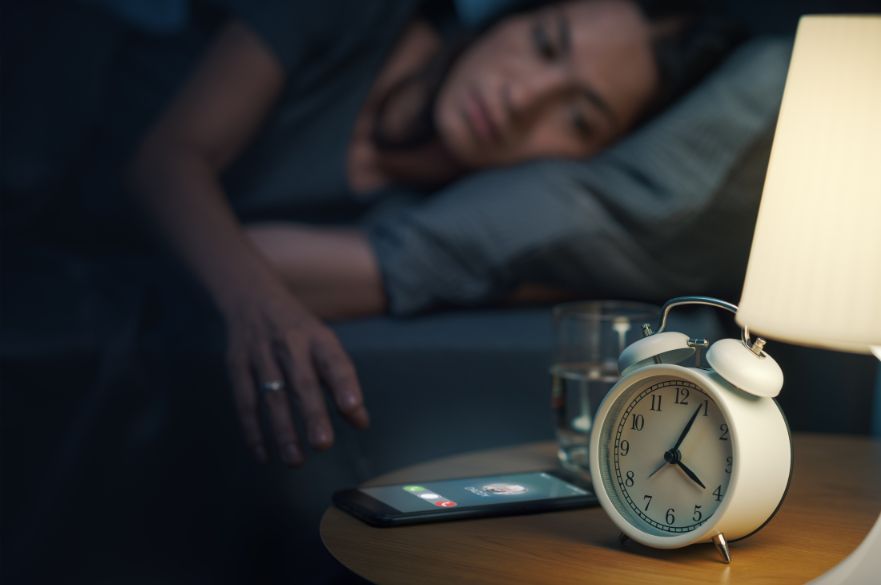
A new paper from the Equality, Diversity and Inclusion Committee and the Early Career Network of the European Sleep Research Society warns that sleep health is becoming a growing public health challenge across Europe and is calling for coordinated action to protect it.
The research was led by Dr Fran Pilkington-Cheney, Senior Lecturer in Psychology and Sleep at Nottingham Trent University (NTU), and Dr Adrian Michalak, Department of Biomedical, Metabolic and Neural Sciences at the University of Modena and Reggio Emilia.
Sleep is essential for physical and mental health, learning, memory, emotional wellbeing, immune function, safety for critical tasks, and day-to-day performance.
But the paper points to a range of changes in society which are making it harder for people to get the rest they need and identifies several major threats to sleep health.
Climate change and the built environment are playing an increasingly important role, particularly in densely populated areas and poorer-quality housing. Noise pollution, artificial light and poor air quality, which can weaken respiratory and immune systems, can all make it more difficult to sleep.
Rising night-time temperatures, more frequent heatwaves and exposure to extreme heat can also cause sleep disruption which may result in poor heart health, mental health issues and sleep apnoea - with the challenge expected to intensify in the future.
Displacement due to climate change or conflict which interacts with the loss of stable housing and energy poverty is also seen to cause sleep disturbances which can persist for many years.
Researchers also highlight inequalities in access to sleep healthcare. Access to medicine, specialist services, diagnosis and treatment pathway vary considerably across communities, while shortages of trained sleep professionals can leave some people struggling to get support.
The study also raises concerns about the growing fixation on optimising and tracking sleep and the volume of sleep advice available online, including the rising trend of ‘sleepmaxxing’ and Orthosomnia - an obsessive preoccupation with achieving “perfect” sleep metrics through wearable devices.
The paper highlights how misleading or inaccurate information shared through social media and other digital platforms can shape people's understanding of sleep and encourage unrealistic expectations. It also stresses that many sleep tracking technologies require stronger evidence and should not be seen as a substitute for individual, independent professional advice.
Finally, the researchers warn of the impacts of a modern society increasingly organised around a 24-hour culture, with shift work, constant connectivity, after-hours communications and widespread screen use all disrupting natural sleep patterns and reducing opportunities for rest and recovery.
The paper calls for greater recognition of sleep as a public health issue and coordinated action from policymakers, healthcare providers, educators, employers, environmental planners and technology developers.
It highlights the need to improve sleep health literacy through public education, professional training and efforts to counter misinformation, alongside clearer regulation of working hours, digital technologies and environmental exposures.
Other priorities include tackling structural inequalities, developing the sleep health workforce, ensuring the responsible use of digital tools, and improving housing, lighting and personal and workplace environments.
An extensive set of recommendations, organised within a PESTEL framework - Political, Economic, Sociological, Technological, Legal and Environmental - is provided in the appendix to support policy development and drive meaningful action to improve sleep health across Europe.
Dr Fran Pilkington-Cheney, part of the Nottingham Institute of Psychology at NTU’s School of Social Sciences, said: "We're seeing a perfect storm of challenges for sleep health across Europe. People are aware that sleep matters, but few recognise how factors such as climate change, technology, shift work, urban environments and misinformation are combining to affect how well we sleep.
“The European Sleep Research Society already has initiatives aimed at tackling some of these issues but, without wider co-ordinated action, these pressures are likely to become more significant in the years ahead.”
A Call to Action: Challenges and Future Directions for Sleep Health in Europe has been published in the Journal of Sleep Research.
Notes for Editors
Press enquiries please contact Helen Breese, Public Relations and Research Communications Manager, on telephone +44 (0)115 848 8751, or via email.
The study brought together a multidisciplinary team of researchers from across Europe, including Claire André (Normandie Université, UNICAEN, INSERM, Neuropresage and GIP Cyceron, France), Seren Ucak (independent researcher, Brussels), Raoua Ben Messaoud (University of Grenoble Alpes), Anna M. Biller (Technical University of Munich), Inês Dias and Daniela Noain (University Hospital Zurich, with Daniela Noain also affiliated with the Neuroscience Centre Zurich), Jose Prius Mengual (University of Oxford), Michaela Pawley (University of Birmingham), Monisha Ravikumar (Loughborough University), Matias Rusanen (University of Eastern Finland and Kuopio University Hospital), and Laura Stankeviciute (University of Gothenburg).
About Nottingham Trent University
Nottingham Trent University (NTU) has been named UK ‘University of the Year’ five times in six years, (Times Higher Education Awards 2017, The Guardian University Awards 2019, The Times and Sunday Times 2018 and 2023, Whatuni Student Choice Awards 2023) and is consistently one of the top performing modern universities in the UK.
Students have voted us first in the UK for course quality, top five in the UK for employability and third best University in the UK (Uni Compare 2027). We are ranked in the top 25 universities in the country (The Guardian University Guide 2026).
We have over 35,000 students and more than 4,000 staff located across five campuses. It has an international student population of over 5,000 and an NTU community representing over 160 countries.
NTU owns two Queen’s Anniversary Prizes for outstanding achievements in research (2015, 2021). The Research Excellence Framework (2021) classed 83% of NTU’s research activity as either world-leading or internationally excellent.
NTU was awarded GOLD in the national 2023 Teaching Excellence Framework (TEF) assessment.
NTU is a top 10 for sport (British Universities and Colleges Sport league table 2025) and was named as Sports University of the Year (Daily Mail University Guide 2025).
NTU is a holder of the University Mental Health Charter, recognising the commitment an institution has shown towards continuous improvement in the area of mental health and wellbeing.
NTU is the most environmentally sustainable university in the UK and third in the world (UI Green Metric University World Rankings, 2025).