Exploring the Student Innovations of the NTU and Makerere University Mini-Grand Challenge
Aqua Watch: Tackling sanitation challenges in flood‑prone communities
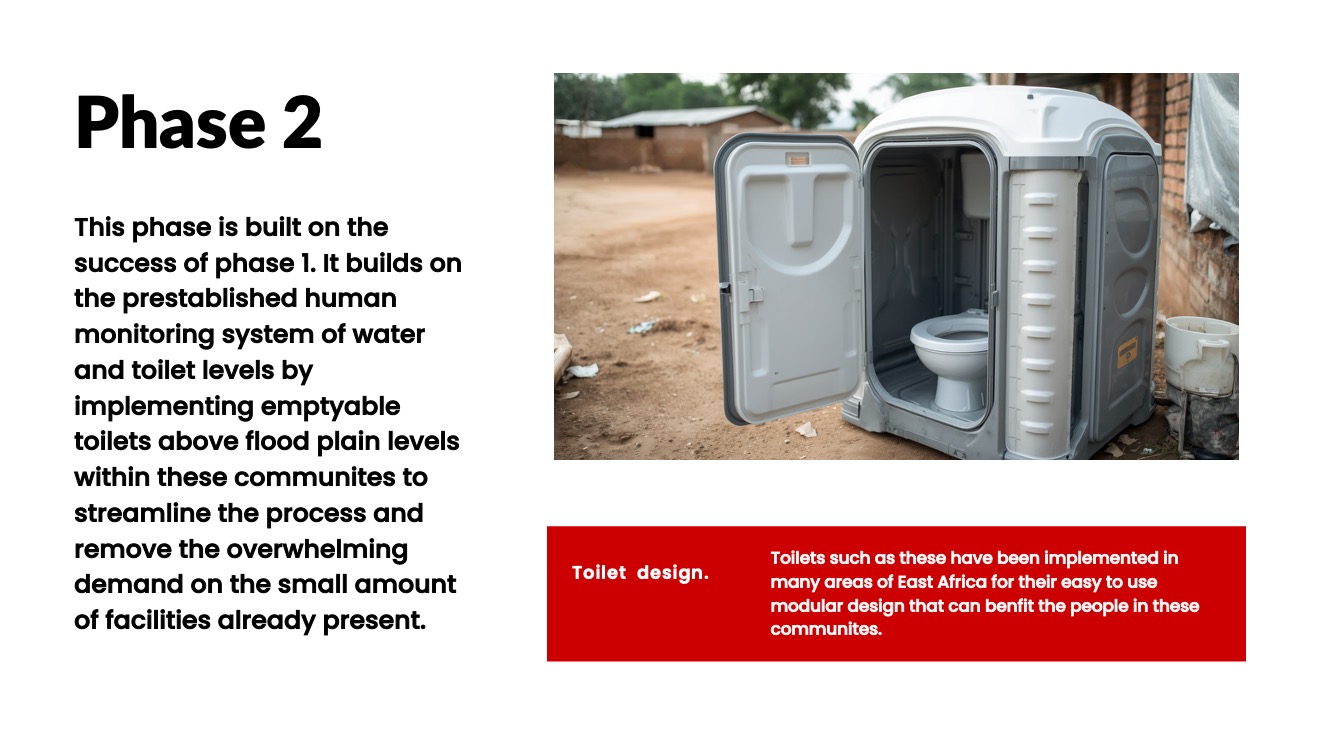
In urban slum areas such as Katanga in Kampala, where a single pit latrine can serve over 50 people, flooding can cause human waste to contaminate water sources and trigger outbreaks of waterborne disease. By starting with low‑cost community monitoring and only then moving to new infrastructure, Aqua Watch offers a practical route for slum communities and local authorities to improve sanitation without large upfront investment. Phase One introduces a community‑based monitoring system, where a trained local resident monitors toilet and water levels and alerts a collection service before facilities overflow. Phase Two would introduce modular emptiable toilets installed above flood‑prone areas, reducing contamination risks while creating a more sustainable sanitation system. The team also explored opportunities to convert collected waste into agricultural fertiliser and to partner with local government and civil society organisations, creating a circular‑value approach that benefits both urban and rural communities.
Team members:
NTU: Charlotte Chamberlain – Aerospace Engineering
Makerere University:
- Jean Peace Achola – School of Public Health
- Ephraim Gerald Okumu – School of Engineering
- Bridget Ahumuza – School of Public Health
Solar-Powered and AI-Supported Waste Management
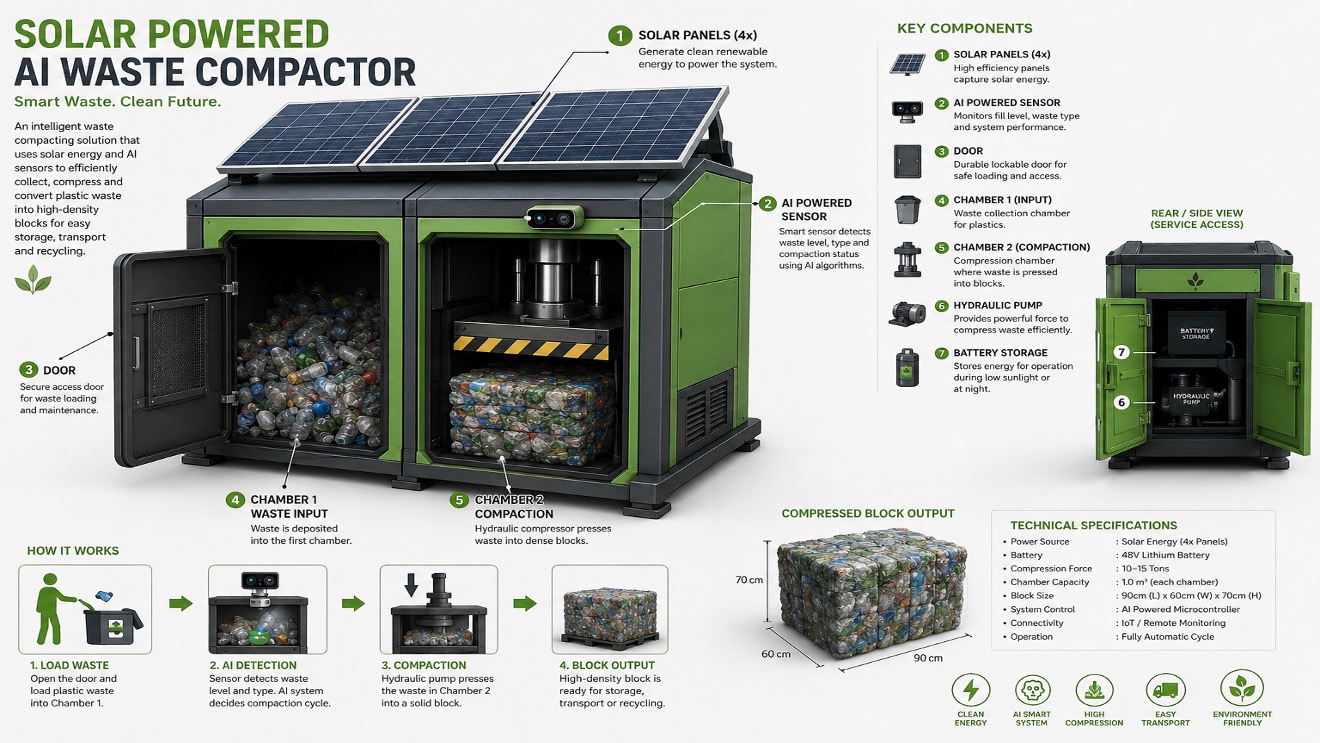
The team focused on environmental conditions that contribute to preventable illness. Through conversations with community health workers, they found that health workers spend much of their limited time treating illnesses that are entirely preventable, including malaria from stagnant water in plastic bottles, respiratory infections from open burning practices and diarrhoea from unmanaged waste. Their proposed solution combines community recycling centres, composting stations and AI‑supported geo‑mapping of dump sites and disease hotspots, where community health workers flag high-risk locations on a sharable map, to help communities identify and address environmental health risks. The model includes an incentive scheme rewarding households that actively participate in waste collection and recycling. To support long‑term sustainability, the team proposed composting stations that convert biodegradable waste into fertiliser and a solar‑powered plastic compressor that transforms plastic waste into a sellable output. The team estimate that a pilot could be established in a single village for approximately UGX 11.8 million (around £2,300), with existing youth‑skilling funds, NGO partners and local stakeholders providing potential pathways for implementation. Over time, the model is designed to reduce the burden of preventable disease on community health workers by reducing the environmental risks that drive repeat cases.
Team members
NTU: Finley Owen – Civil Engineering
Makerere University:
- Abdurahim Butanda – School of Public Health
- Kenneth Nangoye – School of Engineering
CareLine: One free number for every emergency
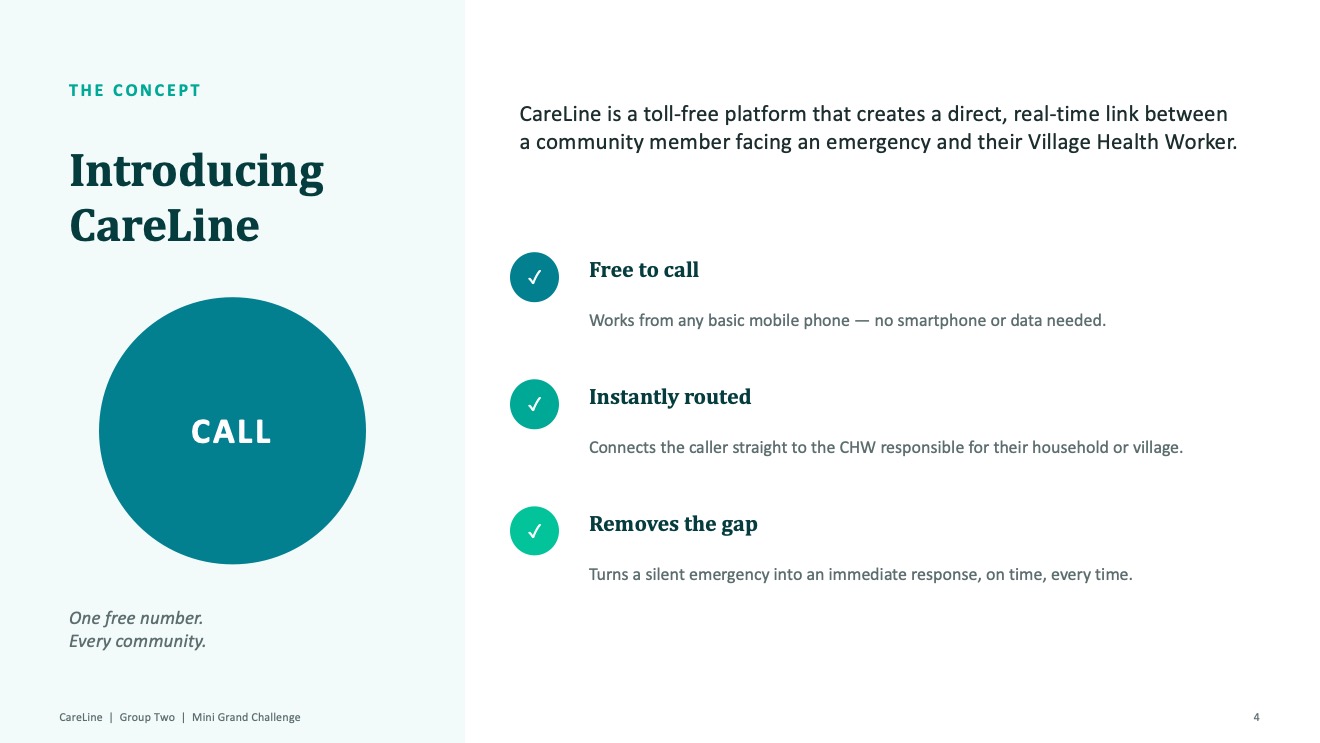
While some teams focused on environmental health, others examined barriers to accessing urgent care. Through discussions with community members, the CareLine team identified a recurring challenge that when emergencies occur, particularly at night, many people do not know how to quickly reach a community health worker, leaving pregnant women and acutely ill patients especially at risk. Community members explained that the problem was often not a lack of willingness to help, but the absence of a reliable way to call for assistance when it was needed most – delays that, in some cases, contributed to preventable deaths. CareLine is a toll‑free call‑routing platform that connects any community member, using any basic mobile phone, directly to the CHW responsible for their village. No smartphone. No internet. No confusion about who to call. Calls are automatically routed, logged and tracked, generating data that could help district health offices monitor response times and outcomes. The team also proposed a low‑cost subscription model to support operational sustainability, with the ambition of scaling the service from district‑level pilots to national coverage over time. CareLine is designed to close a life-critical communication gap with minimal new infrastructure as it works on any basic phone and builds on the existing community health worker network.
Team members
NTU: Josiah Gyamfi – Mechanical Engineering
Makerere University:
- Henry Bageya – School of Engineering
- Alphashiru Mujurani – School of Public Health
- Michelle Best Kemigisha – School of Business
Watch Well: Turning every home visit into a health‑screening opportunity
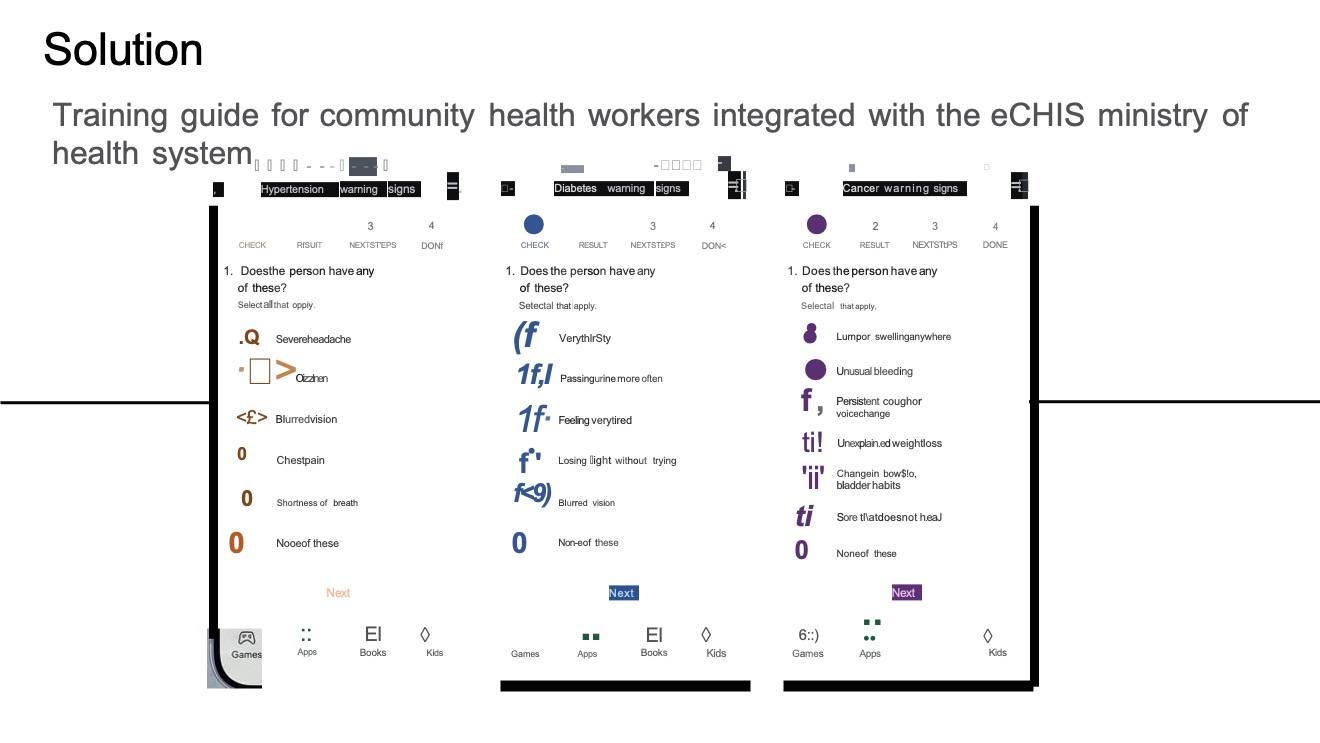
Community health workers already play a critical role in identifying and managing infectious diseases through Uganda’s electronic Community Health System (eCHIS). However, while CHWs routinely record cases of malaria, pneumonia and diarrhoea, opportunities to detect non‑communicable diseases (NCDs) such as hypertension and diabetes often remain limited. NCDs account for an estimated 40% of deaths in Uganda, and existing evidence suggests that 49-89% of people living with diabetes are unaware of their condition; while 1 in 4 Ugandans has hypertension, only around 8% are aware of their status. Rather than creating a new system, the Watch Well team proposed integrating a structured NCD screening guide directly into the eCHIS interface that CHWs already use. During routine household visits, health workers would be guided through a series of questions designed to identify warning signs associated with hypertension, diabetes and certain cancers, while providing clear guidance on referral pathways and next steps. The concept transforms every household visit into an opportunity for early detection and builds on existing infrastructure, no new device and no additional login required. By embedding screening into a platform already used across the country, the team believes the system could be scaled through Uganda’s existing community health workforce and Ministry of Health systems, extending its reach to more than 226,000 CHWs nationally. Watch Well could turn routine household visits into a national early‑warning system for NCDs, without adding new devices or parallel reporting systems.
Team members
NTU: Alexander Dyke – Sports Science Engineering
Makerere University:
- Racheal Cynthia Mutuwa – School of Public Health
- Patricia Naggawa – School of Biomedical Science
D‑BAJ: Giving community health workers their voice back
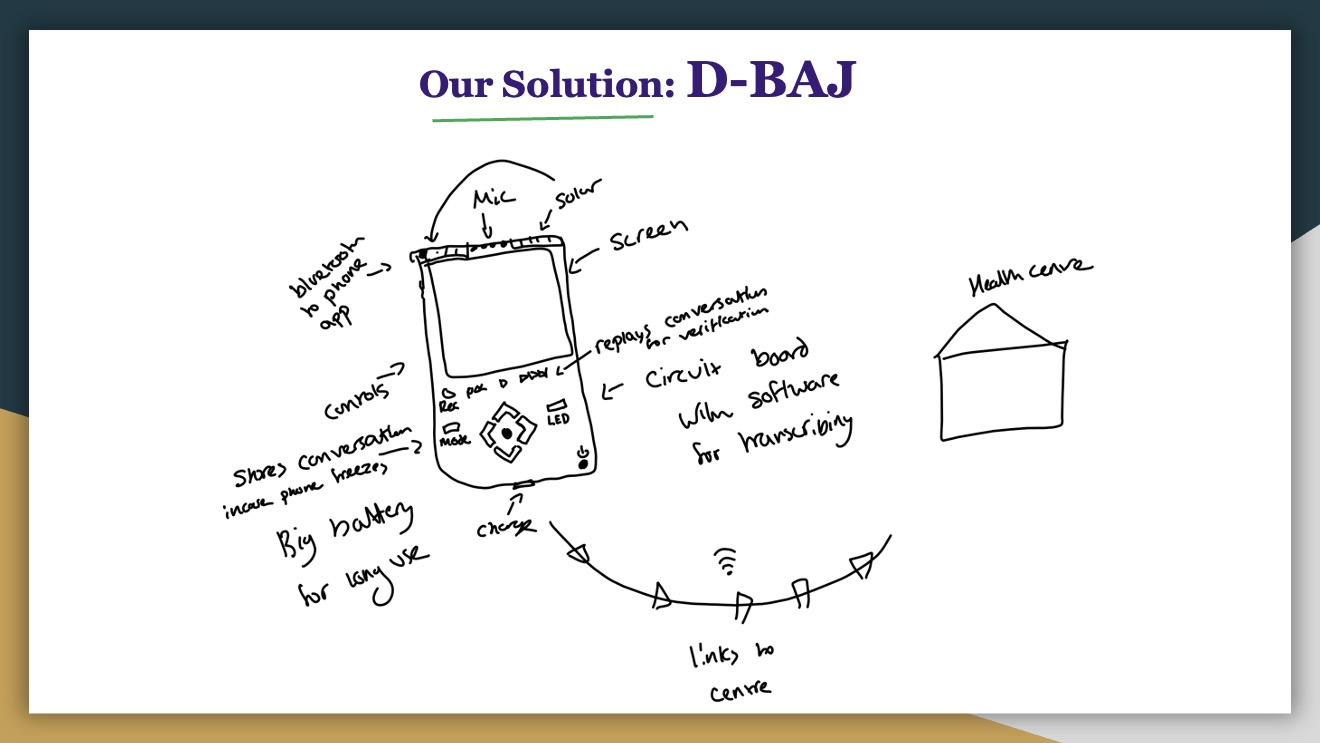
D‑BAJ is a speech‑to‑text tool designed to reduce the reporting burden on community health workers by recording and transcribing their conversations with community members in local languages, then auto‑populating Ministry of Health reporting forms. By focusing on local language accessibility, automation, and building on existing AI expertise within Uganda, the concept offers a practical pathway to implementation with the potential to free up valuable time for patient care, and to support research and programme evaluation across sectors. The team is now exploring options for piloting a prototype with community health workers.
Team members
NTU: James Stafford – Aerospace Engineering
Makerere University:
- Andrew Mudhasi – School of Biomedical Science
- Blessed Namara – School of Business
Read the news article on how NTU and Makerere University students co-design community health solutions in Uganda