Inclusive Universities Network Advances National Policy Brief on Disability Inclusion in Higher Education
An EAC-supported Kenya-UK partnership builds evidence to strengthen disability-inclusive higher education and student wellbeing.
Published on 7 August 2026
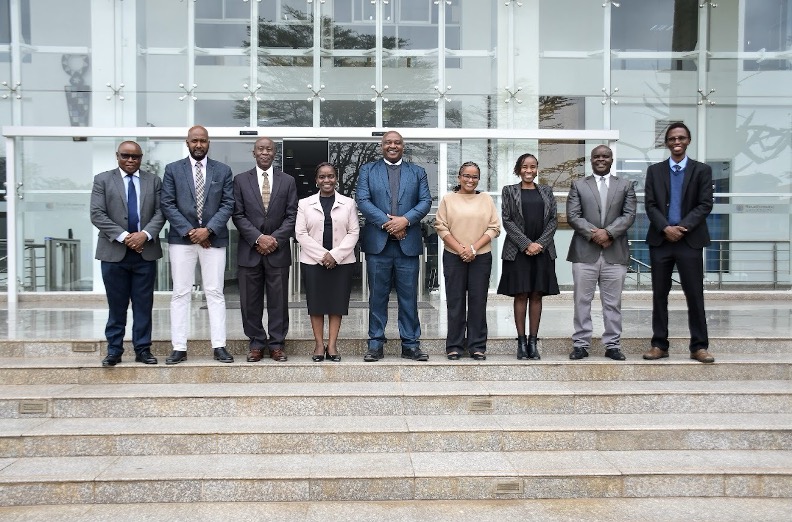
The Inclusive Universities Network (IUN) has taken a significant step towards advancing disability-inclusive higher education in Kenya following a high-level stakeholder engagement hosted by Strathmore University. The meeting, supported by NTU’s Eastern Africa Centre (EAC), brought together representatives from Kenyan and UK universities, the Ministry of Education, Sightsavers, and other partners to review findings from a comparative policy-practice mapping study and refine a national policy brief on disability inclusion in higher education.
Launched in February 2026 at Strathmore University, the Inclusive Universities Network shares a vision of universities where all learners, including students with disabilities and neurodivergent learners, can access, participate in, and successfully complete higher education. The network currently includes Strathmore University, Open University of Kenya, United States International University-Africa (USIU-Africa), Garissa University, Pwani University, and Nottingham Trent University (UK), with NTU participating both as a member institution and through the EAC to strengthen institutional policies and practices for inclusion.
In addition, Kenyatta University and Sightsavers (an international organisation that works to prevent avoidable blindness and promote equality for people with disabilities) are associated with and contributing to the network. As part of Nottingham Trent University’s regional engagement, the NTU Eastern Africa Centre is the UK lead of this strategic Kenya-UK partnership, supporting joint research, policy dialogue and capacity strengthening across the Inclusive Universities Network. The EAC is a strategic university-wide research centre that fosters equitable collaborations, research partnerships and capacity-strengthening initiatives across Africa.
Opening the meeting, Dr Magdalene Dimba, Dean of the School of Humanities and Social Sciences at Strathmore University, welcomed participants and reflected on the progress made since the network's inception. She emphasised that while Kenya has made important constitutional and legislative commitments towards disability inclusion, universities must continue translating these commitments into practical institutional action.
Inclusion is not simply about access. It is about ensuring every student has the opportunity to participate fully and succeed throughout their university journey.
Dr Magdalene Dimba
Evidence to Inform Policy
A key highlight of the meeting was the presentation of findings from a Kenya-UK comparative mapping study. Dr Abdishakur Tarah (NTU) and Dr Alfred Kitawi (Strathmore) shared the preliminary findings. The study examined disability inclusion practices across the six partner universities, focusing on:
- Institutional disability and inclusion systems
- Student disclosure, assessment and reasonable accommodation
- Data collection, monitoring and evaluation
- Student support throughout the university journey
- Neurodiversity and student well-being
- Comparative learning from the United Kingdom
The study was conducted by a wider research team co‑led by Professor Mazeda Hossain (Director, NTU Eastern Africa Centre and Professor of Global Health) and Dr Abdishakur Tarah (IUN UK lead, Senior Lecturer, Nottingham Institute of Education, NTU), together with Dr Alfred Kitawi (IUN Kenya lead, Strathmore University), NTU Research Associates Sam Williams and Ruwan Samaraweera, and colleagues from the Inclusive Universities Network, working through the EAC to link Kenyan and UK evidence and practice. The mapping process drew on bi-directional learning, involving Kenyan partner university disability services teams and NTU Disability Student Support staff, including Dr Gary McGladdery (Head of Disability and Inclusion Support Services) and Richard Fletcher (Dyslexia Specialist), to compare approaches, share tools and identify practical, low-cost ways to strengthen inclusion across both contexts.
The study found that while Kenya has established a strong legal and policy framework through the Constitution, the Universities Act, and the UN Convention on the Rights of Persons with Disabilities (UNCRPD), implementation remains uneven across institutions. Some universities have well-established disability policies, committees and support services, while others continue to rely on informal arrangements with limited institutional capacity. The study also highlighted inconsistent access to support services, inadequate disability data, and significant under-identification of psychosocial and neurodivergent disabilities.
Key Policy Recommendations
Drawing on the comparative mapping, participants endorsed several strategic recommendations designed to move from commitment to implementation and to provide a practical roadmap for universities and policymakers to strengthen disability-inclusive higher education nationally. These include:
- Develop minimum national standards for disability inclusion across all universities.
- Establish a national disability data framework to improve planning, monitoring and accountability.
- Investing in staff capacity building on inclusive teaching, assessment and student support.
- Mainstream neurodiversity and student well-being within university policies and services.
- Promote Universal Design for Learning (UDL) to create accessible learning environments.
- Strengthen institutional monitoring systems to track progress and impact.
Stakeholders emphasised that disability inclusion should be recognised not merely as a compliance requirement, but as a hallmark of educational quality and institutional excellence.
Together, these actions would help translate Kenya’s legal commitments into tangible improvements in access, participation and student wellbeing, while aligning institutional practice with continental priorities such as the African Union’s Agenda 2063 and the Continental Education Strategy for Africa (CESA 2026–2035).
Strong Support from Government and Partners
Dr Darius Ogutu, Director of Higher Education in the State Department of Higher Education and Research, welcomed the study's findings and reaffirmed the Kenyan Government's commitment to strengthening inclusive higher education. Participants underscored the importance of stronger collaboration between universities, government agencies, disability organisations, and development partners to accelerate implementation.
Sightsavers and Kenyatta University reiterated their commitment to supporting institutional capacity building and expanding partnerships, while colleagues from Open University of Kenya highlighted the opportunities and challenges of ensuring accessibility within fully online learning environments. Stakeholders further recommended more direct involvement of persons with disabilities and neurodivergent students in validating, implementing and monitoring future reforms.
Next Steps
The Inclusive Universities Network agreed on several immediate priorities:
- Finalise the disability-inclusive higher education policy brief with wider stakeholder input from across the sector.
- Expand network membership to include additional universities and government agencies.
- Establish a shared repository for inclusive education tools, frameworks and institutional resources.
- Strengthen advocacy and communication around disability in inclusive higher education.
- Present the final policy brief to the Ministry of Education and the Commission for University Education.
- Encourage every participating institution to implement and document at least one practical inclusion initiative while broader policy reforms continue.
Building Universities Where Everyone Belongs.
Reflecting the EAC’s commitment to equitable, co-produced partnerships, the Inclusive Universities Network is grounded in shared values of inclusivity, collaboration, evidence-based practice and translating policy into real changes in students’ lives.
The meeting concluded with a shared commitment to ensuring that disability inclusion becomes embedded in every aspect of university life from policy and governance to curriculum design, teaching, student services and campus infrastructure.
As the Inclusive Universities Network continues to grow, partners aim to position inclusive education as a defining feature of quality higher education in Kenya, ensuring that every student has the opportunity to thrive, contribute and succeed.
The development of the policy brief marks an important milestone in this journey and reflects the collective commitment of universities, government, development partners and persons with disabilities to building a more equitable and inclusive higher education system for Kenya and the UK.
Dr Abdishakur Tarah highlighted the importance of this policy brief:
The real measure of this work is whether it helps shift policy and practice. If the evidence in the brief can prompt stronger commitments, better use of data and more consistent support for disabled and neurodivergent students, then we will have made a meaningful contribution to inclusion in higher education.
Dr Abdishakur Tarah
Professor Mazeda Hossain, Director of the EAC, reflected on the partnership:
The EAC is proud to support this important network. Our partnership is built on the recognition that universities in Kenya and the UK both have strengths and gaps in how they support disabled and neurodivergent students. By learning from each other’s policies and everyday practices, not simply exporting one model to another, we can co-create solutions that are realistic in resource-constrained settings and still ambitious enough to drive systemic change.
Professor Mazeda Hossain
Read more on the Inclusive University Network on the EAC Research webpage.