Project
Forum for Maritime Justice
Unit(s) of assessment: Law
Research theme(s): Safety and Sustainability
School: Nottingham Law School
Overview
The Forum for Maritime Justice (FMJ) is a newly established research initiative within the Centre for Rights and Justice at Nottingham Law School. It brings together scholars working across the law of the sea, maritime law, and public and private international law, united by a shared commitment to advancing human rights and justice at sea. The Forum also embraces a distinctly interdisciplinary approach, drawing on history, social science, and environmental studies to deepen understanding of how past maritime practices shape present-day legal and ethical challenges.
Although the oceans cover more than two-thirds of our planet, the legal, social, and human realities that unfold there often remain obscured – unseen, under-reported, and frequently under-enforced. From the rights of seafarers, migrants, and coastal communities to the governance of shipping, energy, and fisheries, the maritime domain is a dynamic space where law, power, and justice interact in complex and sometimes opaque ways. Historical perspectives help illuminate these dynamics: centuries of maritime customs, imperial trade routes, and ocean governance traditions continue to influence modern legal frameworks and patterns of inequality at sea.
The Forum for Maritime Justice aims to shine a light on these hidden dimensions. Its mission is to produce research and advocacy that promote fairness, accountability, and human rights across global oceans – and to strengthen the legal mechanisms that protect both people and marine environments from exploitation, insecurity, and environmental harm.
Through its work, the Forum bridges gaps between scholarship and practice, interrogating how international and domestic legal systems can more effectively respond to the unique challenges of maritime governance. Its research aligns closely with several United Nations Sustainable Development Goals (SDGs), including good health and wellbeing (SDG 3), gender equality (SDG 5), affordable and clean energy (SDG 7), reduced inequalities (SDG 10), responsible consumption and production (SDG 12), climate action (SDG 13), life below water (SDG 14), and peace, justice, and strong institutions (SDG 16).
In doing so, the Forum contributes directly to the University’s Safety and Sustainability research theme, examining how these priorities unfold at sea and the extent to which existing laws support – or undermine – their fulfilment. Its interdisciplinary orientation enables a more critical understanding of how safety and sustainability principles have evolved over time, and where legal accountability and protection mechanisms must be strengthened.
News
Podcast Episode: Don’t Look Up: From the High Seas to Outer Space – 18 September 2026
What happens when our activities in outer space begin to affect life back here on Earth?
In the first episode of the Forum for Maritime Justice podcast, we take the discussion beyond the oceans and into outer space to explore the growing problem of space debris.
Space debris may seem far removed from maritime law, but the issue raises broader questions about how we govern and protect the global commons. With thousands of objects and fragments orbiting the Earth, space debris presents environmental, technological and strategic challenges, with potential consequences for satellites, communications, navigation, weather monitoring and environmental observation.
Joining today are Dr Ian Whittaker, physicist and space expert at Nottingham Trent University, and Dr Lesley Masters, an international relations scholar specialising in global governance and space security.
Together, they explore what space debris actually is, why it matters, who is responsible for the risks it creates, and what its growing presence in orbit tells us about the challenges of governing spaces beyond national borders.
From the high seas to outer space, this episode asks how international law and global governance can respond to environmental challenges that transcend national boundaries.
Podcast Episode: The Rosebank Development: Energy, Environment and a Just Transition – 24 September 2026
In the second episode of the Forum for Maritime Justice podcast, Dr Laurence Atkin-Teillet is joined by Dr Daria Shapovalova and Professor Tavis Potts from the University of Aberdeen to explore one of the most contested issues in the UK’s energy transition: the Rosebank development.
Rosebank has become a focal point for debates about North Sea oil and gas, climate change, energy security, environmental protection and the future of the UK’s energy system. But the discussion goes beyond the development itself to consider some much broader questions.
What are the legal and environmental issues surrounding Rosebank? Who benefits economically from North Sea oil and gas, and who bears the environmental and social costs? What does the debate look like from communities in North-East Scotland whose economies have historically depended on the industry? And what would a genuinely just transition require for workers, businesses and communities?
We also explore the relationship between Rosebank and Jackdaw, the role of environmental law in energy decision-making, and the difficult question of whether continued fossil-fuel production can genuinely form part of a credible pathway towards net zero.
Research Seminar on The Great Universal Jurisdiction Showdown – 2 September 2026
On 2 September 2026, the Forum for Maritime Justice hosted the research seminar The Great Universal Jurisdiction Showdown, bringing together Dr Mark Chadwick of Nottingham Law School, Nottingham Trent University, and Dr Tamsin Paige of Deakin Law School in Melbourne, Australia, for a fascinating discussion on one of the most contested concepts in international criminal and maritime law.
The seminar explored the origins and historical development of universal jurisdiction, considering the different legal and conceptual foundations that have been invoked to explain why, in certain circumstances, a State may exercise jurisdiction over conduct occurring beyond its territory and involving persons with no direct connection to the prosecuting State.
The discussion then turned to a particularly pressing contemporary question: whether universal jurisdiction remains applicable to modern-day piracy. While piracy has traditionally occupied a distinctive position in international law, its contemporary manifestations raise difficult questions about the continuing relevance of the jurisdictional framework developed around the concept.
Dr Chadwick and Dr Paige approached these questions from two distinct conceptions of universal jurisdiction. Their different perspectives provided the basis for a particularly engaging exchange, demonstrating that disagreements about universal jurisdiction are not merely technical questions of jurisdictional doctrine, but reflect deeper disagreements about the nature, purpose and limits of international law.
About the speakers

Dr Mark Chadwick
Dr Mark Chadwick is a Principal Lecturer at Nottingham Law School, Nottingham Trent University. His research focuses on international law and international criminal law, with particular interests in questions of jurisdiction, international crimes, and the legal frameworks governing accountability for conduct with transnational or international dimensions.

Dr Tamsin Paige
Dr Tamsin Paige is an Associate Professor at Deakin Law School, Deakin University, in Melbourne, Australia. Her research engages with international law and international criminal law, with particular interests in questions of jurisdiction, accountability and the operation of international legal institutions.
Research Seminar on The Sea and the State in the Climate Age – 15 July 2026
On 15 July 2026, the Forum for Maritime Justice hosted the seminar The Sea and the State in the Climate Age, bringing together two scholars whose work explores the intersection of legal philosophy, international law, and contemporary environmental challenges.
Dr Aravind Ganesh examined the relationship between Immanuel Kant and the sea through his presentation. Drawing on Kantian legal and political philosophy, he explored how the sea has shaped ideas of freedom, international order, and legal authority, offering a thought-provoking perspective on the philosophical foundations of the law of the sea and contemporary international legal debates.
The Forum was also delighted to welcome Dr Alessandro Volpi, who presented his research on sovereignty, the role of the state, and climate politics. His presentation reflected on how classical concepts of sovereignty continue to influence responses to climate change, considering the relationship between public authority, private governance, and the legal and political challenges posed by the climate crisis.
Together, the presentations generated a stimulating discussion on the connections between legal philosophy, international law, and environmental governance, demonstrating how classical political thought continues to inform contemporary debates surrounding climate change, global governance, and the future of international law.
You can access the recording of the event at the following link.
About the Speakers
Dr Aravind Ganesh

Dr Aravind Ganesh is a Lecturer in Law at the University of Sussex. His research focuses on legal and political philosophy, particularly the application of Immanuel Kant's thought to contemporary questions in private law, international law, European Union law, and human rights. Before joining Sussex in 2024, he held research positions at Maastricht University, where he worked in international and comparative law, and at Oxford Brookes University as Vice Chancellor's Research Fellow.
Prior to entering academia, Dr Ganesh practised as a corporate lawyer in New York. He has also worked with the Legal Resources Centre in South Africa and served as a research associate to the United Nations Special Rapporteur on the Right to Food. He has held visiting fellowships at the Universities of Louvain, Tel Aviv, Bayreuth, and Hamburg.
Dr Alessandro Volpi

Dr Alessandro Volpi is a Visiting Fellow at the Max Planck Institute for Legal History and Legal Theory in Frankfurt and a Lecturer in Political Theory at the University of Bergamo and Vita-Salute San Raffaele University. He completed his PhD in Political Philosophy at Vita-Salute San Raffaele University in Milan.
His research examines the relationship between classical traditions of Western political philosophy and contemporary global challenges. His current work focuses on climate change, sovereignty, and public-private governance, exploring how evolving understandings of political authority shape legal and institutional responses to the climate crisis.
Research Seminar on ‘Rising Above, Digging Below, and the Maritime Spaces in Between’ – 10 June 2026
On 10 June 2026, the Forum for Maritime Justice hosted the seminar Rising Above, Digging Below, and the Maritime Spaces in Between, bringing together two scholars working at the intersection of ocean governance, climate change, and international law.
Dr Elizabeth Mendenhall examined the International Seabed Authority's response to the recently adopted Agreement on the Conservation and Sustainable Use of Marine Biological Diversity of Areas Beyond National Jurisdiction (BBNJ Agreement), reflecting on the implications of emerging biodiversity governance frameworks for deep-sea mining and the management of the international seabed.
The Forum was also delighted to welcome Nottingham Law School PhD candidate Olga Lablache, who presented her research on international climate governance and the pitfalls associated with the generalisation of Small Island Developing States (SIDS). Her presentation highlighted the diversity of experiences, vulnerabilities, and legal challenges faced by SIDS, questioning assumptions that often shape international climate discourse and policymaking.
You can access the recording of the event at the following link.
About the Speakers
Dr Elizabeth Mendenhall

Dr Elizabeth Mendenhall is an Associate Professor with a joint appointment in the Department of Marine Affairs and the Department of Political Science at the University of Rhode Island. Her research focuses on international relations, ocean governance, maritime security, and the politics of global environmental change. Her work examines how international institutions respond to emerging challenges in ocean governance, including marine biodiversity conservation, maritime security, and the governance of the deep seabed.
Olga Lablache

Olga Lablache is a PhD candidate at Nottingham Law School specialising in international climate change law. Her research focuses on sea-level rise and its implications for Small Island Developing States, with particular attention to questions of statehood, sovereignty, and climate justice. Alongside her academic work, Olga brings practical legal experience from her previous role as an associate at Rivard Nariman.
Guest Lecture by Mr Michel Forst – 16 March 2026
On Monday 16 March 2026, we had the great pleasure of welcoming Michel Forst, UN Special Rapporteur under the Aarhus Convention on environmental defenders. Mr Forst delivered an engaging guest lecture to our LLM students and colleagues on freedom of expression and environmental activism, drawing on his mandate to reflect on emerging threats to protected expression and the evolving priorities of his office.
From a maritime justice perspective, he explored the protection of fundamental rights at sea - particularly the freedoms of expression, assembly, and access to information. He also offered valuable insights into the role of INTERPOL’s Commission for the Control of Files, of which he is a member, in addressing concerns around the misuse of international mechanisms by States in cases involving disruptive activism. In this context, he reflected on the recent case of Captain Paul Watson.
We are grateful for this opportunity and for Mr Forst’s thoughtful and inspiring contribution to our academic community.
About the Speaker

Figure 1: Frantz Vaillant

Michel Forst has extensive experience in human rights, and more specifically on the protection of human rights defenders.
He has held several leading positions on the national and international stages (e.g. Secretary General of the French National Human Rights Institution, 2005-2016; UN Independent Expert on the human rights situation in Haiti, 2008-2013; Executive Director of Amnesty International France, 1989-1999).
His dedication to the protection of human rights defenders led him to convene the First World Summit on Human Rights Defenders (1998), as its Secretary General. In 2014, he was nominated as the Special Rapporteur on the situation of Human Rights Defenders (2014-2020), under the UN Human Rights Council.
Further to witnessing in this role the major threats that environmental defenders faced, he applied in 2022 for a newly established mandate under the Aarhus Convention, specifically dedicated to their protection: in June 2022, he was elected as the world’s first UN Special Rapporteur on Environmental Defenders under the Aarhus Convention.
He was re-elected in November 2025 for a second term and currently holds this mandate.
Research Seminar on ‘Rights at Sea’ – 28 January 2026
The Forum for Maritime Justice was officially launched at Nottingham Law School with an online research seminar entitled “Rights at Sea.” The launch marked the beginning of a new interdisciplinary space dedicated to examining how law, policy, and practice can advance human rights and justice in maritime contexts.
The launch event took the form of an online seminar featuring three expert speakers, each addressing a different but interconnected dimension of rights at sea. Together, the presentations explored how maritime spaces are regulated, contested, and reimagined through lenses of criminal justice, environmental protection, human rights, and species justice.
The seminar opened with a paper on piracy and international criminal law, examining the historical status of piracy as the first international crime and reflecting on contemporary legal reforms and future challenges. This was followed by human rights and freedom of expression at sea, including the regulation of protest, environmental activism, and the protection of the ocean within existing maritime legal frameworks. The final paper focused on a presentation interrogating the emerging recognition of cetaceans as legal persons, and the implications this has for species justice and ocean governance.
Each presentation was followed by discussion and questions, allowing for meaningful engagement between speakers and participants and highlighting the value of dialogue across disciplines.
The Forum for Maritime Justice would like to extend its sincere thanks to all three speakers for their insightful and thought-provoking contributions, and to everyone who joined us for the launch event. We look forward to building on this conversation and to developing the Forum as a vibrant space for research, collaboration, and dialogue on justice on — and beyond – the waves!
About the speakers
Dr Mark Chadwick, Principal Lecturer in Law, Nottingham Law School
Mark’s research lies at the intersection of international criminal justice and the law of the sea. He has published widely on universal jurisdiction and piracy, including a monograph examining the historical origins and continued relevance of piracy as a crime prosecutable by all States.

Elliot Doornbos, Senior Lecturer in Criminology, School of Social Sciences, Nottingham Trent University
Elliot’s work focuses on species justice and environmental harm, with particular attention to the legal status of whales and dolphins. His recent research explores the emerging recognition of cetaceans as legal persons, including developments in Pacific regional treaties, and the broader implications for rights-based approaches to ocean governance.

Dr Richard Caddell, Reader in Law, Cardiff University
Richard is a leading expert in the law of the sea and international environmental law. His research includes marine biodiversity conservation, marine mammal protection, and human rights at sea, including protest rights and freedom of expression in maritime contexts. He has published seminal work on how activism at sea interacts with regulatory and navigational regimes.
Guest Lecture by Dr Constantinos Yiallourides on Whaling in the Antarctic – 9 December 2025
On 9 December 2025, the Forum for Maritime Justice hosted a guest lecture by Dr Constantinos Yiallourides on one of the International Court of Justice’s most fascinating and culturally complex cases: Whaling in the Antarctic (Australia v Japan, with New Zealand intervening). The session was attended by both LLM students and staff members.
Dr Yiallourides explored not only the Court’s central finding – that Japan’s JARPA II programme did not constitute genuine scientific research under the International Convention for the Regulation of Whaling – but also the broader insights the case offers into the operation of international law. The lecture examined how states justify their actions, how international courts approach evidence, and how judgments are implemented in practice. As Dr Yiallourides highlighted, the case vividly demonstrates the role of international law in navigating sensitive, culturally charged disputes, resulting in tangible consequences such as the revocation of Japan’s whaling permits.
A particularly engaging aspect of the talk was its focus on the cultural meaning of whales and why certain species acquire powerful symbolic value in some societies but not others. While whales hold a prominent place in Western environmental consciousness, they carry a very different cultural significance in Japan. This contrast shapes state behaviour, legal argumentation, and wider debates on conservation. The case also illuminates the interaction between species-specific treaties and broader marine environmental frameworks, revealing both the possibilities and limits of international environmental law.
Bringing a distinctly Japan-centred legal and cultural perspective, Dr Yiallourides offered a rare and insightful angle on the dispute – inviting participants to consider not only what the Court decided, but why these decisions matter politically, culturally, and ecologically.
The lecture was kindly facilitated by Olga Lablache.
About the Speaker
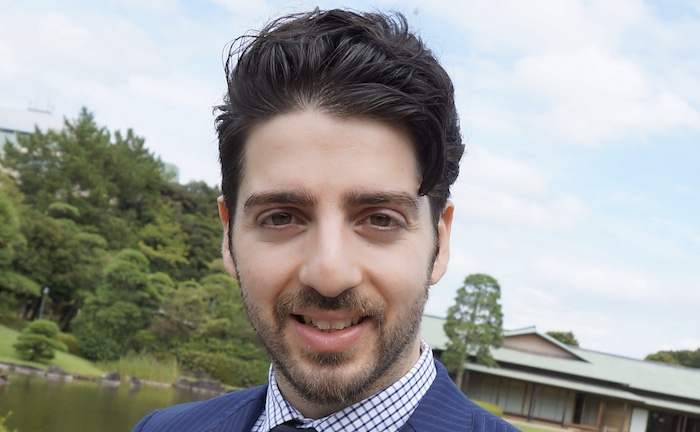
Dr Constantinos Yiallourides is Senior Lecturer in International Law at the Macquarie School of Law and Deputy Director of the Centre of Environmental Law. He also serves as Senior Research Fellow in Law of the Sea at the British Institute of International and Comparative Law (BIICL), where he leads the Institute’s research and training in the law of the sea and energy law. His research interests include the law of territory, the law of the sea, environmental and natural resources law, and the peaceful settlement of international disputes.
Get involved
If you have any questions, ideas, or potential projects related to the Forum for Maritime Justice, please contact Dr Laurence Atkin-Teillet:
laurence.atkin-teillet@ntu.ac.uk
Research Degrees in NLS
Our research degrees will enhance your employability whilst providing a stimulating and supportive learning environment for you to thrive as a researcher. We offer opportunities for PhD and Professional Doctorates, and a researcher support programme that prioritises your professional development.
Come and be a part of our world-leading research.