Role
Dr Lucy Clarke is a fluvial geomorphologist whose research addresses key environmental challenges through applied and collaborative science, spanning flood mitigation and nature‑based solutions alongside interdisciplinary work on climate resilience, heat vulnerability, environmental skills and teaching & learning. She is the ARES Nature Positive Chair at Nottingham Trent University, supporting strategic approaches to sustainability and environmental recovery. Her work combines geospatial data science, field‑based investigation and interdisciplinary collaboration to generate evidence that informs policy, supports practice and enables decision‑making on complex environmental challenges.
Her research spans environmental change, landscape dynamics and applied challenges such as flood management and resilience, alongside broader work on ecological systems and human-environment interactions. She uses a combination of field-based data collection and advanced remote sensing approaches (including UAVs/drones, photogrammetry, ground‑based photography and satellite imagery), alongside spatial mapping using Geographical Information Systems (GIS) to understand how environmental systems respond to both natural processes and human intervention. Working closely with academic partners, government agencies, practitioners and communities, her work is interdisciplinary and designed to support real‑world decision‑making.
A core focus of her work is advancing flood mitigation and resilience in the context of climate change. She develops and evaluates practical strategies that help communities adapt to increasing flood risk, including the design of nature‑based interventions and new approaches to communicating environmental risk and adaptation. Through this work, she strengthens connections between science, policy and practice, contributing to more sustainable and inclusive approaches to flood‑risk management.
Lucy teaches across Geography, Environmental Science, and Ecology & Conservation degree programmes. She supervises undergraduate dissertations and postgraduate research projects in ecology, environmental science and physical geography, with a focus on river processes, flood mitigation and the application of image analysis, remote sensing and GIS. She contributes to modules including:
- Level 4: Practical & Professional Skills (Module Leader)
- Level 4: Weather & Climate
- Level 4: Global Environmental Issues
- Level 5: GIS & Spatial Analysis (Module Leader)
- Level 5: Environmental Monitoring & GIS (Module Leader)
- Level 5: River Dynamics and Management (Module Leader)
- Level 5: Principles & Practice
- Level 6: Applications of Remote Sensing (Module Leader)
- Masters: Conservation Priorities
Career overview
Dr Lucy Clarke is a Senior Fellow of the Higher Education Academy (SFHEA) and a Chartered Geographer (Geomorphology) with the Royal Geographical Society, with over 20 years’ experience in research, teaching and professional practice in the geosciences.
She has a strong track record of teaching excellence, recognised through the award of a University Teaching Fellowship ( University of Gloucestershire), and is an established subject specialist in fluvial geomorphology and flood mitigation. Her professional standing is reflected in a range of external roles, including national trainer status for the Defra Biodiversity Metric River Condition Assessment and has membership of regional flood and catchment governance bodies, where she contributes to environmental management, policy and practice.
She holds a BSc (Hons) in Geography (Durham University), an MSc in Geography and Surveying (University of Otago, New Zealand) and a PhD in Geography (University of Exeter). Prior to joining Nottingham Trent University in 2023, she has held academic and research positions across a range of UK institutions including at the University of Gloucestershire, British Antarctic Survey, University of Hull, University of Dundee and University of Exeter.
Research areas
Dr Lucy Clarke’s research expertise spans fluvial geomorphology, nature‑based solutions, flood mitigation, geospatial data science and EDI (Equality, Diversity and Inclusion) in the geosciences. She is currently working on a range of externally funded projects, including the NERC Opening the Environment "Nottingham CITEES (connecting, inspiring, training, and employing environmental scientists)" (University of Nottingham, BGS, EA), British Academy International Interdisciplinary Fund "Women's Narratives of Heat and Climate Resilience in Informal Settlements in Bangladesh and Uganda" (Glasgow University, Makerere University: Uganda, Chittagong University: Bangladesh), and NERC Opening the Environment Phase 2 "C3ITEES: Connecting, Inspiring, Training, and Employing Environmental Scientists" (Loughborough University, BGS, University of Nottingham)
Her primarily research interests are in:
Nature‑based solutions and flood mitigation - Evaluating and implementing natural flood management and other nature‑based approaches to flood mitigation and sustainable catchment management. Investigating how flood risk is communicated, perceived and managed, including stakeholder engagement to support real‑world adaptation strategies.
Climate resilience, risk and adaptation - Investigating flood resilience alongside wider climate resilience challenges, including interdisciplinary research on heat vulnerability, flood perception and community-level resilience and adaptation to inform inclusive and context‑specific resilience strategies.
Fluvial systems, landscape dynamics and environmental change - Investigating river processes, landscape dynamics and freshwater environments, including responses to natural variability, climate change and human intervention.
Career progression, inclusion and skills development in the geosciences - Advancing research on career progression and success in environmental science alongside work addressing structural inequalities within the discipline. This includes investigating skills development and workforce needs, developing pathways that improve graduate retention and employability, and delivering initiatives that widen participation, support underrepresented groups and embed inclusive practices within geoscience research, training and career development.
Geospatial data science and environmental monitoring - applying spatial data analysis, remote sensing and field‑based methods to analyse environmental, ecological and human systems, generating actionable data to support interdisciplinary research and impact.
Opportunities to carry out postgraduate research towards an MPhil/PhD in these research areas exist and further information can be obtained from the NTU Graduate School.
External activity
Dr Clarke’s external activity is centred on collaborative, impact‑focused research that engages partners across academia, regulatory and charitable bodies and community organisations. She works to co‑produce research that informs flood‑risk management, mitigation and climate resilience, supporting evidence‑based decision‑making at catchment and regional scales. This includes her role as an independent member of the Trent Regional Flood and Coastal Committee (RFCC), where she contributes to strategic planning, investment decisions and innovation funding, alongside her involvement in the Lower Trent and Erewash catchment partnerships, supporting the development of integrated, place‑based approaches to environmental management and community resilience.
She contributes to disciplinary leadership and external networks through a range of strategic roles within learned societies and professional bodies. This includes serving as Chair of the British Society for Geomorphology (BSG) Research Committee, where she supports the development of national research priorities and funding initiatives, and as lead coordinator of the annual BSG Windsor Workshop PhD Training programme, delivering sector‑leading postgraduate research training. She also contributes to peer review, editorial processes and funding assessment, including her role on the Progress in Physical Geography editorial board (social media). This is alongside wider academic citizenship that supports research quality, governance and the development of the geosciences at national and international levels.
Her professional expertise is recognised through a range of appointed roles that support both education and practice. She serves as an external examiner for both undergraduate and postgraduate degree programmes at UK Higher Education institutions and delivers specialist training, including national training for the Royal Geographical Society (RGS-IBG) and the Defra Biodiversity Metric River Condition Assessment, contributing to skills development and professional standards within the environmental sector.
Press expertise
- Flood risk and climate resilience
- Nature‑based solutions for flooding
- UK flooding and community resilience
- River systems and environmental change
- Climate change impacts on landscapes
- Sustainable land and water management
- Geospatial data and environmental mapping
- Remote sensing for environmental monitoring
- Communicating environmental hazards
- Green skills and environmental careers
Course(s) I teach on
-
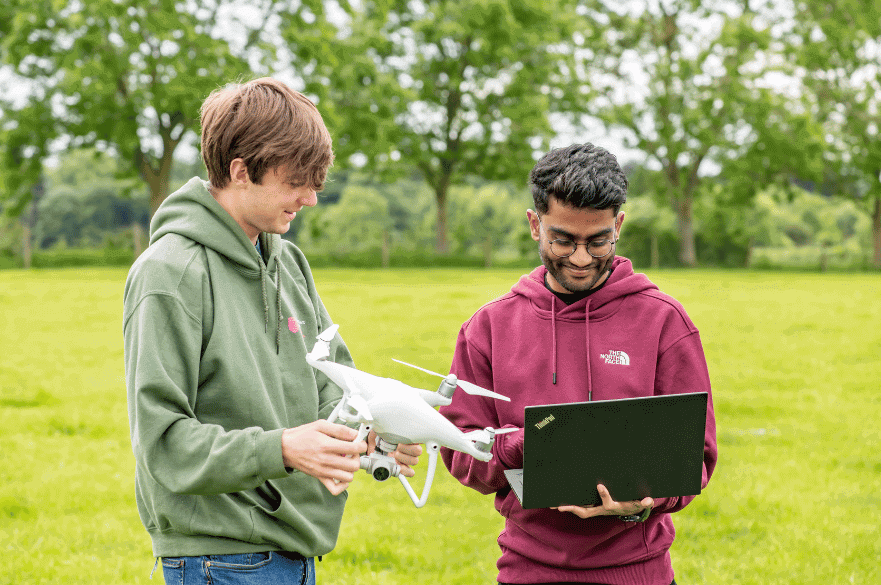 Undergraduate | Full-time / Sandwich
COURSE
Geography - BSc (Hons)
https://www.ntu.ac.uk/course/animal-rural-and-environmental-sciences/ug/bsc-hons-geography
-
 Undergraduate | Full-time / Sandwich
https://www.ntu.ac.uk/course/animal-rural-and-environmental-sciences/ug/bsc-hons-environmental-science
-
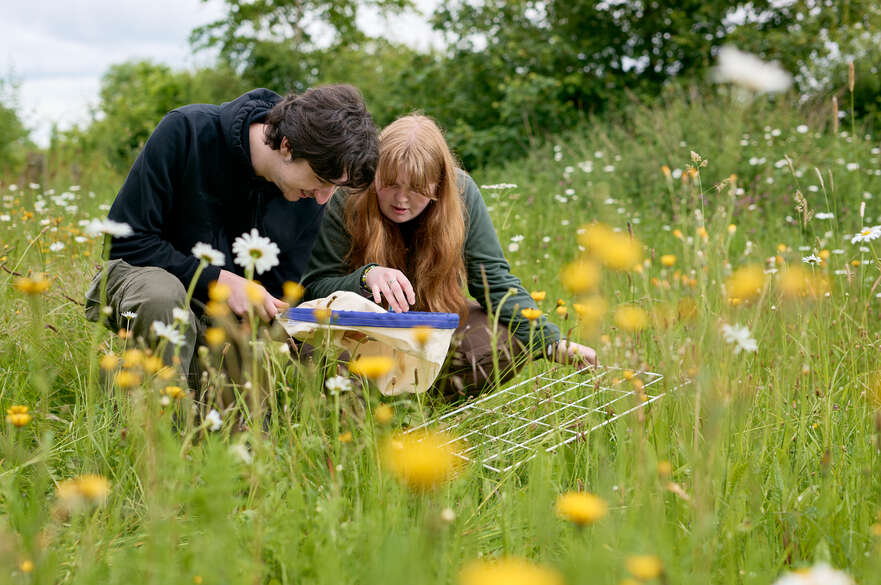 Undergraduate | Full-time / Sandwich
https://www.ntu.ac.uk/course/animal-rural-and-environmental-sciences/ug/bsc-hons-ecology-and-conservation
Lucy Clarke's work contributes to the UN Sustainable Development Goals, particularly SDG4 (Quality Education), SDG6 (Clean Water and Sanitation), SDG11 (Sustainable Cities and Communities) and SDG13 (Climate Action)