Role
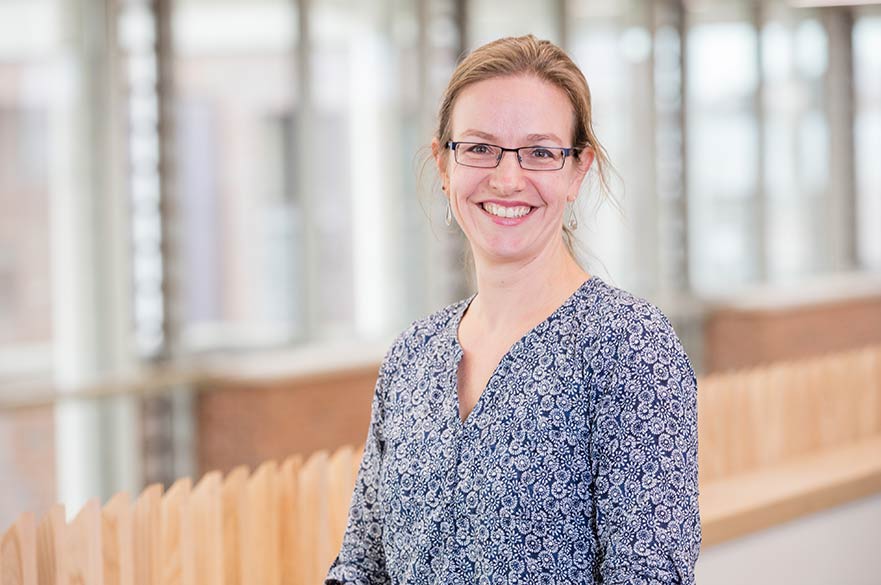
Professor Natalie Braber is a sociolinguist at Nottingham Trent University. She teaches in the School of Social Sciences within the subject area of Linguistics.
She works in the Nottingham Institute for Languages and Intercultural Communication (NILIC) and forms part of the Language, Identities and Institutions Research Group within the School's Centre for Research in Literature Linguistics and Culture.
Her teaching responsibilities are mainly in the area of sociolinguistics and language and heritage and she teaches on all levels of the BA English Language and Linguistics degree and Joint Honours Linguistics degrees:
- LING10523 Language, Society and Culture
- LING10223 Language in Everyday Life
- LING23323 Language and Local Communities (module leader)
- LING30525 Language and Heritage (module leader)
- LING30023 Major Project in Linguistics (module leader)
Natalie supervises PhD researchers and is happy to supervise research in the fields of language variation, language as heritage, accent discrimination, language and memory.
She co-leads AIMS@NTU (Advancing Interdisciplinary Memory Studies) and is the current chair of the Language, Discourse and Memory Working Group which forms part of the Memory Studies Association.
Career overview
Natalie joined NTU in 2005. Before this time, she completed her MA in German and PhD in German Linguistics from St Andrews University and worked as a post-doctoral researcher and lecturer at the University of Manchester.
Research areas
Her main interests are in the fields of sociolinguistics, language variation and language as heritage. These subject areas can be divided into more specific research interests, for example:
- Accents and dialects
- Language and identity
- ‘Pit Talk’ – language of East Midlands coal miners
- Language and Heritage
- Perceptual Dialectology
- Accent discrimination
Professor Braber is currently working on several projects relating to these research interests. In previous years, she was involved with projects examining language variation in the East Midlands, a highly under-researched subject. With the aid of several grants, Professor Braber collected data from around the East Midlands, examining language variation and studying the perception of variation within the area. Some of this work has shown that language varieties of the East Midlands are not easily recognisable.
Her research includes work on 'pit talk' in the region, and beyond. This variety of language, used by coal miners, is now disappearing following the closure of the last mine in 2015 and this language needs to be preserved for future generations. Working with mining heritage groups, this research incorporates poetry, creative writing, art and music to involve participation in this preservation. Recent funding from the AHRC-DFG resulted in a collaborative project entitled ‘Linguistic practices of coal mining communities in the post-industrial era’ which compares the language of coal miners in the East Midlands with the Ruhr Area in Germany.
Other projects involve collaboration with colleagues in Psychology and Law to examine earwitness testimony and accent discrimination. In cases where witnesses hear a perpetrator’s voice, but do not clearly see their face, they may be required to provide voice identification evidence at criminal trials. Voice identification evidence is error-prone, but can be decisive in court. Our work investigates both the ability of lay speakers to describe voices, and methods of improving the quality and accuracy of such descriptions. We also examine issues of accent discrimination among barristers, where sounding ‘posh’ is still often associated with this career path.
Natalie co-leads a further university-wide initiative aimed at bringing together NTU colleagues working in the field of Memory Studies. AIMS (Advancing Interdisciplinary Memory Studies) @ NTU has organised and continues to organise a range of events and projects building on the work of the NTU-led COST Action on Slow Memory with colleague Jenny Wüstenberg as its chair. She has organised the Oral History Conference and the Oral History Festival with a number of colleagues, including Chris Reynolds and Verusca Calabria at NTU.
External activity
Natalie has been external examiner at several UK universities and has acted as internal and external examiner for PhD vivas. She is on the editorial board for the book series Mobilizing Memories published by BRILL and also reviews journal articles, book chapters and grant application for a number of different bodies. Natalie often presents her work at international conferences and as invited speaker in both universities and wider interest groups.
She is part of UPEN which is the Universities Policy Engagement Network (UPEN), a central space for academics, policy actors, and professional services staff who undertake and support academic-policy engagement.
As part of her Impact Study work, she collaborates with a number of governmental, heritage and community associations, such as the DCMS, the British Deaf Association, UK UNESCO and a large number of museums, including National Museums Northern Ireland. Much of this work revolves around engaging community groups and organisations with Living Heritage and all information, including recent projects, signing the pledge and engaging with your language as heritage can be found on this website #Celebrating Languages and Dialects.
Sponsors and collaborators
- Arts and Humanities Research Council (AHRC)
- Economic and Social Research Council (ESRC)
- COST - European Cooperation in Science and Technology
- Arts Council
- British Academy
- National Lottery Heritage Fund
- British Association of Applied Linguistics (BAAL)
Natalie has also received significant funding from NTU which has allowed for continued collaboration around Living Heritage and engaging with language as a vehicle for heritage.
Publications
Natalie Braber and Jonnie Robinson (2018) East Midlands English. Berlin: Mouton de Gruyter.
Natalie Braber and Sandra Jansen (Eds.) (2018) Sociolinguistics in England. London: Palgrave Macmillan.
Natalie Braber (2018) Pit Talk in the East Midlands. In: N. Braber and S. Jansen (eds.) Sociolinguistics in England. London: Palgrave Macmillan, 243-274.
Natalie Braber (2018) Performing identity on screen: Language, identity, and humour in Scottish television comedy. In: R. Bassiouney (ed.) Dialect and identity performance. London: Routledge, 265-285.
Natalie Braber, Suzy Harrison and Claire Ashmore (2017) Pit Talk in the East Midlands. Sheffield: Bradwell Books.
Natalie Braber and David Amos (2017) Images of the Coalfields. Sheffield: Bradwell Books.
Natalie Braber and Diane Davies (2016) Using and creating oral history in dialect research. Oral History 44(1), 98-107.
Natalie Braber (2016) Dialect perception and identification in Nottingham. In: J. Cramer and C. Montgomery (eds.) Cityscapes and Perceptual Dialectology: Global Perspectives on Non-Linguists’ Knowledge of the Dialect Landscape. Berlin: Mouton de Gruyter, 209-231.
Natalie Braber; Louise Cummings and Liz Morrish (Eds.) (2015) Exploring Language and Linguistics. Cambridge: Cambridge University Press.
Natalie Braber (2015) Nottinghamshire Dialect. Sheffield: Bradwell Books.
Natalie Braber (2015) Sociolinguistics. In: N. Braber; L. Cummings and L. Morrish (eds.) Introduction to Language and Linguistics. Cambridge: Cambridge University Press, 274-298.
Natalie Braber & Nicholas Flynn (2015) ‘The East Midlands: Nottingham’. In R. Hickey (ed.) Researching Northern Englishes. Amsterdam: John Benjamins, 369-392.
Natalie Braber (2015) Language perception in the East Midlands. English Today 31(1), 16-26.
Natalie Braber (2014). The concept of identity in the East Midlands of England. English Today 30(2), 3-10.
Natalie Braber (2014) Representation of domestic violence in two British newspapers, The Guardian and The Sun, 2009-2011. English Language Research 1, 86-104.
Press expertise
Professor Braber is happy to comment on issues around language variation, accents and dialects of the East Midlands, language as heritage, accent discrimination, oral history and language and identity.
Press
-

NEWS
Campaign To Protect Local Lingo Launched By Academics In Nottingham
15 October 2025Cultural organisations across Notts – including museums, libraries, theatres, schools and more – are being asked to sign a pledge to protect the local lingo.
ntu.ac.uk/about-us/news/news-articles/2025/10/campaign-to-protect-local-lingo-launched-by-academics-in-nottingham
-

NEWS
Roundtable: Engaging with Language as Heritage
12 October 2022Roundtable: Engaging with Language as Heritage
ntu.ac.uk/about-us/news/news-articles/2022/10/celebrating-notts-language
Course(s) I teach on
-
 Undergraduate | Full-time / Part-time (day) / Sandwich
https://www.ntu.ac.uk/course/arts-and-humanities/ug/english-language-and-linguistics