
Role
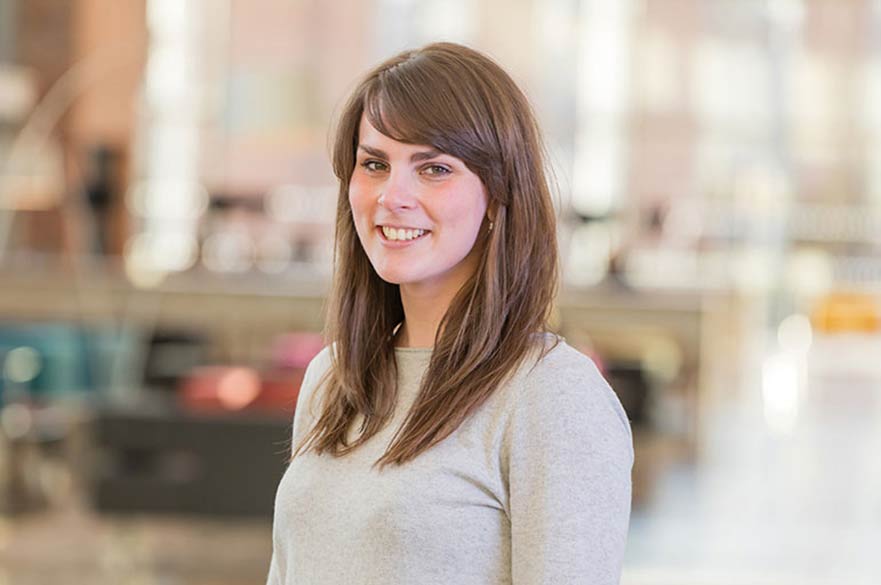
Dr Karah Dring is a Senior Lecturer in Exercise and Health in the Department of Sport Science within the School of Science and Technology.
Dr Dring joined NTU as a Lecturer in 2019 teaching exercise and health related modules across the undergraduate degree programmes. Karah teaches predominantly on the BSc. Sport Science, Health and Nutrition degree programme.
Dr Dring's research expertise includes examining the potential for physical activity to enhance the cardiometabolic health, cognitive function and academic achievement of young people, specifically those with ADHD, and those living with socio-economic disadvantage.
Extending upon her research in physical activity and health, Dr Dring has more recently commenced a programme of research examining the potential for outdoor, woodland mum-and-baby groups to improve the mental health, well-being, and physical activity levels of postpartum mums, including those living with socioeconomic disadvantage.
Dr Dring is also the Physical Activity and Health Across the Lifespan (PAHAL) Research Group lead, supporting her colleagues within the field of exercise and health to produce high quality research outputs that have the potential to create impact for those who need it most within our communities.
Career overview
Dr Dring completed her BSc in Sport and Exercise Science at Nottingham Trent University, before going on to complete a MSc in Integrated Physiology in Health and Disease at the University of Nottingham.
Following this, Karah returned to NTU to undertake her PhD, which examined the benefits of physical activity for adolescent cardiometabolic health and physical fitness.
During her time at NTU as a Senior Lecturer, Karah has been successful in producing high quality research within her field (physical activity for the cardiometabolic health and cognition of young people and their families). To support her research, Karah has been successful in obtaining ~£300,000 of external grant income (including £210,000 as Principal Lecturer), with all projects running on time and to budget. For her research success, Dr Dring won the Vice Chancellor Research Excellence Award in 2023/24.
Karah also leads the Physical Activity and Health Across the Lifespan Research Group. Through this role Karah supports colleagues and postgraduate researchers to develop their research skills to produce high-quality research outputs, secure external grant funding and improve the impact of the research outputs.
Dr Dring also manages several PhD candidates, as both Director of Studies and Co-Supervisor. Students include those with university funding and those opting to self-fund.
Research areas
Dr Dring is a member of the Sport, Health and Performance Enhancement (SHAPE) Research Group. Her research interests include:
- Potential for physical activity to enhance the cardiometabolic health and cognitive function of young people and their families.
- Specialist interest in the power of physical activity for young people with ADHD, and those living with socio-economic disadvantage.
- The potential for forest schools and woodland groups to support the mental health of parents, and the development of young people.
Sponsors and collaborators
Internal Collaborators:
Dr Simon Cooper, Dr John Morris, Dr Caroline Sunderland, Dr Ryan Williams, Dr Ruth Boat, Dr Grace Walters, and Dr Robert Needham.
External Collaborators
- John van Geest Cancer Research Centre
- Nottingham City Council Childhood Obesity Working Group
- Active Notts and Active Derbyshire
- The Waterloo Foundation
- Rosetrees Trust
Publications
Selected publications:
Small, C., Walters, G., Fountain, S., Dring, K., Bowes, A., Cooper, S., & Williams, R. (2026). Perceptions of Physical Activity and Kin-Ball in Low-Active Adolescent Girls From Areas of Socioeconomic Disadvantage: A Mixed Methods Study. Research Quarterly for Exercise and Sport, 1-11.
Dunn, A., Williams, R. A., Dring, K. J., Cooper, S. B., & Boat, R. (2026). Examining the associations of self-control with physical fitness, cardiometabolic health, and well-being in young people aged 9–13 years. Frontiers in Cognition, 5, 1755134.
Walters, G., Dring, K. J., Williams, R. A., Needham, R., & Cooper, S. B. (2025). Outdoor physical activity is more beneficial than indoor physical activity for cognition in young people. Physiology & Behavior, 295, 114888.
Fountain, S. M., Cooper, S. B., Williams, R. A., Sunderland, C., Bowes, A., & Dring, K. J. (2025). Barriers, facilitators, and factors influencing the perceived feasibility of family-based physical activity: the role of socioeconomic status. Advanced Exercise and Health Science.
Walters, G. W., Taylor, S., Sweeney, E. L., Cooper, S. B., Williams, R. A., & Dring, K. J. (2024). Effect of an acute bout of exercise on executive function and sleep in children with attention deficit hyperactivity disorder and autism spectrum disorder. Mental Health and Physical Activity, 27, 100624.
Gilbert, L. M., Dring, K. J., Williams, R. A., Boat, R., Sunderland, C., Morris, J. G., ... & Cooper, S. B. (2023). Effects of a games-based physical education lesson on cognitive function in adolescents. Frontiers in Psychology, 14, 1098861.
Dring, K. J., Hatch, L. M., Williams, R. A., Morris, J. G., Sunderland, C., Nevill, M. E., & Cooper, S. B. (2022). Effect of 5-weeks participation in The Daily Mile on cognitive function, physical fitness, and body composition in children. Scientific Reports, 12(1), 14309.
Press expertise
- Physical Activity and Health in Young People
- Physical Activity and Cognitive Function in Young People
- Specialist populations include those with ADHD and Autism, and those living with socio-economic disadvantage