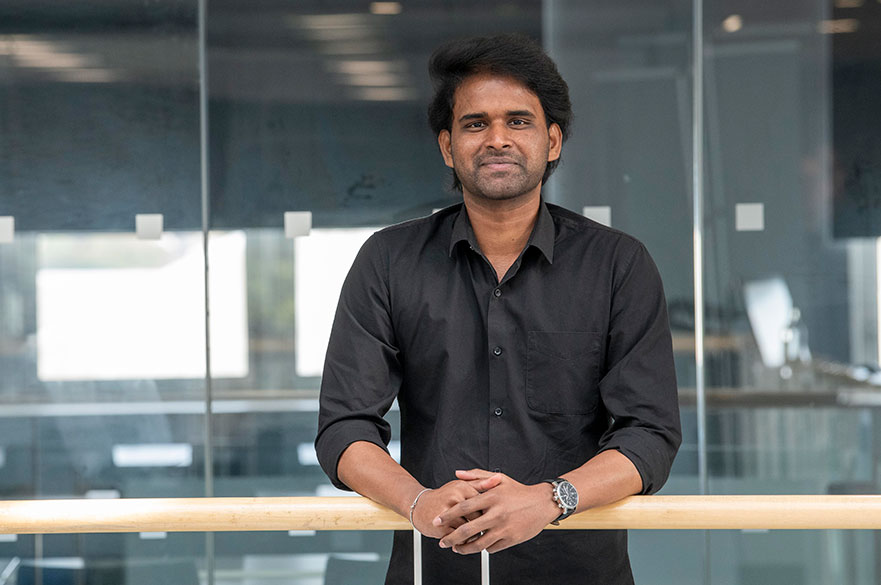
The MBA has fundamentally shifted how I see myself as a leader. I came in thinking I was collaborative, but the reflective work forced me to admit that my 'efficiency' was actually control, and that honesty has changed how I listen and make decisions.
More about Ravi
What motivated you to pursue an MBA, and why did you choose Nottingham Business School?
I pursued an MBA to deliberately shift from a technical engineering role into business leadership because I realised my strengths in coordination and communication were being underused. I wanted to understand strategy, finance and people management, not just hardware. I chose Nottingham Business School because its MBA is built around self-awareness and critical reflection, not just frameworks; the focus on leadership development and change management was exactly what I needed to interrogate my own controlling habits and become a more effective, honest leader.
Tell us about your career/work experience before joining the MBA.
Before the MBA, I spent four years as a Senior Hardware Engineer at VVDN Technologies, where I coordinated cross-functional teams, managed vendor procurement and simplified technical information for non-technical stakeholders, directly improving work efficiency by 10%. I also mentored junior engineers, which taught me that I enjoyed developing people more than purely technical work. That experience made me realise I needed formal business education to move from engineering into operations and supply chain leadership, which is why I pursued the MBA.
What motivated you to study in the UK, and how did you find settling in?
I chose the UK because its MBA programmes combine academic rigour with a strong emphasis on reflective leadership and employability, and Nottingham Business School specifically offered the practical, self-aware approach I was looking for. Settling in was not easy at first. Moving from India to a new academic culture meant adapting to different expectations around independent learning and speaking up in class, but the University’s support structures and the diverse MBA cohort helped me build a routine and feel at home within the first few months.
Which aspects of the NBS MBA programme have you found most valuable, and why?
The most valuable aspect has been the Professional Leadership Development module’s focus on critical self-reflection. It forced me to confront that my 'efficiency-first' style was actually control, which no other module would have surfaced. The practical simulations, like the crisis leadership exercise, taught me more about decision-making under pressure than any lecture could. The MBA also gave me the frameworks and confidence to secure my Siemens Energy internship, which has been the real proving ground for everything I’ve learned.
What academic, professional, or careers support have you found most helpful as an MBA student?
Have you taken part in any consulting projects, study trips, work placements or experiential learning opportunities? What have you gained from these?
Yes. I completed a consulting-style project with Priory Trust, assessing their readiness for AI adoption and designing a phased roadmap, which taught me to treat resistance as a signal to investigate rather than a problem to overcome. I also took part in experiential simulations, including a crisis leadership exercise in which I played both Medical and Finance roles. This showed me the emotional weight of trade-offs and the need for composure under pressure. Most significantly, I am currently on a work placement as a Supply Chain Intern at Siemens Energy, where I am applying my VVDN coordination experience and MBA learning to real operational challenges, and discovering how much more I still need to develop in data fluency and upward influence.
How has the MBA contributed to your personal and/or professional growth?
The MBA has fundamentally shifted how I see myself as a leader. I came in thinking I was collaborative, but the reflective work forced me to admit that my 'efficiency' was actually control, and that honesty has changed how I listen and make decisions. Professionally, it gave me the language and confidence to transition from engineering into supply chain, and the Siemens Energy internship is proof that the behavioural changes I practised actually work in a real business context. Most importantly, it taught me that leadership is not about having the answers; it is about creating the conditions for others to succeed, and that is a lesson I will carry into every role.
How has the NBS MBA network influenced your learning, career, or professional opportunities?
What advice would you give to someone considering the MBA at Nottingham Business School?
Be ready to change how you see yourself. The NBS MBA is not just about frameworks; it is about confronting uncomfortable truths about your leadership, and if you engage honestly with the reflective work, it will change you. Use the diagnostic tools and coaching sessions properly, not just as assignments. They are the fastest route to understanding your blind spots. And take every opportunity to apply your learning in real contexts, whether through consulting projects, internships, or simply how you behave in group work, because that is where the development actually happens. Build your network deliberately, ask for honest feedback, and do not wait until assessment time to start reflecting.
What advice would you give new international MBA students?
Be prepared for the discomfort of adapting. Academic culture, communication styles and even small things like speaking up in class will feel different, so give yourself time and ask for help early rather than pretending you are fine. Use the support available, including academic mentors, employability teams and your cohort, because trying to figure everything out alone is the fastest way to struggle. Start building your network and reflecting on your goals from day one, not in the final term, because the students who settle in best are the ones who treat the MBA as a live experience rather than a series of assignments.
Still need help?
-
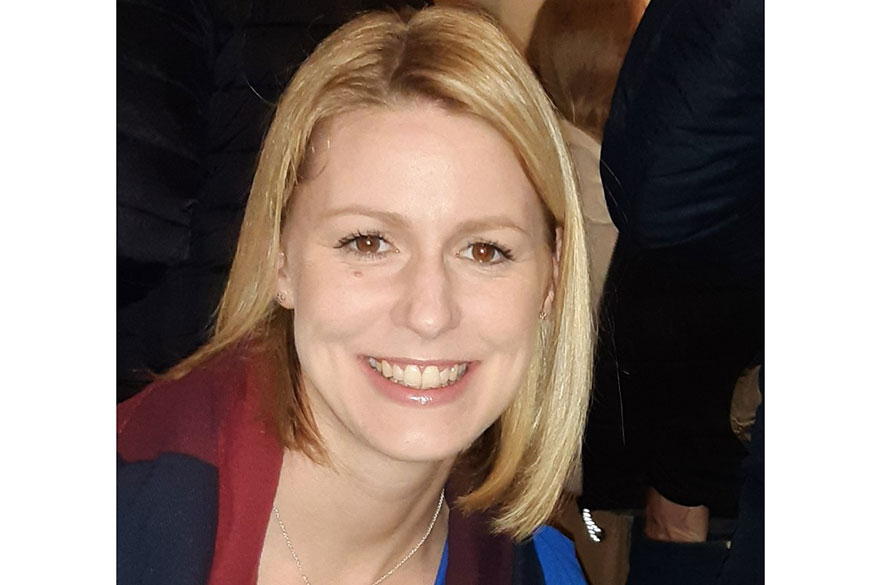
STUDENT PROFILE
Alexandra Phillips
Global Executive Master of Business AdministrationUnited Kingdom
https://www.ntu.ac.uk/study-and-courses/courses/our-students-stories/business/alexandra-phillips
-

STUDENT PROFILE
Aanchal Singh
Master of Business AdministrationIndia
https://www.ntu.ac.uk/study-and-courses/courses/our-students-stories/business/aanchal-singh
-

STUDENT PROFILE
Alex Natale
Global Executive Master of Business AdministrationUnited Kingdom
https://www.ntu.ac.uk/study-and-courses/courses/our-students-stories/business/alex-natale