How wearing smart textiles could transform health and safety for people with additional needs
A bra that monitors breast health, a vest that detects temperature changes and a pillow that vibrates during emergencies. Discover how Nottingham Trent University researchers are developing smart textiles and wearable technology to improve health, safety and accessibility.
By Julia Head | Published on 9 October 2026
Categories: Press office; Research; School of Art & Design;
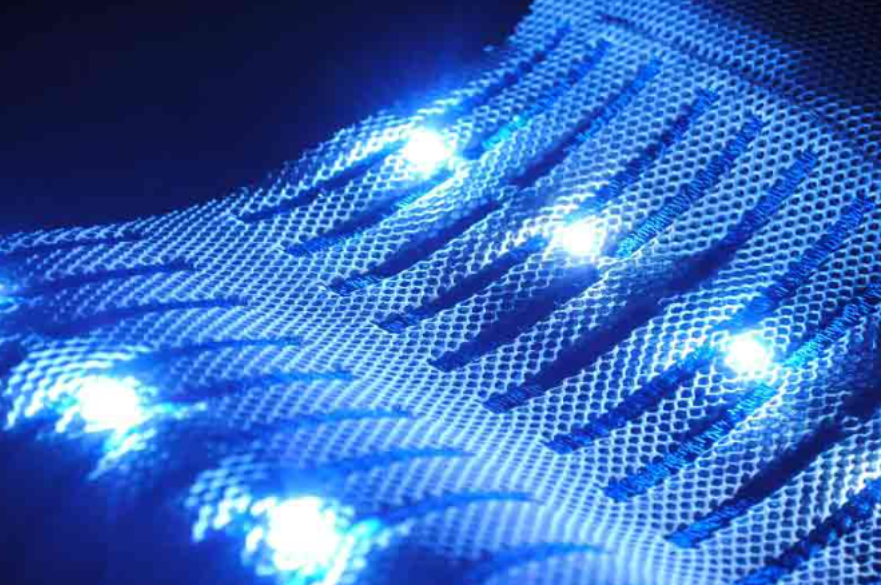
A bra, a vest, a sock, a pillow and a pair of gloves might seem unlikely places to find technology tackling serious health, safety and communication problems.
But at Nottingham Trent University (NTU), we are exploring how embedding sensors and electronic components into familiar textiles could help monitor changes in the body, provide vital warnings and communicate information through touch.
The studies have very different purposes, but they start from a similar question: how can we make technology work better for people who may face barriers with existing healthcare, warning systems or ways of accessing information?
The answer is leading us to rethink familiar objects. A bra could provide additional monitoring for changes in breast tissue. A vest could detect changes in an older person's body temperature, or a pillow could wake a Deaf person when an alarm sounds, while a pair of gloves could turn spoken information into vibrations that a deafblind person can feel.
Rather than asking people to adapt to another device, our research explores how sensors, electronics and haptic technology can be built into textiles people already wear or use.
What you need to know
- Our smart and electronic textiles research is developing everyday items such as clothing, pillows and gloves into technologies that can monitor health or communicate information.
- A smart bra could help monitor breast tissue in women with intellectual disabilities, while a sensor-embedded vest could warn older people at risk of hypothermia.
- A vibrating pillow sleeve could wake Deaf people when fire or burglar alarms sound, without requiring a bulky device beneath the pillow.
- Electronic textile gloves could help deafblind people understand spoken conversations by translating information into vibrations they can feel through their fingers.
Making night-time alarms safer for Deaf people
For Deaf people, being alerted to a fire or burglar alarm while asleep can require technology that does not rely on sound.
Existing systems can include vibrating devices placed beneath a pillow, but feedback from members of the Deaf community identified a practical problem: sleeping with a bulky object under a pillow can be uncomfortable.
That experience helped shape our research into a different solution.
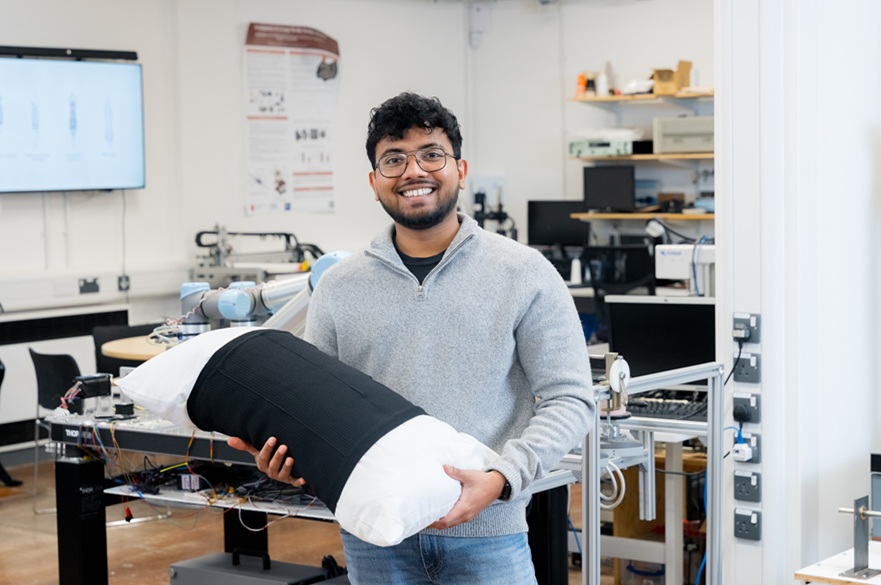
PhD researcher Malindu Ehelagasthenna, from the Nottingham School of Art & Design, developed an electronic textile sleeve that fits over a standard pillow and sits beneath an ordinary pillowcase.
Four tiny haptic actuators are embedded into yarn-like structures within the sleeve. They cannot normally be felt by the person sleeping on the pillow, but can vibrate strongly enough to wake them when an alarm is triggered.
The system could connect wirelessly to alarms and other household technology. Different vibration patterns could then tell the sleeper whether a fire alarm or burglar alarm is sounding, or whether they are receiving a phone call.
The design demonstrates why understanding how people will actually use a technology can be as important as developing the electronics behind it.
The textile has undergone repeated washing and durability testing, while our research team is seeking an industrial partner to help develop the technology further.
It also provides a clear example of a wider principle running through our smart textiles research – starting with a specific problem experienced by users and considering how wearable tech can fit more naturally into their lives.
A video interview about the smart vest
Monitoring health risks through everyday clothing
We are applying the same approach to health risks faced by older people, including hypothermia and falls.
Research led by Dr Theo Hughes-Riley, Associate Professor in NTU’s Advanced Textiles Research Group (ATRG), has developed a smart vest that monitors body temperature and could identify when an older person is at risk of hypothermia.
Four miniature temperature sensors, known as thermistors, are incorporated into yarns. Each measures just 1mm long and 0.5mm wide, with two positioned around the chest and two around the shoulder blades.
The sensors can transmit real-time information via Bluetooth to a mobile phone or another device, and if abnormal temperature readings persist, the technology could potentially raise an alert.
Our researchers have also explored how electronic textiles could help identify when an older person is at increased risk of falling.
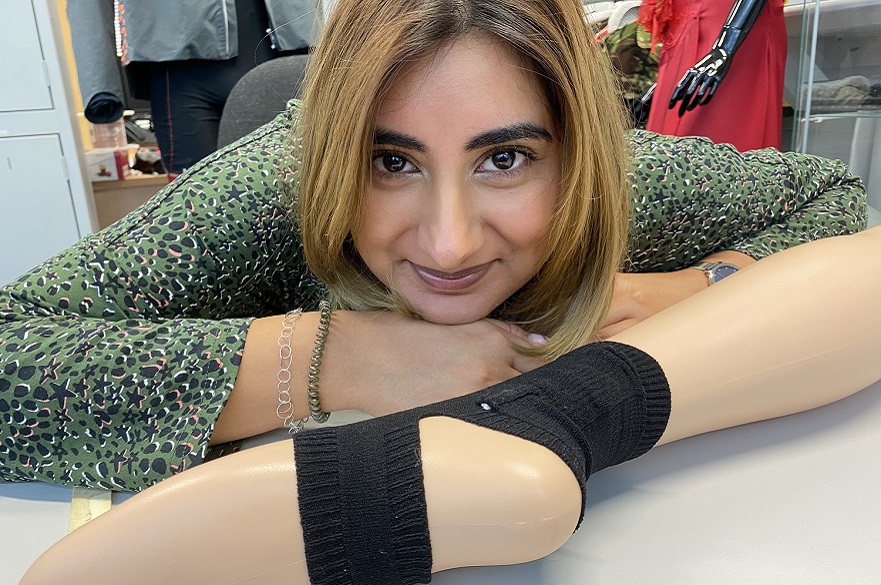
A prototype smart over-sock developed through Zahra Rahemtulla's PhD research contains a tiny motion sensor embedded in the yarn at the ankle. An algorithm processes movement data to distinguish between falls and near-falls, such as slips, trips and stumbles.
In human trials, the technology detected falls with 99.4% accuracy and near-falls with 94.2% accuracy. The aim is for information about near-falls to help carers and healthcare professionals identify an increased risk before a more serious fall occurs.
These projects also have to address the practical demands of turning electronic technology into something people can wear. Sensors need to remain accurate as the wearer moves, while the textiles need to be comfortable and withstand everyday use and washing.
For the hypothermia vest, our researchers have tested the prototype during movements including sitting, walking, jumping and reaching. In the smart sock, the electronic circuitry is small enough not to be felt by the wearer, while the motion sensor is encapsulated in resin so the textile can be washed.
In both cases, the aim is to make monitoring part of familiar clothing rather than requiring the wearer to continually operate a separate device.
Could a smart bra help detect breast cancer earlier?
For women with intellectual disabilities, we are also investigating whether electronic textiles could provide an additional way to monitor for breast cancer.
Women with intellectual disabilities have a lower incidence of breast cancer but significantly higher mortality rates and can face barriers in accessing current screening methods.
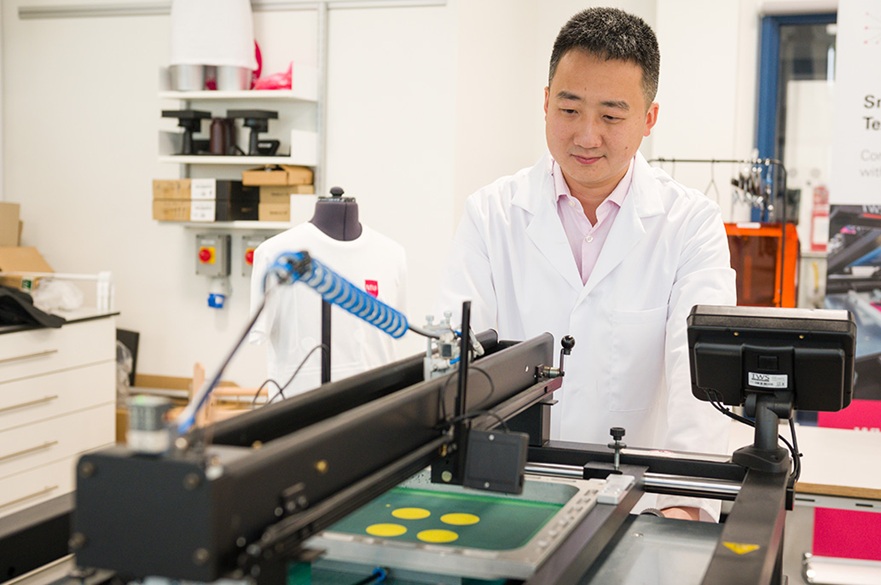
The research is led at NTU by Professor Yang Wei, an expert in electronic textiles and electronic engineering, working with colleagues at NTU and the University of Glasgow. With funding from Cancer Research UK, the team is developing an electronic textile that could fit inside a bra and monitor changes in breast tissue over time.
The technology uses an electrical current to identify subtle differences between tissues. Tumours tend to be denser and contain less water than healthy tissue, and our researchers believe the system could potentially identify growths as small as 5mm.
Information recorded by the device can be sent to a smartphone and made available to the wearer, carers and clinicians. Changes that indicate a potential risk can then prompt further investigation, such as an MRI or another scan, however the product is intended to provide additional monitoring rather than replace existing breast screening.
How that monitoring is delivered is an important part of our research.
The technology could eventually take the form of an insert placed inside an existing bra or be incorporated into a specially designed garment. Women with intellectual disabilities, carers and healthcare professionals are being involved in the design process so that usability is considered alongside the technology's effectiveness.
That involvement is important because a technically effective healthcare device will have limited value if the people it is intended to support find it difficult or uncomfortable to use.
Our research therefore brings together the challenge of detecting physical changes in the body with the equally important question of how monitoring can be designed around people who experience barriers to existing healthcare.
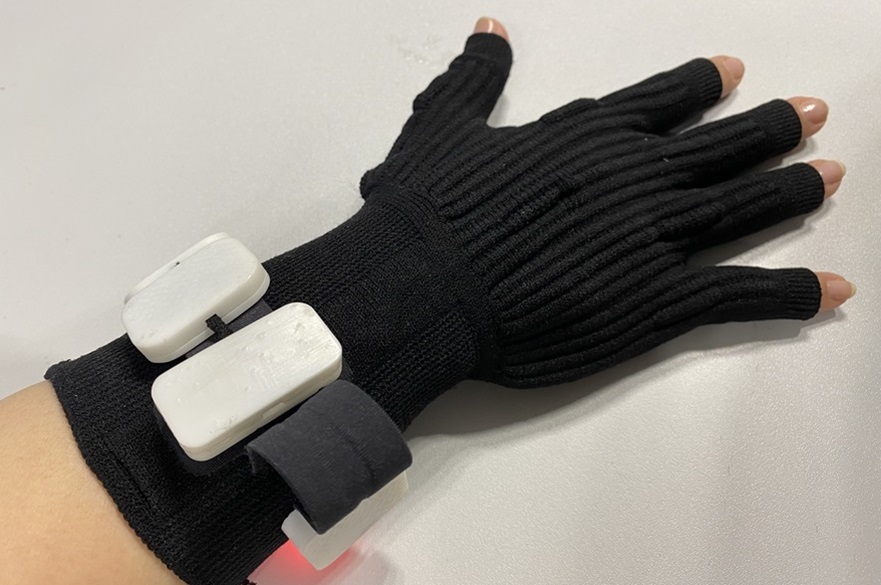
Using touch to help deafblind people understand conversations
We are also exploring how smart textiles can do more than monitor the body and how they could provide a new way to receive information.
Our researchers are developing electronic textile gloves designed to help people who are deafblind understand live spoken conversations through touch.
The prototype could combine AI with tiny haptic actuators incorporated into the gloves. The proposed system would use AI to interpret and summarise spoken conversations, with the information then communicated through vibrations delivered to the wearer's fingers.
By varying the amplitude, frequency and duration of the vibrations, we are investigating whether a tactile system could communicate words, numbers and grammar.
The potential application goes beyond a conversation between two people – our researchers envisage tactile information being used to communicate directions and notifications, including doorbells and fire alarms, where the technology could also potentially help communicate interpretations of music and visual art.
It could therefore offer another way for deafblind people to receive information while moving through physical environments, where communication cannot always be delivered through a screen.
The project is based on a working prototype and remains in development, but it points to a different role for electronic textiles.
In the hypothermia vest and breast-monitoring research, the textile receives information from the body. In the gloves, that relationship is reversed: the textile becomes a way of delivering information to the person wearing it.
Monitoring breathing with a wearable sticker
Changes in breathing can provide an early warning that someone's health is deteriorating.
Our researchers have helped develop a wearable sticker that can monitor breathing rates and detect changes, even without direct contact with the skin.
The device uses sensors to detect subtle movements associated with breathing. It is designed to offer a less intrusive way of monitoring patients, whether in healthcare settings or at home.
In testing, the technology measured breathing rates to within two breaths per minute. The research team hopes it could eventually help healthcare professionals identify signs of declining health earlier, allowing them to respond before a patient's condition becomes more serious.
The technology remains in development, but it demonstrates how wearable sensors could make regular health monitoring more practical.
Using smart dressings to monitor chronic wounds
Smart textiles could also change how chronic wounds are monitored.
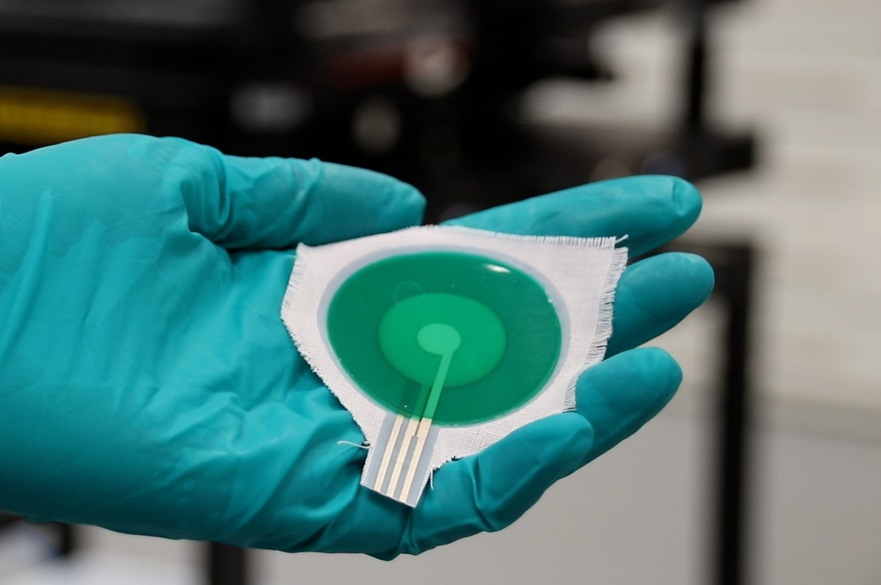
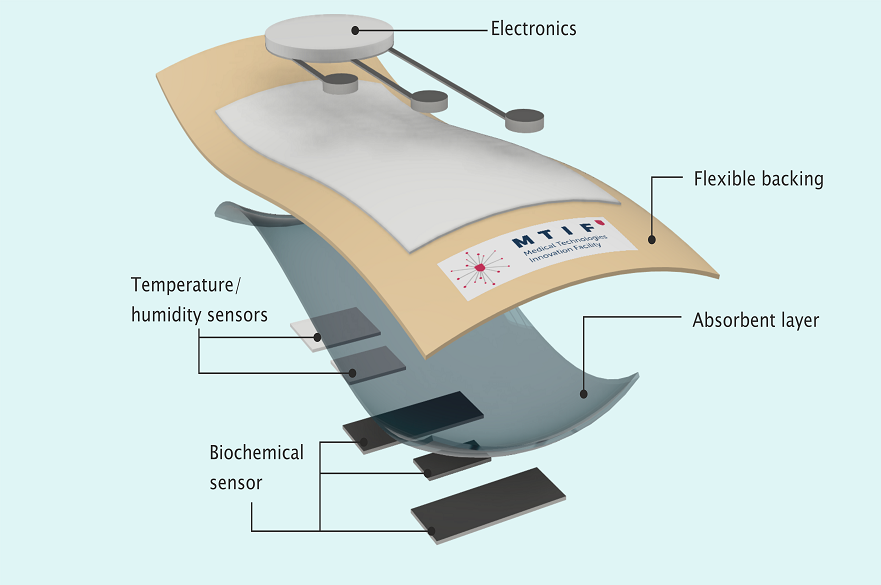
Our researchers are developing a smart dressing that uses sensors printed onto textile materials to detect changes associated with wound healing.
The sensors are designed to monitor proteins linked to the condition of a wound, potentially giving healthcare professionals useful information about whether healing is progressing or further treatment may be needed.
By incorporating the sensors into a flexible, breathable dressing, the research aims to make monitoring possible without repeatedly removing the dressing to examine the wound.
The longer-term goal is to support remote monitoring, helping patients and clinicians track wound conditions and identify potential problems earlier.
Across these projects, our researchers are exploring how technology can become part of objects people already wear and use.
Developing the technology is only one part of that process. Smart textiles also need to be comfortable, durable and reliable in everyday situations, whether that means surviving repeated washing, monitoring someone as they move or delivering information through touch.
These practical considerations are shaping our research from the outset. Feedback from Deaf people has informed the vibrating pillow sleeve, while women with intellectual disabilities, carers and healthcare professionals are helping shape the breast-monitoring technology.
Further testing and collaboration with industry will be needed to bring some of these prototypes into wider use. But together, the projects demonstrate how textiles could play a more active role in monitoring health, providing warnings and helping people communicate.
Watch how researchers at Nottingham Trent University’s Advanced Textile Research Group embed electronics into yarn to create soft, washable textiles with powerful sensing capabilities.
Researchers Revealed – meet our researchers
Forget lab coats and research papers. It's time to get personal. Meet the people behind the research and uncover fascinating truths about their experiences.