Intercropping could improve animal feed and reduce environmental impact
Intercropping – the agricultural practice of growing two or more crops together – could improve the amount and quality of livestock feeds while reducing environmental impact, a new study suggests.
By Dave Rogers | Published on 4 November 2026
Categories: Press office; Research; School of Animal, Rural and Environmental Sciences;
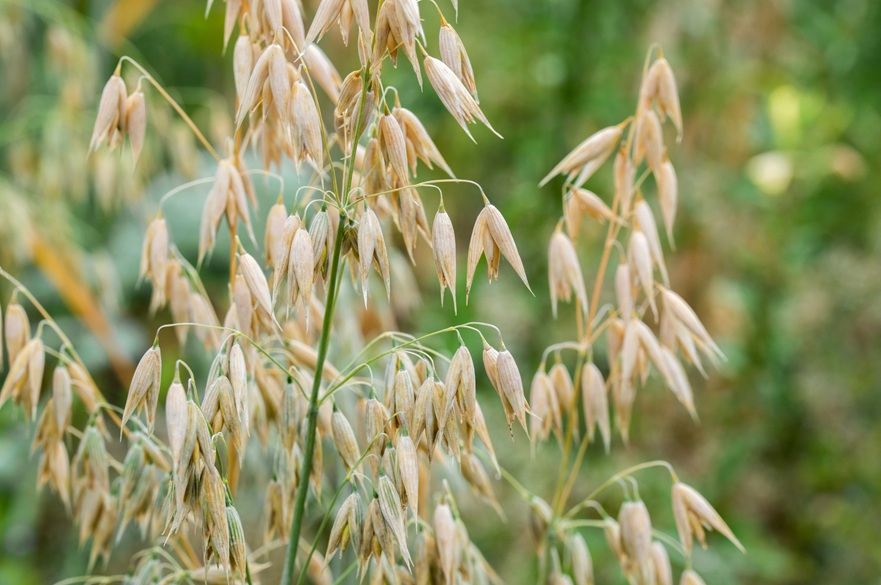
Scientists at Nottingham Trent University, the International Centre for Agricultural Research in the Dry Areas (ICARDA) in Ethiopia and Ethiopia’s Jimma University, wanted to explore the benefits of growing oats and alfalfa together, as opposed to separately, and without irrigation or fertiliser.
The research aimed to go beyond conventional feed evaluation by considering not only the nutritional and fermentation characteristics, but also the potential contribution to animal growth and greenhouse gas production.
The research team evaluated sole oat, sole alfalfa, and oat-alfalfa seed ratios of 3:1, 1:1, and 1:3 under strict rainfed, low-input conditions with no fertilization and found that growing in equal proportions produced the best overall results, increasing forage yields and nutritional value, while also improving soil properties.
The 1:1 intercrops produced 21% more dry matter – the total weight of the crop after water is removed – than oats grown in a monoculture, the study revealed.
The 1:1 intercrop also had a more balanced nutritional profile, yielding higher levels of crude protein and metabolizable energy, alongside reduced neutral detergent fibre which is important for animal nutrition. It also produced better-quality silage with demonstrated superior sensory quality, lower gas and effluent losses, a lower final pH, and a higher dry matter recovery rate during fermentation, it was found.
Following the study, post-harvest soil analysis showed that where the 1:1 intercrop had been grown, there was an increase in organic carbon, total nitrogen, available phosphorus, and cation exchange capacity, improving its overall quality.
The team predicted that a 1:1 ratio oats and alfalfa intercrop could reduce greenhouse gas emissions per unit of potential livestock weight gain by 37- 47% compared with growing either crop alone, for both hay and silage.
Dr Ashraf Alkhtib, a Senior Research Fellow in Nottingham Trent University’s School of Animal, Rural and Environmental Sciences, said: “Growing oats and alfalfa together, particularly in equal proportions, could offer a promising way to produce more nutritious animal feed while improving soil fertility and reducing predicted emissions in low-input farming systems.”
Dr Jane Wamatu, Senior Scientist at the International Centre of Agricultural Research in Dry Areas, added: “By integrating crop management, feed quality and predicted environmental performance, the research provides a new framework for identifying sustainable livestock strategies.”
The research, which emerged from a Memorandum of Understanding between NTU and ICARDA, is published in the Journal of the Science of Food and Agriculture.
Notes for Editors
Press enquiries please contact Dave Rogers, Public Relations Manager, on telephone +44 (0)115 848 8782, or via email.
About Nottingham Trent University
Nottingham Trent University (NTU) has been named UK ‘University of the Year’ five times in six years, (Times Higher Education Awards 2017, The Guardian University Awards 2019, The Times and Sunday Times 2018 and 2023, Whatuni Student Choice Awards 2023) and is consistently one of the top performing modern universities in the UK.
Students have voted us first in the UK for course quality, top five in the UK for employability and third best University in the UK (Uni Compare 2027). We are ranked in the top 25 universities in the country (The Guardian University Guide 2026).
We have over 35,000 students and more than 4,000 staff located across five campuses. It has an international student population of over 5,000 and an NTU community representing over 160 countries.
NTU owns two Queen’s Anniversary Prizes for outstanding achievements in research (2015, 2021). The Research Excellence Framework (2021) classed 83% of NTU’s research activity as either world-leading or internationally excellent.
NTU was awarded GOLD in the national 2023 Teaching Excellence Framework (TEF) assessment.
NTU is a top 10 for sport (British Universities and Colleges Sport league table 2025) and was named as Sports University of the Year (Daily Mail University Guide 2025).
NTU is a holder of the University Mental Health Charter, recognising the commitment an institution has shown towards continuous improvement in the area of mental health and wellbeing.
NTU is the most environmentally sustainable university in the UK and third in the world (UI Green Metric University World Rankings, 2025).