Advancing SDG 4 in Eastern Africa
A high-level roundtable discussion, titled “The Role of Non-State and Private Schools in Achieving SDG 4”, was held on 15 April 2026 at Strathmore University’s Centre for Policy Innovation in Nairobi, Kenya. The roundtable examined the role of Non-State Schools in advancing SDG 4 (Quality Education).
Published on 5 May 2026
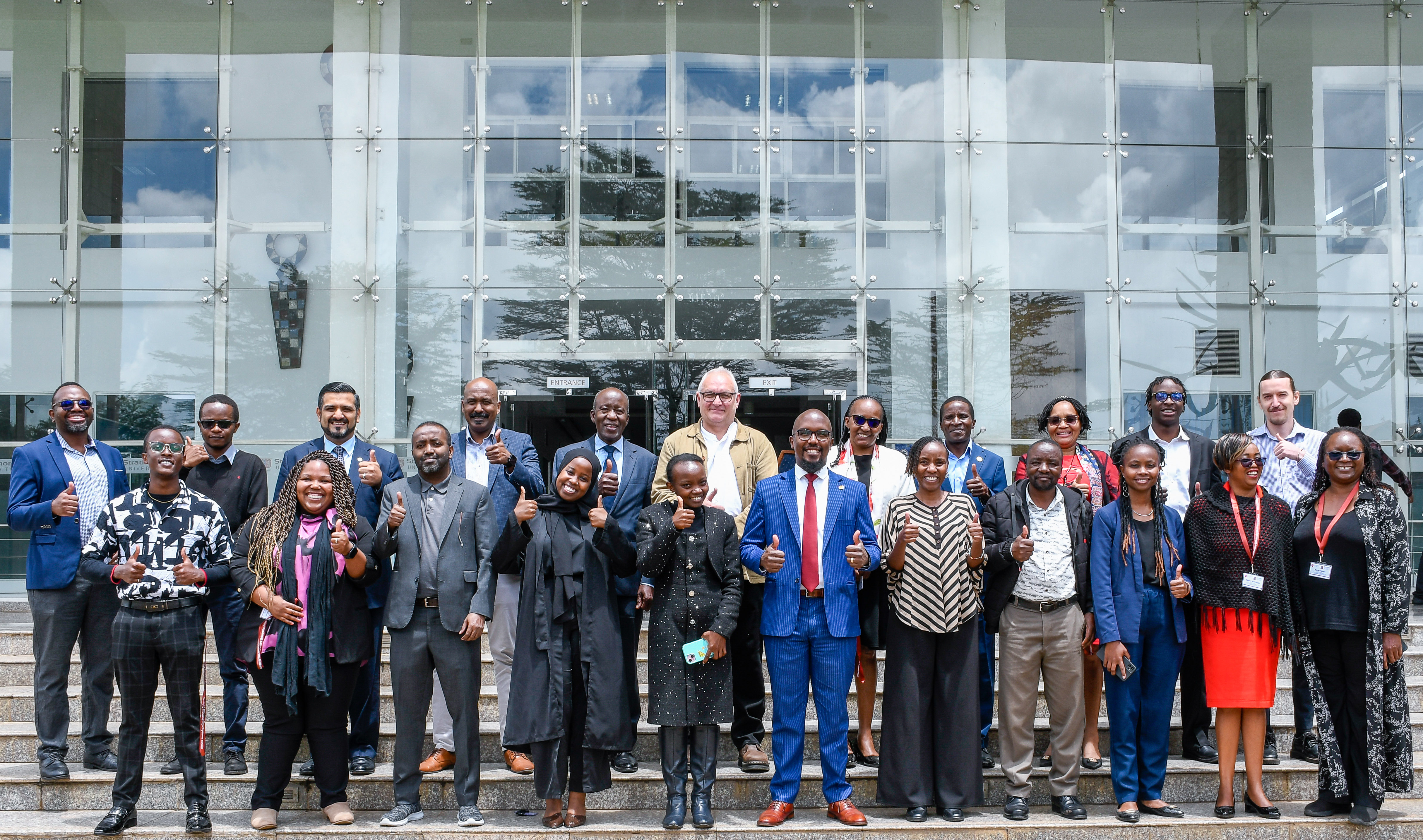
Overview
The event, co-hosted by Strathmore University and Nottingham Trent University (NTU), brought together researchers, education practitioners, policymakers, community leaders, and youth representatives to reflect on the contributions of non-state education providers to inclusive, quality education in East Africa.
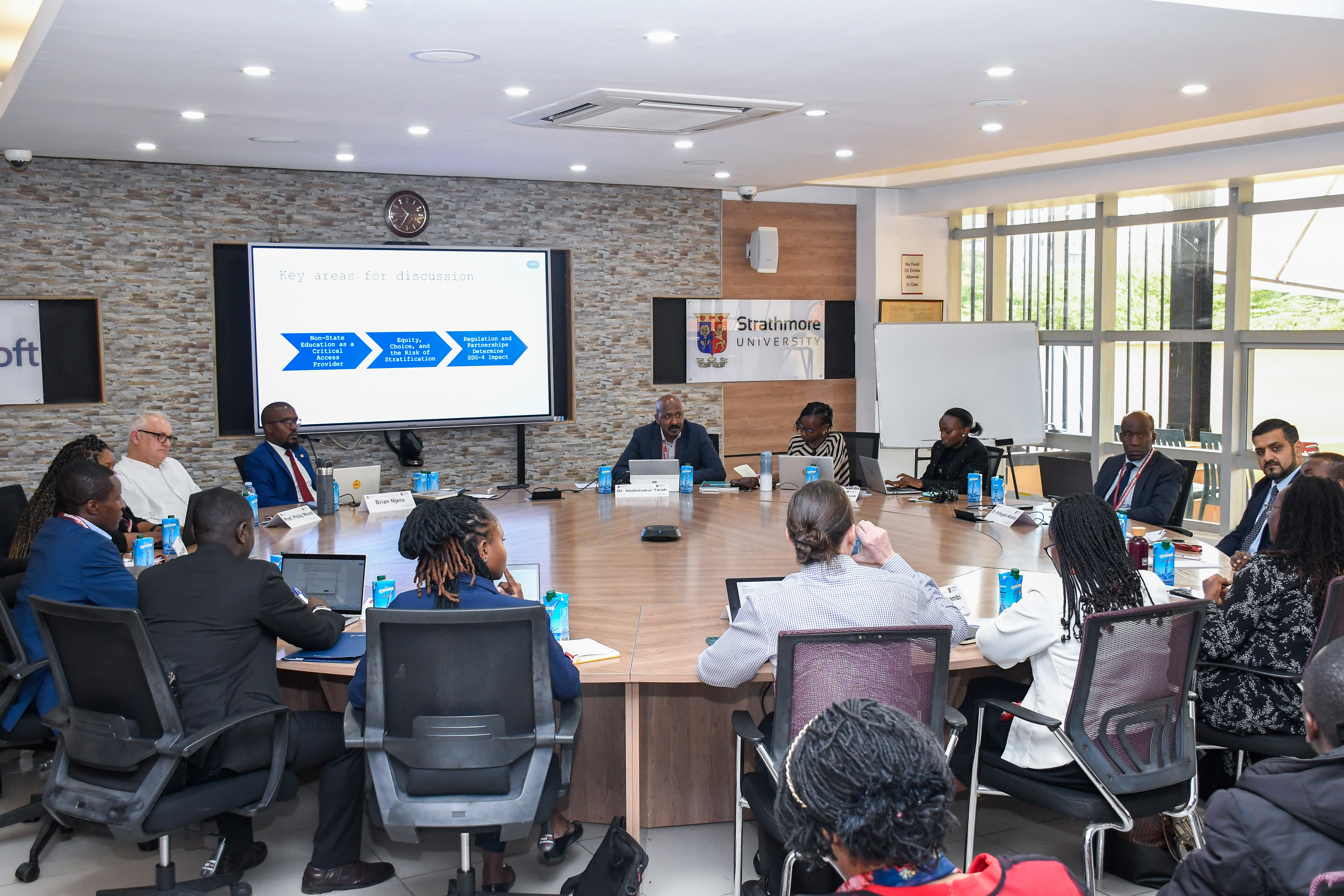
Roundtable discussion with the participating universities and institutions
The event
Against the backdrop of concerns that SDG 4 may not be achieved by 2030, participants highlighted the growing yet under-recognised role of private and non-state actors in expanding access, innovation, and community-based provision, particularly in underserved and informal settlements. Drawing on evidence from the UNESCO Global Education Monitoring Report and regional practice, discussions emphasised viewing public and non-state providers as part of a single education ecosystem with shared standards and accountability.
The roundtable explored policy and regulatory gaps, community-driven initiatives, youth-led SDG actions, and emerging innovations such as AI-integrated learning models. Contributions from practitioners, including grassroots organisations supporting non-state schools and private education networks, underscored the opportunities that such a partnership might offer to achieve SDG-4 equitably.
Dr Abdishakur Tarah (NTU), a Senior Lecturer at Nottingham Institute of Education, who moderated the session, stated:
Achieving SDG 4 depends on inclusive education systems, as governments alone are insufficient. This underscores the importance of engaging non-state actors, including foundations, community-owned schools, and low-cost private schools, to expand access, equity, and quality across Sub-Saharan Africa.
Dr Abdishakur Tarah
Dr William Murithi, a Senior Lecturer at Business School, Strathmore University, who co-hosted the roundtable, also stated:
Non-state actors are not peripheral but central to delivering access and challenging us to move beyond ideological positions to confront the practical reality that, without these actors, millions of children would be left behind. This shows that the tension between access and equity remains the defining policy dilemma and will require deliberate alignment through smarter regulation, innovative public-private partnerships, and evidence-driven advocacy. Ultimately, the roundtable reaffirmed that achieving SDG 4 will depend not on isolated efforts but on coordinated ecosystems, making the commitment to build a community of practice a critical step not only for continued dialogue but for translating insight into action.
Dr William Murithi, Strathmore University
The Roundtable Discussion marked an important step in consolidating a regional network committed to advancing SDG 4 through inclusive, evidence-informed partnerships.
Read more about Dr Abdishakur Tarah's project work in Eastern Africa on the EAC news page