The EAC Supports Launch of the Inclusive Universities Network (IUN) to Advance Disability Inclusion in Higher Education
Over two days in Nairobi, educators, researchers, and institutional leaders from Kenya and the UK came together around a shared purpose: to make higher education genuinely inclusive for disabled students and staff. Their collaboration has now been formalised through the launch of the Inclusive Universities Network (IUN), a new partnership dedicated to transforming disability inclusion in universities.
Published on 25 May 2026
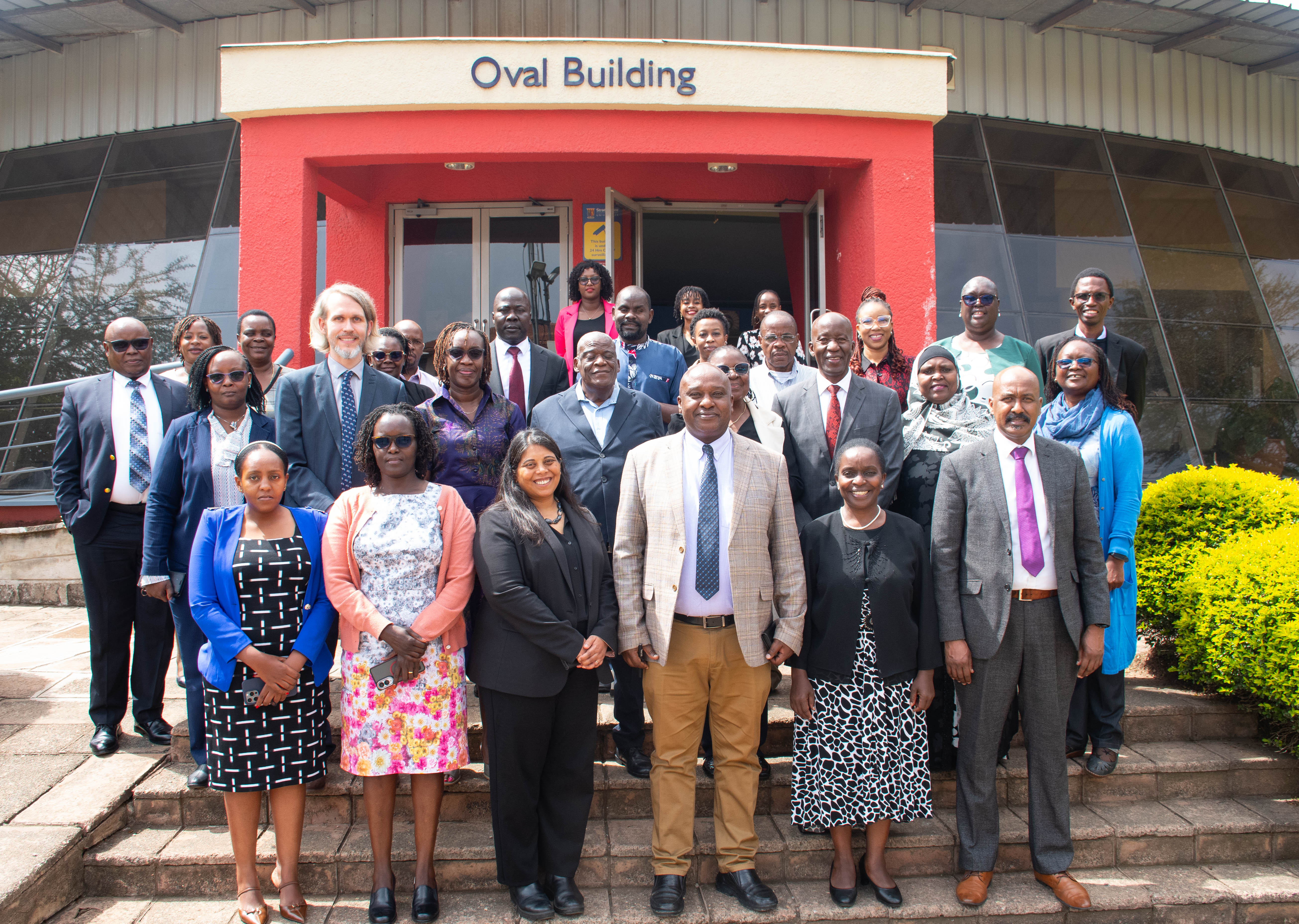
A new UK-Kenya partnership
The Inclusive Universities Network brings together six universities spanning Kenya and the UK: Nottingham Trent University (NTU), Strathmore University, Pwani University, Garissa University, The Open University of Kenya, and United States International University–Africa (USIU–Africa).
The Network was officially launched on 17 February 2026 in Nairobi at Strathmore University and is one of the Eastern Africa Centre’s (EAC) flagship initiatives. It will initially focus on Kenya, with a view to extending its reach across the wider African region, creating a platform for sustained collaboration on disability-inclusive higher education.
From policy to lived experience
Across the Kenyan partner universities, leaders and practitioners have identified shared but distinct challenges: gaps in formal disability policy, limited staff capacity, inaccessible infrastructure, fragmented data, and the difficulty of translating national legislation into consistent institutional practice.
During the launch, participants spoke candidly about their starting points. Some universities are still developing formal policies and dedicated disability support units; others have more established structures but acknowledge that having policies in place does not automatically guarantee inclusion. As one contributor reflected, the Network provides space to move beyond statements on paper towards changing the everyday experiences of disabled students and staff.
The IUN is therefore designed not only as a forum for policy discussion, but as a strategic alliance focused on improving lived experience across member institutions. Partners acknowledge that there is no single model for disability inclusion and that meaningful change depends on context, resources, and institutional culture.
Shared values and strategic objectives
At its founding workshop, members of the IUN agreed a set of core values that guide the Network’s work: Inclusivity, Compassion, Collaboration, Evidence-Based Practice, Integrity and Transparency, and Translating Policy into Practice.
These values underpin five strategic objectives to:
- Promote interdisciplinary research on inclusivity in higher education
- Improve accessibility and participation across partner institutions
- Build advocacy, leadership, and institutional capacity
- Encourage innovative policy and practice
- Mobilise sustainable resources for inclusive education
To give practical shape to these objectives, the Network’s initial comparative institutional mapping study will focus on six evidence areas that define institutional readiness for disability inclusion: institutional systems; disclosure and assessment processes; disability data and accountability; support across the student journey; neurodiversity and wellbeing; and opportunities for cross‑border learning between Kenya and the UK.
Different starting points with a shared direction
The launch highlighted the diversity of approaches to disability inclusion across the Network.
USIU-Africa operates a centralised Disability Inclusion Services Department serving close to 190 registered students. Assistive technologies and guidance for faculty are embedded in its institutional systems, providing a strong platform for inclusive teaching and learning.
Pwani University has developed a committee-based accommodation model that brings together academic, administrative, legal, and student voices to consider individual and structural adjustments. While stigma around disclosure remains a challenge, this approach demonstrates how governance mechanisms can be designed to support inclusion.
Strathmore University is expanding psychological support and educator training, and its iLab Africa initiative offers a compelling example of inclusion in practice, equipping neurodivergent young adults with digital skills and pathways into employment. These diverse approaches underscore the Network’s commitment to mutual learning rather than one-way transfer of models.
Co produced, research-led, and reciprocal
The EAC is providing strategic research leadership for the Network by coordinating evidence-gathering, supporting data processes, and convening partner institutions around shared priorities. Professor Mazeda Hossain, Professor of Global Health and Director of the NTU Eastern Africa Centre, is leading the research component of the Network's activities.
The EAC’s approach is grounded in co‑production, with reciprocal capacity strengthening built into every stage of the collaboration. Rather than conducting research about partner institutions, the Centre works with them to co-design research questions, tools, and outputs, ensuring that evidence directly informs practice on all sides.
Professor Hossain emphasised the global significance of the work:
Disability-inclusive higher education is a global issue and there is no single standard for addressing it. What is striking about the Kenyan universities in this Network is that they are developing genuinely innovative approaches, often under significant resource constraints and for students coming from diverse backgrounds. Their practices and insights offer real insights for institutions worldwide, including here in the UK. The Eastern Africa Centre (EAC) is supporting the IUN because it is tackling a critical gap in access to higher education and doing so with the kind of contextual creativity that the field urgently needs. The learning is bi-directional and that is what makes this partnership so valuable
Professor Mazeda Hossain
UK coordination for the Network led by Dr Abdishakur Tarah, Senior Lecturer in Education Policy at Nottingham Institute of Education, NTU, who has been instrumental in developing the partnership since its earliest stages.
Reflecting on the significance of the collaboration, Dr Tarah noted:
This network represents more than a partnership. It is a collective commitment to ensuring every student, regardless of background or ability, can thrive. By sharing knowledge, aligning our practices, and learning from one another, we are building a future where inclusion is not just an aspiration but a lived reality across our universities
Dr Abdishakur Tarah
Concrete tools: a shared questionnaire for institutional change
One of the Network’s first joint outputs is a comprehensive institutional questionnaire co-designed by representatives from all partner universities and co-led by Professor Mazeda Hossain, with Dr Tarah and Dr Alfred Kitawi.
This shared tool will be used in the upcoming mapping study to document disability inclusion across governance, teaching and learning, digital accessibility, student support, staff capacity, neurodiversity and wellbeing, and accountability mechanisms. It is designed to generate comparable data across institutions and to provide a common evidence base for the Network’s future research, dialogue, and policy engagement.
The EAC is supporting the implementation and analysis framework for this questionnaire, ensuring that subsequent findings can feed directly into institutional planning and sector-wide debate.
Rethinking inclusion in classrooms and lecture halls
The Network also foregrounds the importance of inclusive pedagogy and learning environments. Partners agreed that disability inclusion cannot be confined to specialist units alone, but must be embedded in everyday teaching, assessment, and student support. Insights shared from Kenyan university partners and NTU Disability Student Support emphasised that inclusion must be embedded directly into classrooms and lecture halls through accessible materials, structured peer support, and inclusive teaching practices, rather than treated as an add‑on delivered solely through specialist units.
Richard Fletcher, Dyslexia Specialist at NTU, reflected on the value of this work:
Participating in this collaboration has reframed our own disability and inclusion practice within a UK context. NTU is among the first universities in the UK to sign the Disabled Students’ Commitment; of approximately 150 to 160 institutions, only around 31 have done so. Delivering a workshop at the Kenya Institute of Special Education (KISE), covering dyslexia, co-occurrence, stigma, and AI, was a particular highlight. Engaging with trainee teachers reinforced how international networks grow through shared projects and meaningful exchange
Richard Fletcher
Roots of the collaboration
The NTU–Kenya partnership that underpins the IUN began in April 2023, when NTU colleagues facilitated an inclusive practices workshop during Strathmore University’s academic staff development day. Led by Dr Gary McGladdery, Head of Disability and Inclusion Support Services at NTU, Dr Abdishakur Tarah, and Richard Fletcher, the session introduced many participants to concepts such as access statements and practical approaches to neurodiversity for the first time and sparked sustained interest in formalising a broader collaboration.
Aligning with the Sustainable Development Goals
The IUN’s work is directly aligned with three United Nations Sustainable Development Goals (SDGs): SDG 4 – Quality Education, SDG 10 – Reduced Inequalities, and SDG 17 – Partnerships for the Goals.
The launch of the Network also sits within wider African Union commitments, including the Continental Education Strategy for Africa (CESA 2026–2035) and Agenda 2063, which call for education systems that support youth empowerment, employability, equity, and human capital development. By focusing on disability-inclusive higher education and transitions into employment, the IUN positions its work squarely within these continental priorities.
A roadmap for the coming years
The IUN’s launch was made possible with support from NTU’s International Partnership Fund, which provided the foundation for bringing founding members together and establishing the Network’s shared governance and research agenda.
Building on this foundation, partners are working across five priority areas:
- Research: Designing and preparing the comparative institutional mapping study that will examine disability inclusion across the six universities using the shared questionnaire and evidence framework.
- Governance: Establishing formal procedures and structures to guide the Network’s decision-making and long-term development.
- Policy engagement: Planning future policy briefs and dialogues with ministries and regulatory bodies that will be informed by the evidence generated through the mapping study.
- Sustainability: Preparing a funding concept note and subsequent proposals to secure resources for the Network’s continued growth and regional expansion.
- Knowledge exchange: Presenting emerging lessons and models at disability inclusive education conferences, ensuring that the Network contributes visibly to wider sector debates.
The mapping study and subsequent analysis will take place over the next 12 months, with partners committed to sharing emerging insights through joint publications, conference contributions, and stakeholder engagements once findings are available.
A shared commitment to dignity
As the Inclusive Universities Network grows, it aims to position African universities at the forefront of global conversations on inclusive higher education, while also reshaping how institutions in the UK and globally think about disability, accessibility, and equity.
At its core, the Network is guided by a shared commitment to dignity, recognising accessibility not as an optional add‑on or act of charity, but as a fundamental responsibility of universities committed to equity and social justice.
IUN Event Highlights
Read more on the Inclusive University Network on the EAC Research webpage.