Project
Exploring Human Rights Through Games
Unit(s) of assessment: Law
School: Nottingham Law School
Brave New World
Helen Hall and Tom Lewis, in collaboration with Javier Garcia Oliva (University of Manchester) have developed a role-playing boardgame – Brave New World – that teaches players - through role-play and dialogue - basic principles of human rights, equality, toleration and constitutions.

Different versions of the boardgame, in which the players step into the shoes of a character very different to themselves, and attempt to maximise their individual happiness, include a fantasy planet inhabited by ‘goblins’ of different races and world-views, and an early 17th century New England colony. The game draws on the designer’s research in human rights, freedom of religion, toleration, and empathy.
Brave New World has been played extensively in primary and secondary schools across England and Wales, and also in Europe and South America. The team won funding from the Aspect Consortium to develop and promote the game, including the design and production of a digital version. In addition to their work with schools the team are collaborating with several museums including the National Civil War Centre, Newark, and the Plimoth Plantation Museum, Massachusetts.
In 2020 Brave New World won the Bronze medal (non-digital games) at the 8th International Educational Games Competition.
Two version of the game are currently available Brave New World Goblin (set in a fantasy universe) and Brave New World Pilgrim (set in Early Colonial North America). If you would be interested in using either game with your school, university or organisation, please contact helen.hall@ntu.ac.uk
Immersive Adventures in Narrative
Immersive Adventures in Narrative (IAINs) are educational game experiences designed to enable participants to explore questions of rights and justice through a story. Players are presented with an initial mystery, and need to complete a number of challenges and puzzles to access elements of the story surrounding it (e.g. letters, official records, audio recordings of interviews etc). Once all of the evidence has been revealed, participants sit down to piece the narrative together, working out what happened and why.
After the game has been completed, there is space for reflection on what has come to light. How do the themes and issues in the story relate to wider questions about fairness, justice and fundamental rights?
Existing IAINs cover a range of different issues, including: LGBTQ+ rights, children’s rights, women’s rights and freedom of religion and belief. They also span a number of different historical periods and geographical locations. If you are interested in any of the games below, or would like more information, please contact helen.hall@ntu.ac.uk
You can find out more about IAINs here.
Griezzell Greedigutt - As a family mourn the death of a man in 17th century New England, the notice sinister magical symbols carved into their house. Who is responsible, and did he truly die of natural causes?
Through the Veil - In the darkness of a séance, a renowned but controversial medium takes her last breath. Was there foul play?
Written in Stone - A much hated stepfather and employer falls to his death on a family holiday. Was it an accident, or something more sinister?
Breaking Wheel - A bomb kills a Conservative MP and a suffragist. Authorities at the time concluded that the young activist who died was responsible for the explosion, but her family and friends never believed this. Can you discover the truth?
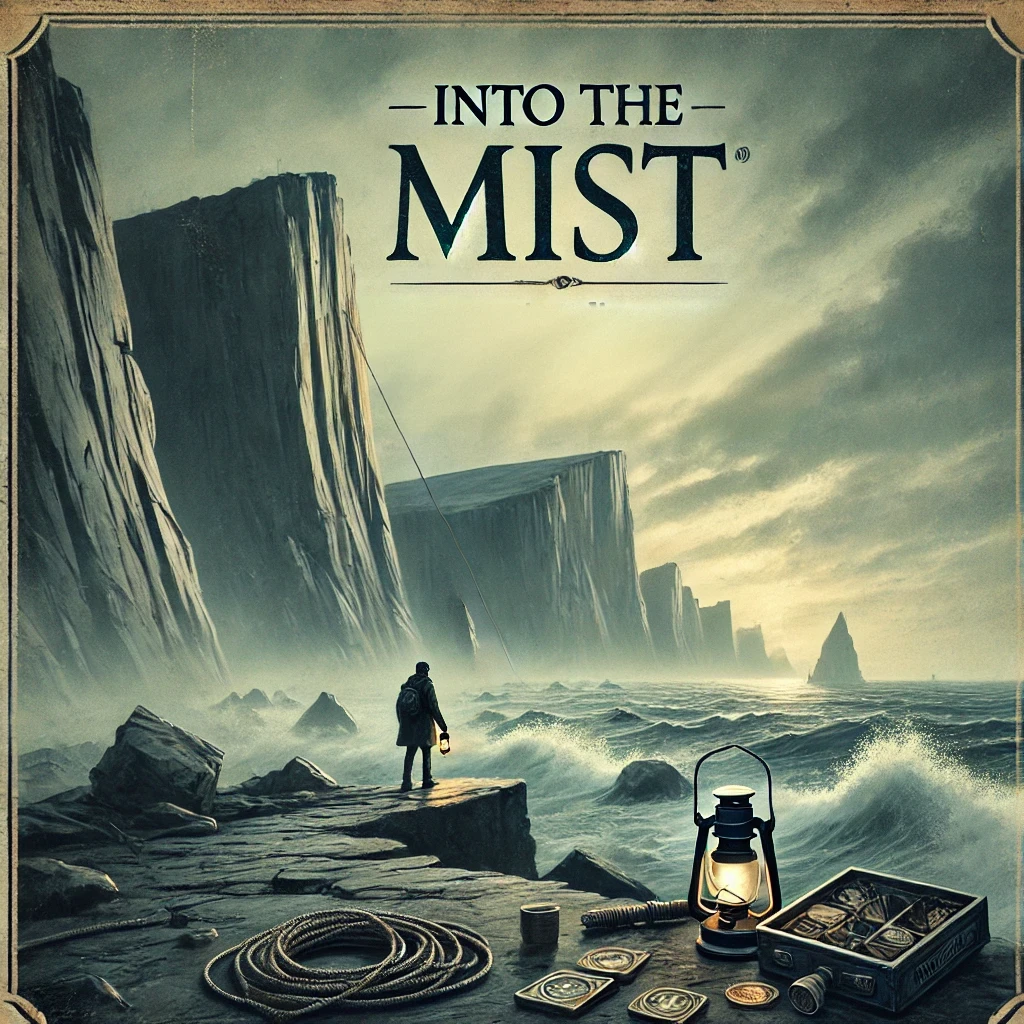
Into the Mist - In 1924 famous Alpinist Hywel Morgan disappeared, apparently while climbing with an unknown partner. Murder always seemed more plausible than an accident, but police at the time could not crack the case. Now that new evidence has come to light, can you solve the mystery?
Gamebooks
Governing Academic Freedom
This gamebook has been designed as an interactive educational tool aimed at helping postgraduate law students develop and consolidate their understanding of human rights law, with a particular focus on freedom of expression and academic freedom.
Set within a university environment, the gamebook places students in the role of Dean for Research confronted with a difficult and politically sensitive situation involving controversial research conducted by a member of academic staff. Throughout the narrative, students are required to make decisions in response to competing legal, institutional, ethical, and reputational pressures.
Each choice carries consequences, shaping both the development of the story and the legal implications arising from the situation. Students are therefore encouraged to think critically about the limits and protections of freedom of expression, the meaning and scope of academic freedom, and the practical challenges involved in applying human rights principles within institutional settings.
The gamebook is intended not only to reinforce substantive legal knowledge, but also to develop critical thinking, legal reasoning, and decision-making skills in complex real-world scenarios where the “correct” answer is not always immediately apparent.
Access to the gamebook, along with further information and materials, is available via the following link. The gamebook may be requested by lecturers and tutors for use in teaching and learning contexts, particularly within modules on human rights law and freedom of expression. It is intended for educational use and may be adapted in line with teaching needs, provided that appropriate attribution is maintained.

Introduction to SLAPPs
This introductory roleplay has been designed as an immersive educational tool intended to introduce students to the phenomenon of Strategic Lawsuits Against Public Participation (SLAPPs). Through an interactive narrative structure, students are placed in the role of a journalist navigating the professional, legal, and personal consequences of investigative reporting on matters of public interest.
Throughout the game, students are required to make a series of decisions concerning their reporting, interactions with sources, editorial strategies, and responses to legal threats. While the roleplay presents multiple pathways and choices, it is intentionally designed to create the illusion of control: regardless of the decisions made, students are gradually confronted with similar outcomes, including legal intimidation, mounting pressure, and the prospect of litigation.
This structure reflects one of the defining characteristics of SLAPPs themselves. The purpose of such actions is often not necessarily to win in court, but rather to exhaust, intimidate, isolate, and silence individuals through the burden of legal proceedings and associated pressures. By experiencing these dynamics firsthand within the roleplay, students are encouraged to develop an emotional and practical understanding of the chilling effect produced by SLAPPs.
The roleplay therefore serves as an experiential introduction to the topic before engaging with the underlying legal, political, and human rights dimensions in greater depth. In addition to introducing the legal framework surrounding SLAPPs, the exercise aims to foster empathy, critical reflection, and a deeper appreciation of the pressures faced by journalists, activists, researchers, and other public watchdogs confronted with abusive litigation.
Access to the gamebook, along with further information and materials, is available via the following link. The gamebook may be requested by lecturers and tutors for use in teaching and learning contexts, particularly within modules on human rights law and freedom of expression. It is intended for educational use and may be adapted in line with teaching needs, provided that appropriate attribution is maintained.
The Great Expression Rights Goose Chase
This goose game has been designed as a collaborative and interactive revision tool intended to consolidate a year’s worth of learning on a human rights module focusing on freedom of expression and related expression rights.
Developed for postgraduate and advanced undergraduate law students, the game encourages participants to revisit key legal principles, case law, theoretical debates, and contemporary controversies explored throughout the module in a more engaging and dynamic format. Through a combination of questions, scenarios, challenges, and discussion prompts, students are invited to critically reflect on the legal protections, limitations, and tensions surrounding freedom of expression across a variety of contexts.
The game is intended to promote active learning by encouraging students to apply legal knowledge, debate competing perspectives, and develop confidence in articulating complex legal arguments. In doing so, it seeks not only to reinforce substantive understanding of human rights law, but also to foster collaborative discussion and critical engagement with difficult questions surrounding censorship, academic freedom, protest rights, hate speech, media regulation, and democratic participation.
While developed specifically as a recap activity for a module on expression rights, the game may also be adapted and used more broadly by lecturers and tutors teaching human rights law, freedom of expression, media law, or related subjects.
Access to the Goose Game is available upon request via the following link.