Project
ReFashioning Futures
School: School of Art & Design
Abstract Deadline: 2 June
13 & 14 July 2026
As we work together to refashion the futures of our discipline, we invite students, staff and industry partners to join us for our upcoming ReFashion Futures 2026 conference, This event is designed to provide a supportive platform for postgraduate students on MA and PhD courses to share their research and practice, build confidence and develop their scholarly voice. Submissions may be completed projects or work in progress, including early ideas, developing methodologies or emerging findings.
A core aim is to support developmental research. The conference offers a supportive environment to test ideas, receive constructive feedback, and engage in cross‑institutional dialogue. We welcome a wide range of academic, creative and practice‑based contributions that explore diverse perspectives on fashion and textiles. Delegates will benefit from peer feedback, professional insight and the opportunity to join a growing network of emerging researchers shaping future directions in the field.
Register for the conference:
Please use the links below to register for either the in-person or online conference.
Conference Theme
Re‑shaping Fashion Knowledge: Creativity, Circularity and Transformative Futures
This year’s theme invites students to explore how creative practice, critical inquiry and emerging technologies can re‑shape what fashion knowledge is and how it is produced. The focus is on re‑imagining fashion’s futures through new ways of making, thinking and engaging, whether through innovative methods, transformative ideas, circular and regenerative approaches, digital experimentation, or socially and culturally grounded perspectives. The theme encourages contributions that challenge assumptions, propose alternative pathways, and offer imaginative visions for how fashion might evolve in response to changing environmental, technological and social conditions.
While sustainability and circularity are important areas within the conference, they are not a requirement across all submissions. We actively encourage contributions that engage with fashion from multiple perspectives, including culture, identity, technology, creativity, business, and critical theory.
Subthemes
This subtheme explores how new, mixed and creative research methods can challenge traditional academic approaches and open up different ways of understanding fashion. It welcomes practice‑led, sensory, speculative, narrative and future‑focused methods that help us rethink materials, systems, cultures and identities.
Questions that may guide submissions:
- How can creative and critical research methods challenge the dominant stories we tell about how fashion is made, used and valued?
- How can speculative or experimental approaches help us imagine more sustainable or regenerative fashion futures?
- How can participatory, community‑led or decolonial methods change the way we carry out fashion research?
A focus on circularity, regeneration and the environmental and social systems that shape fashion. Submissions may examine how materials, behaviours, infrastructures, policies, economic structures and cultural practices can support low impact, restorative and equitable fashion futures.
Questions that may guide submissions:
- How can research help shift fashion from a linear model towards regenerative, circular and socially just systems?
- What environmental, cultural, economic or structural barriers limit the adoption of circular and regenerative practices, and how might you propose creative ways to address them?
- How can repair, reuse, thrift, local production, cooperative models or community based practices influence mainstream fashion and shift how clothing is valued?
- How can design decisions (materials, processes, construction, repairability, disassembly) contribute to more circular and regenerative fashion futures
This subtheme examines how digitalisation, virtual environments, AI enabled tools and new media are reconfiguring fashion practice, business models, creative expression and consumer engagement. It welcomes both critical and practice‑led work that examines the opportunities, challenges and social implications of emerging digital technologies
Questions that may guide submissions:
- How can digital tools enable more democratic, accessible or participatory fashion futures?
- What are the impacts of virtual fashion, AI‑driven creativity, digital prototyping or immersive technologies on sustainability, labour and social equity?
- How might ecological knowledge, craft traditions or local cultural practices connect with digital innovation to create new forms of hybrid design?
This subtheme foregrounds the social, cultural and political dimensions of fashion. It explores how identities, communities, intergenerational knowledge and global cultural narratives influence how fashion is made, used and valued. It welcomes work examining diversity, inclusion, wellbeing, heritage, alternative lifestyles and collective forms of fashion engagement.
Questions that may guide submissions:
- How can cultural storytelling and communal practices shape alternative fashion futures?
- What can we learn from communities already practising sustainable or low consumption lifestyles?
- How can local cultural knowledge and global connectivity work together to build socially just fashion systems?
Conference Format
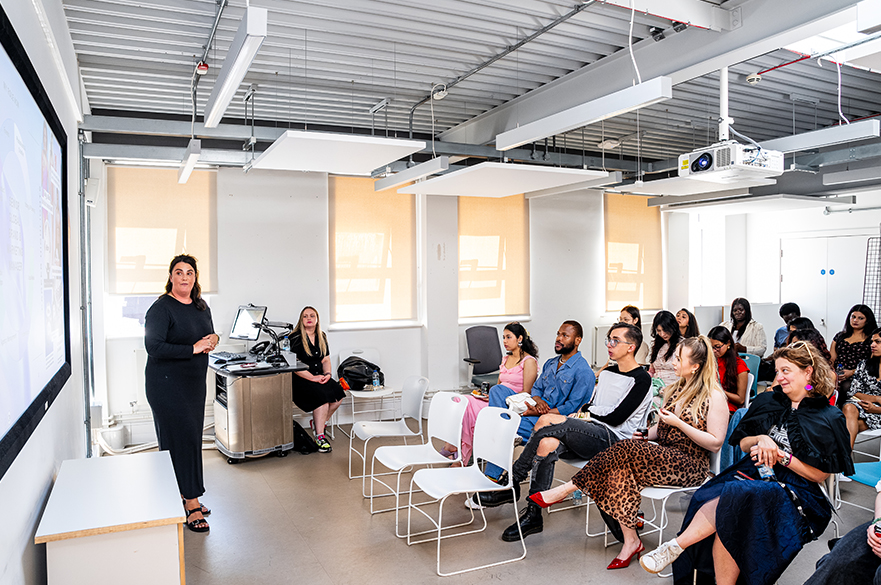
The 2026 International Postgraduate Conference in Fashion and Textiles will be delivered in a hybrid format from Nottingham Trent University. All sessions will be held in person on campus and livestreamed to enable international participation. Presenters may join either in person or online, ensuring global accessibility for Master’s and Doctoral researchers.
Multiple submissions are welcome.
We invite contributions in the following categories:
Extended abstracts should outline original academic or practice-led research aligned with the conference subthemes. Selected authors will deliver a 10 minute presentation followed by 10 minutes of Q and A, either in person or online.
Work in progress submissions are strongly encouraged. Students at any stage of their project may present early ideas, developmental work, or emerging insights. The conference provides a supportive environment for constructive peer and professional feedback.
Publication Opportunity: Please note here will be opportunities to submit a full paper on your research to special issues of one international fashion sustainability journal after the conference.
We welcome a diverse range of digital, material, performative and screen-based creative submissions. All accepted creative work will be showcased during a dedicated creative session, with options for both in person and online display formats.
Posters will be included in an interactive session, with opportunities for both in-person and online poster presentations to engage with delegates. Online presenters will be allocated a virtual discussion slot during the poster session.
Submitting your Abstract
All abstracts should include;
- Title
- Abstract
- Keywords (5)
- Relevant conference theme(s)
- Format (Presentation, Poster or Creative Output)
- Author(s) and affiliation(s), option to include ORCID iD
- Biography for each author (maximum 150 words each)
Extended Abstracts (Oral Presentations)
Abstract (maximum 500 words)
Abstract should include;
- Explain what issue, question or topic your research addresses.
- If work in progress: describe the emerging focus or the problem area you are beginning to explore.
- List your key research question(s)(and hypothesis if quantitative)
- If you are still developing: present your current working questions or the direction your questions are taking.
- Outline the theories, concepts, debates or literature shaping your work.
- If still forming: identify the initial theoretical ideas or thinkers you are considering.
- Explain how you are conducting (or plan to conduct) your research.
- If you are in early stages: describe your proposed methods, pilot work, or methodological approach under consideration.
- For completed or near completed research, share key findings.
For work in progress:
- present early observations,
- initial themes,
- insights from pilot testing,
- reflections from ongoing making, prototyping or fieldwork, or
- expected directions.
The aim is not to present finished results but to show how the project is developing.
- Explain the relevance and contribution of your research, why it matters.
- If work in progress: reflect on your expected contribution or the potential significance of your emerging work.
Do Include any key texts that inform your abstract
Creative Outputs
1-3 images supporting the submission – provide links to the images
Intended final format and any technical or spatial requirements
Abstract 250 word description
Abstract should include:
- Aim or Concept
- Context or Background
- Approach, Method or Making Process
- Explain how the work is being created. This may include:
- practice‑led experimentation
- material exploration
- digital methods or tools
- prototyping or iterative making
- performance, immersive or interactive processes
- Explain how the work is being created. This may include:
- Description of the Creative Output
- Significance or Intended Contribution
- Summarise why the work matters. What does it offer creatively, conceptually, or critically?
- If in progress: outline the anticipated contribution or questions the work aims to raise.
Abstract (250 words)
Abstract should include:
- Problem Statement or Aim
- Research Question(s)
- Theoretical Framework
- Methods:
- Explain how you are conducting (or plan to conduct) your research.
- If work in progress: outline proposed methods, pilot activities, or the approach you are currently developing.
- Early Findings or Work‑in‑Progress Insights
- For completed work: summarise key findings.
- For work in progress: briefly present
- early observations
- initial themes
- insights from pilot work or making
- emerging directions
- Conclusion and Significance
- Explain why your project matters and what contribution it aims to make.
- If in progress: reflect on the potential significance or expected contribution of your evolving work.
- References (optional): Include 1–3 key texts
Conference Submission Guidelines:
Please prepare a PowerPoint or pdf presentation suitable to be presented within a 10 minute timeframe as part of one of the conference tracks. Please note here will be an opportunity to submit a full paper on your research to special issues of one international fashion sustainability journal after the conference.
Please submit your poster as a single digital file, following the specifications below. Posters will be displayed physically/digitally throughout the conference, ensuring accessibility for both in‑person and online participants.
- Format: A1 dimensions (84.1cm x 59.4cm), landscape orientation, saved as a PDF (maximum file size: 200MB).
- Resolution: Minimum 300dpi to ensure clear and high‑quality viewing on screens and digital displays.
- Content: Include the poster title, author name(s), institutional affiliation(s), and all relevant text, visuals, images or diagrams needed to communicate your project effectively.
Accepted Formats Include:
- Video or film: mp4, maximum 3 minutes
- Screen‑based digital work (e.g., animations, motion graphics): mp4, mov or MP4‑compatible formats
- Interactive or immersive digital work: provide a stand‑alone executable, web‑based link, or screen‑recording if interactive elements are not self‑contained
- AI‑generated work: submit as mp4, jpeg, png, or other standard digital formats
- Virtual, mixed‑reality or gaming environments: submit as a short demo video (mp4, max 3 minutes)
- Performance: submit performance documentation as an mp4 recording (max 3 minutes)
- Artefact, textile or materials‑based practice: upload high‑quality digital documentation (jpeg/png, or mp4 video, max 3 minutes)
- Physical creative outputs accepted also
File Size:
- Maximum file size: 200MB
File Naming, use the following naming format:
- Surname_Firstname_CreativeOutput2026
Please note:
- Creative output space, as with all submissions, creative outputs will be peer reviewed, please provide as much information as possible, even for work in progress. We will not be able to select submissions without images and dimensions.
- For physical exhibits, contributors will be required to install, in person, the day before the conference.
Uploading your submission:
Please use the link below to submit your abstract in the first instance for review
Key dates:
| Stage | Date |
|---|---|
| Call for Papers Opens | April 2026 |
| Abstract Submission Deadline | 2 June 2026 |
| Notification of Acceptance | 14 June 2026 |
| Final Creative Files and Posters Due | 2 July 2026 |
| Conference Dates | 13–14 July 2026 |
Submit Your Abstract
Contact us
For all enquiries, please email: Info.RefashioningFutures@ntu.ac.uk