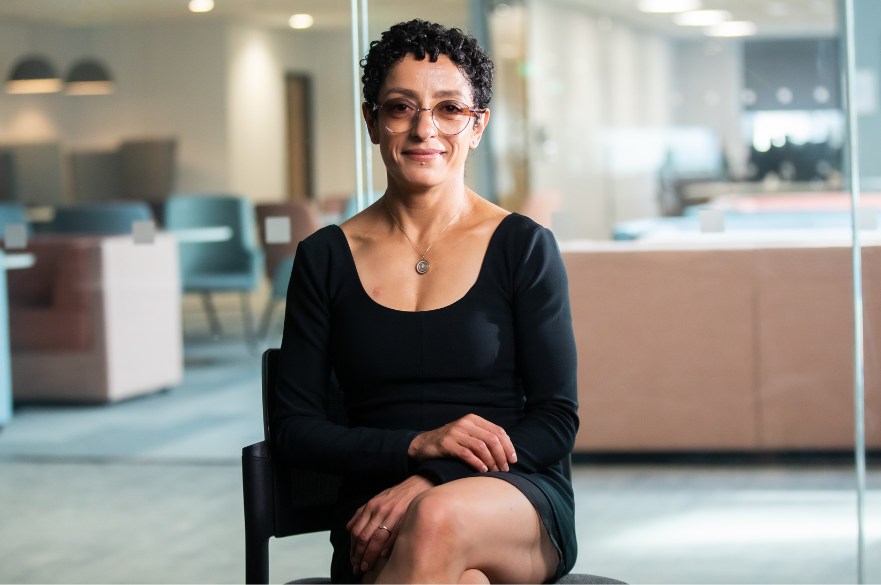
Protecting biocultural diversity: working with communities to restore ecosystems
Felipe Melo, Associate Professor
As a young researcher in Brazil, I saw tropical forests vanish before my eyes. The biodiversity crisis is undeniable and perhaps even more widespread than the climate emergency.
My research journey
In the late 1990s, I watched Brazil’s tropical forests disappear before my eyes. Rapid industrialisation and deforestation devastated ecosystems, consuming nature while local communities remained trapped in poverty. It was a painful reality, but it also ignited my passion for conservation.
Driven by a deep sense of justice for both the land and its people, I took a stand and left teaching to study ecology and conservation. My journey led me from the Tropical Forest in Brazil to the Maasai Mara in Kenya, where I now work to restore ecosystems with local and Indigenous communities. But the fight is far from over. The biodiversity crisis is urgent, and the threat to life as we know it is real.
This experience shaped everything I do today. I moved away from siloed, traditional ecological research to dedicate myself to environmental justice, merging science, tradition and activism to ensure the survival of our planet and its people.
Over the years, I’ve been proud to see my work create real-world impact.
Before entering academia, I co-founded and managed CEPAN, a major NGO protecting biodiversity in Brazil, and helped establish a 112,000-hectare nature reserve in the country’s endangered dry forest.
I’ve also worked to shape global and national policy, including serving as president of the Brazilian Association of Ecologists and contributing to the Intergovernmental Science-Policy Platform on Biodiversity and Ecosystem Services (IPBES), an independent body established in collaboration with the United Nations. These roles have given me a voice in high-level conservation, but it’s the on-the-ground work, alongside communities, that continues to drive me.
Restoring balance through research and activism
Today, as a researcher and activist, I work to restore ecosystems and protect biodiversity by combining traditional knowledge with modern science. I focus on the intersection of conservation and social justice – challenging the commodification of nature and advocating for biocultural restoration.
By working alongside communities, I seek to protect not just ecosystems, but the cultural heritage tied to them. Through my research, I strive to ensure that the voices of those who have always cared for the land are heard and respected in the fight against the biodiversity crisis.
My research now spans continents, from South America to Africa – where I am leading a major programme in ecological restoration in Kenya’s Maasai Mara through NTU’s Eastern Africa Centre. We collaborate with local partners to restore culturally significant species and promote biocultural diversity.
Being a researcher isn’t just a job; it’s who I am. My work is personal, political, and rooted in a deep sense of responsibility. Research isn’t just about preserving nature, it’s about empowering communities, reshaping our approach to conservation and fighting for a more just and sustainable future for both people and the planet.
Dr Felipe Melo
Felipe is an Associate Professor in Ecological Restoration. His research focuses on restoring ecosystems in partnership with local and Indigenous communities in Kenya and Brazil.
By protecting biodiversity, his work also safeguards the cultural heritage closely linked to these landscapes.
Meet our researchers
Forget lab coats and research papers. It's time to get personal. Meet the people behind the research and uncover fascinating truths about their experiences.
Kirsty Welsh
The law and domestic abuse
Learn how Kirsty is challenging policies to better protect victims
Gareth Cave
Life-changing nano-solutions
Explore how Gareth is applying nanoscience to tackle global health challenges