The law and domestic abuse: challenging policy to better protect victims
Kirsty Welsh, Senior Lecturer
Women and children live with abuse and are being killed by it. They are also being failed by the law, the legal system and the criminal justice system. A commitment to changing this inertia is what drives me and my research.
My research journey
My research journey began as a law undergraduate in the 1990s, when I was shocked to learn how the law treated women who had killed their abusers. At the time, women who committed these acts were often unable to plead a ‘partial defence’ – a legal mechanism that could reduce a murder charge to manslaughter.
The assumption was that they should have simply left the relationship instead. But I was learning that leaving an abusive relationship is not simple – in fact, it can be the most dangerous and vulnerable time for a woman. What horrified me most was that the legal system, and many of the experts within it, failed to recognise these complexities, so I was determined to be part of changing that.
That determination led me to pursue a PhD at the University of Sheffield, where I had the privilege of being supervised by one of the leading voices in the field of victimology. Her pioneering work on crime victimisation was not only academically influential but personally inspiring, and her mentorship helped shape the direction of my research and my career.
After receiving my doctorate, I took some time out to raise my three sons. During this time, I continued to be involved in work supporting women, training as a breastfeeding counsellor and establishing a local La Leche group.
Becoming a mother, and connecting with other mothers, gave me a new perspective on who I was and who I could become. At first, I didn’t recognise the relationship with the father of my sons as abusive, but as I opened up to friends and family, I gradually started to see it that way. Eventually, I was able to leave the relationship, and I began teaching at NTU.
During this period, I discovered that a new legal framework had emerged helping women name and understand the coercive control at the heart of many abusive relationships. This framework personally resonated with me and gave new urgency and meaning to my research.
I realised that my expertise in the area no longer derived simply from my previous work, but also from my own experiences. This realisation emboldened me and made me determined to document the range of controlling tools (not just violence) that men use against partners in ‘romantic’ relationships.
Challenging the status quo
My research takes a socio-legal and criminological approach to understanding domestic abuse – particularly in heterosexual relationships, where women and children are most often the victims, and men the perpetrators. I examine how the law and wider criminal justice system respond to abuse, and how well current legal definitions and frameworks reflect the reality of coercive, controlling relationships.
There are three key areas my work is currently focused on. First, I challenge the prevailing emphasis on 'high-risk' victimisation in policy and practice, arguing that this focus excludes many victims who also need protection. Second, I explore how the non-consensual sharing of intimate images is used as a coercive tool and how the law must better respond. Finally, I examine the legal defences available to abused women who kill, and how changes here could lead to fairer outcomes.
What drives me is simple: women and children are living with abuse and dying because of it. Thirty years since I first encountered this issue as a student, we are still seeing legal systems that misunderstand or overlook the realities of abuse. That is unacceptable. My research is about making sure women’s experiences are not only heard but properly understood and reflected in the law.
Follow my story
My story doesn’t end here. Keep up to date with me and my research by keeping an eye on my academic profile.
Dr Kirsty Welsh
Kirsty is a Senior Lecturer at Nottingham Law School. Her research has a socio-legal and criminological approach to understanding domestic abuse — particularly where women and children are the victims, and men the perpetrators.
Her work examines how the law and wider criminal justice system respond to abuse, and how current legal definitions and frameworks reflect the reality of coercive, controlling heterosexual relationships.
Meet our researchers
Forget lab coats and research papers. It's time to get personal. Meet the people behind the research and uncover fascinating truths about their experiences.
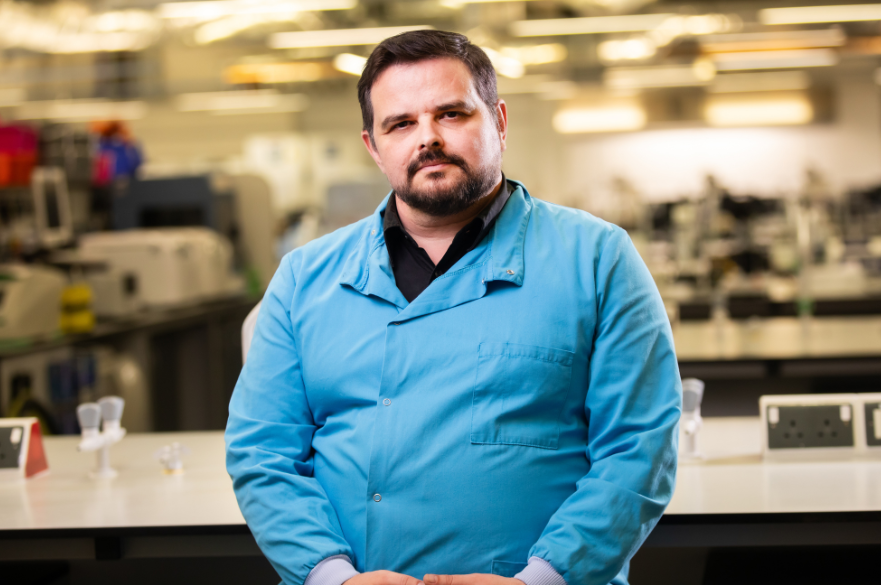
Gareth Cave
Life-changing nano-solutions
Explore how Gareth is applying nanoscience to tackle global health challenges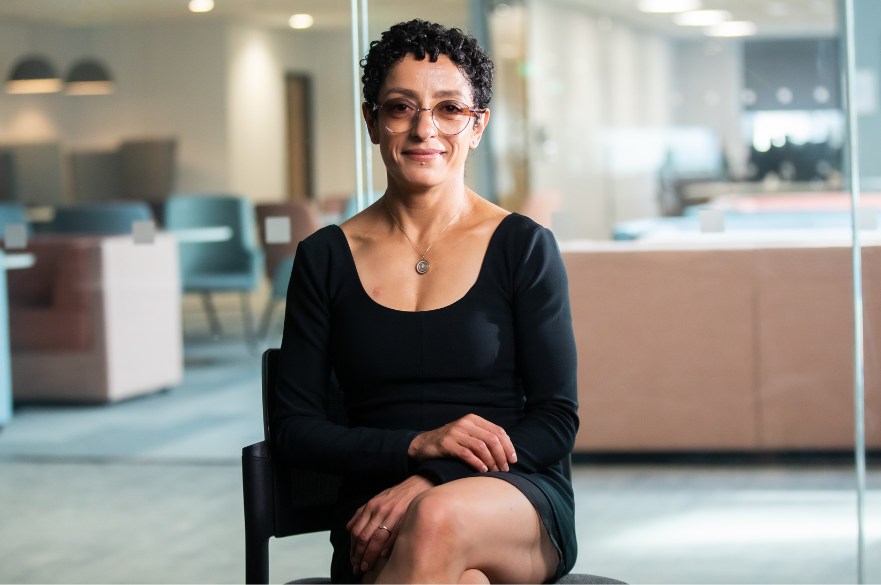
Hind Elhinnawy
Challenging gender discrimination
Discover how Hind is challenging harmful narratives about Muslim women