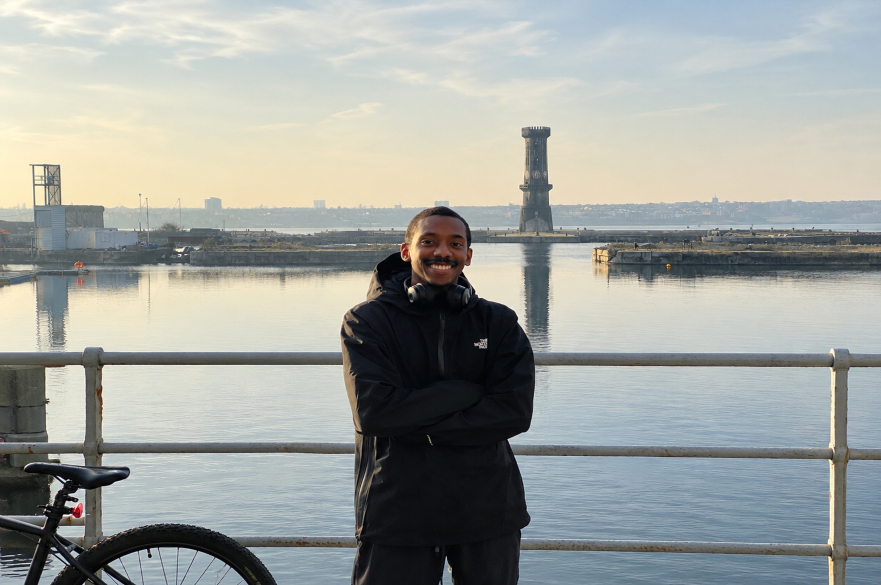
The academic and technical staff were a key part of my experience at NTU. They provided support throughout the course while encouraging me to become a more independent researcher.
More about Abdulrahman
What inspired you to continue your studies at postgraduate level, and why did you choose NTU for your next step?
I was inspired to continue my studies because I wanted to build on the practical experience I had already gained as a forensic scientist and develop a deeper understanding of the scientific principles behind forensic evidence. I chose Nottingham Trent University because of the strength of its Forensic Science programme and its combination of scientific theory, practical learning and research.
How did you discover your postgraduate course?
I discovered the MSc Forensic Science programme while researching postgraduate opportunities in the UK. I was looking for a course that would complement my previous Biology degree and my professional experience in forensic DNA analysis. I was especially interested in the advanced topics in forensic science module, along with the biometrics and bioarcheology modules, as they would be particularly useful for my lab and teach valuable practical and research skills.
What aspects of your course did you enjoy the most?
I enjoyed the practical aspect of the course the most. It gave me the opportunity to conduct investigations involving potential environmental violations, crime scene searches, and missing-body search and recovery scenarios. I enjoyed these because they exposed me to areas outside my previous day-to-day experience working in a lab.
What do you think were the biggest strengths of your course?
One of the biggest strengths was the balance between theoretical knowledge and practical application, helping me understand both the science behind forensic techniques and their real-world use.
The research component was particularly valuable, developing my independence in identifying research questions, evaluating literature, designing experiments and analysing results.
Engaging with professionals and industry, including working with Promega and visiting Toyota’s factory as part of my research, also showed how university research can connect with real-world developments in forensic science.
Which facilities, equipment, or practical experiences were most valuable to your learning — and why?
The forensic laboratories and practical facilities at NTU were particularly valuable because they allowed me to apply theoretical concepts in a practical environment. Having access to the forensic laboratory enabled me to work with realistic forensic sampling conditions and investigate DNA recovery.
Have you taken part in a year-long or shorter placement, fieldwork, research or industry project?
My main research experience was through my MSc dissertation, which included collaboration with Promega UK. industry involvement was particularly valuable because it allowed me to see how forensic DNA research connects with commercial laboratory technologies and professional practice. This experience strengthened my research skills and gave me a better understanding of how academic research can contribute to developments in forensic science.
What achievement from your time as a student are you most proud of?
I am most proud of completing my MSc while building on my career as a forensic scientist and undertaking independent research into a genuine forensic challenge. Combining my professional experience with postgraduate research has been one of my most valuable achievements at NTU.
How did your lecturers, tutors and technical staff support you during your studies?
The academic and technical staff were a key part of my experience at NTU. They provided support throughout the course while encouraging me to become a more independent researcher. My supervisor was particularly helpful during my dissertation, encouraging me to think critically about my research and results. This helped me become more confident in making scientific decisions and developing my own ideas.
What did you most enjoy or value about life at NTU — both academically and socially?
Academically, I valued being surrounded by people with different educational and professional backgrounds. Studying alongside other students exposed me to different perspectives on forensic science.
As an international student, I also valued the opportunity to experience studying and living in the UK. Moving to a different country while undertaking postgraduate study was challenging at times, but it was also an important part of my personal development and independence.
What has your career path looked like since graduating from NTU?
I worked as a forensic scientist in the General Department of Criminal Evidence and the Kuwait Identification DNA Laboratory, where I gained practical experience in handling forensic evidence and conducting DNA analysis. The course has helped me think about my career more broadly. Rather than limiting myself to routine forensic laboratory work, I am now particularly interested in research and potentially pursuing academic jobs and teaching in universities.
As an international student, what was your experience of moving to and living in the UK while studying at NTU?
One of the biggest adjustments was becoming independent in a different country while balancing postgraduate study and family responsibilities. At the same time, living in the UK gave me the opportunity to experience a different academic environment and meet people from a wide range of backgrounds. Studying in Nottingham was also a valuable experience because the city provided a student environment while allowing me to experience life in the UK beyond the university.
How do you feel your time at NTU has influenced your global outlook, opportunities, or career prospects internationally?
Coming from a forensic laboratory in Kuwait and studying in the UK allowed me to see different approaches to forensic science, research and professional practice. It also introduced me to international perspectives and industry connections that I would not necessarily have encountered otherwise. The course has therefore strengthened my confidence in pursuing opportunities internationally.
What would you say to someone who’s thinking about applying to the course you studied?
I would encourage anyone considering the MSc Forensic Science at NTU to make the most of the opportunities available. The course helped me develop my scientific knowledge, critical thinking and independent research skills.
My dissertation and collaboration with Promega showed me how valuable it is to connect academic learning with real forensic and industry applications. The MSc gave me a different perspective on forensic science and helped me develop a clearer direction for my future career.
Still need help?
-
STUDENT PROFILE
Ajay Konuri
Medical ImagingIndia
https://www.ntu.ac.uk/study-and-courses/courses/our-students-stories/science-technology/ajay-konuri
-

STUDENT PROFILE
Blaine Dacre-Pearson
PhysicsUnited Kingdom
https://www.ntu.ac.uk/study-and-courses/courses/our-students-stories/science-technology/blaine-dacre-pearson
-
STUDENT PROFILE
Daniel Ajayi
Pharmacologyhttps://www.ntu.ac.uk/study-and-courses/courses/our-students-stories/science-technology/daniel-ajayi