Human Migration and AMR in Britain: Fresh Insights from NTU researchers and NHS practitioners
By NTU’s Antimicrobial Stewardship Research Group | Published on 7 August 2026
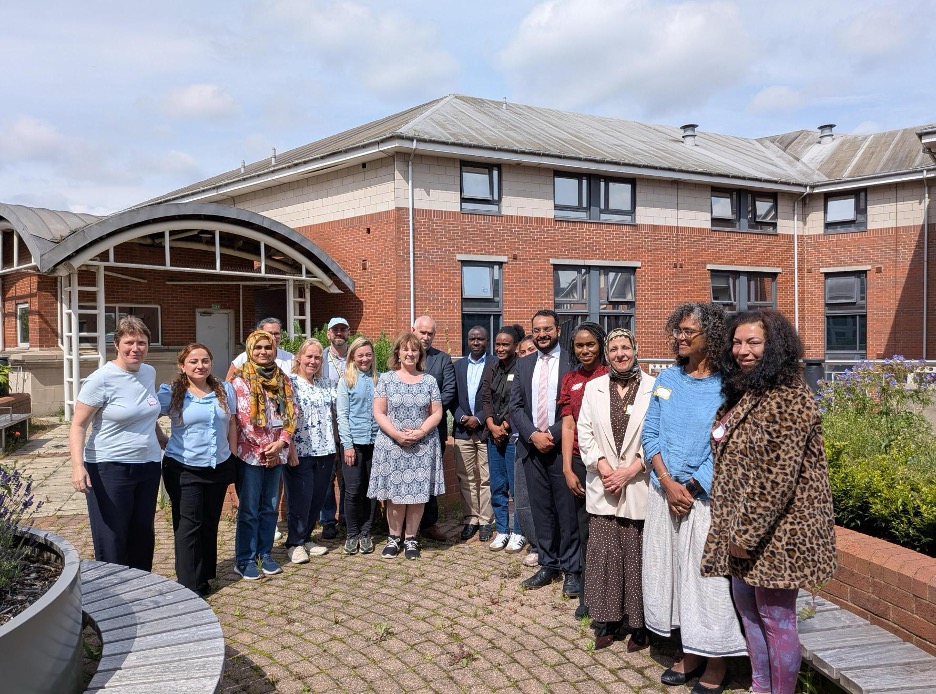
On 15 June 2026, twenty-one Nottingham Trent University (NTU) multidisciplinary researchers from law, biosciences and social sciences, together with pharmacy and microbiology practitioners from Buckinghamshire Healthcare NHS Trust held a workshop exploring the intersection between Antimicrobial Resistance (AMR) and Human Migration. AMR is among the top ten global health threats endangering not just human health but also food security, economic growth, and sustainable development. AMR in 2021, directly contributed to an estimated 1.14 million deaths and indirectly to 4.71 million deaths. AMR arises when germs mutate and evolve in ways that make them resistant to medicines which complicates clinical management of infections and increases the risk of further transmission. Delayed, limited or inappropriate medical care is known to exacerbate or heighten rates of infection.
The workshop discussed the complex but often ignored relationship between human migration, AMR, healthcare access, and policy responses, focusing on the UK. With increasing climate change, geopolitical instability, economic pressures and tourism, international mobility and migration are inevitable. Through a keynote address, presentations of literature reviews, and facilitated discussions among the workshop participants, the workshop explored how social, structural, and health system factors shape AMR risks and outcomes among migrant populations. By interrogating the current evidence, the group identified critical gaps and prioritised the next steps for future research and policy on AMR and migration.
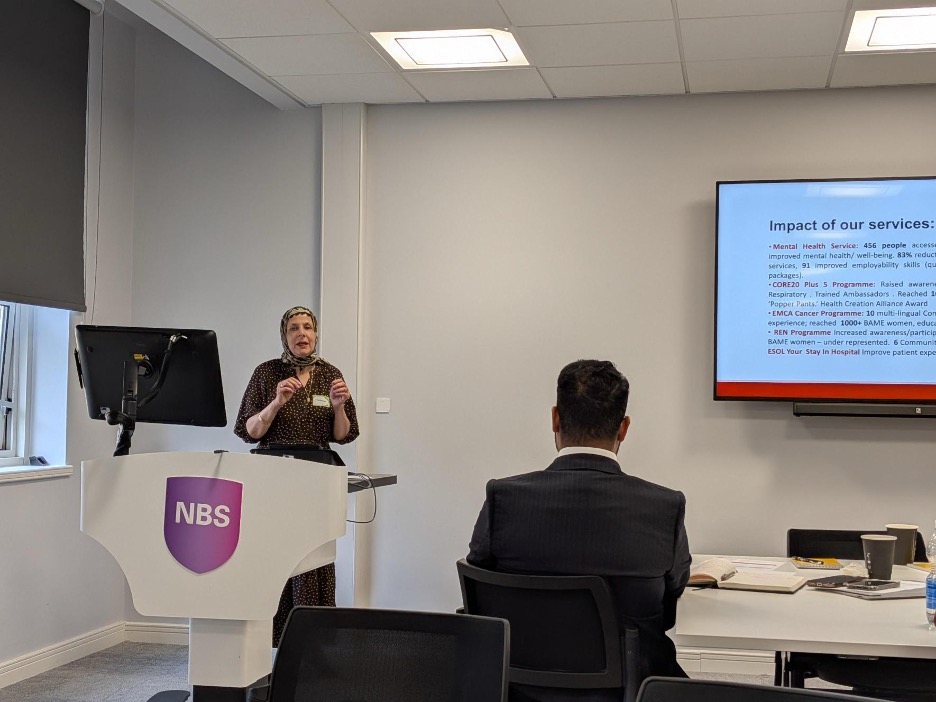
Khudeja Amer-Sharif, CEO of Shama Women's Centre, delivering the keynote address on understanding migration and AMR
Two postgraduate researchers presented findings from their literature review on the themes:
- Examining the contribution of migration to the AMR burden in the UK (Sidra Kashif)
- The policy and governance landscape for migration and AMR in the UK (Diana Wendo)
In a keynote address, Khudeja Amer-Sharif, CEO of the Shama Women's Centre, highlighted migrant lived experiences, showing how challenges in accessing NHS healthcare systems, including health service registration difficulties, language barriers, digital exclusion/poverty, limited awareness of available services, and mistrust arising from previous experiences or uncertainty about immigration status, often restrict health-seeking behaviours of migrant populations. Her presentation emphasised the importance of building trust between the NHS and migrants through community organisations that support health literacy and awareness, bridge access to services, and build culturally appropriate relationships between healthcare providers and communities.
Honestly, I too find it difficult to use some of the digital tools we use, so I am certain it must be much more difficult for someone who has just gotten into the country
A participant reflection on how digital tools can sometimes reinforce health inequities rather than reduce them.
Way forward
Reflecting on the evidence from research literature and lived experiences, the workshop participants discussed the priority challenges and gaps and made recommendations for future research based on three themes:
- screening, detection and surveillance
- inequity and healthcare access
- policy, governance and enforcement
Theme 1: Screening, detection and surveillance
Concerns around consent, trust, stigma, data protection and the practical challenges of implementing screening programmes in diverse populations were recognised. However, there was consensus on the need to explore ways of circumventing these challenges to improve AMR detection, surveillance, and understanding transmission pathways. Identified opportunities included community engagement at a grassroots level and stronger data-sharing systems for demographic mapping and wastewater surveillance, to help identify “hotspots” of AMR prevalence and inappropriate or excessive antibiotic use where interventions might be particularly beneficial.
Theme 2: Inequity and access to healthcare
Participants emphasised that inequity should not be understood through a unilateral lens; rather, it should be viewed pragmatically through interactions of multiple and interconnected structural, informational, social, cultural, economic and migration-related factors. Key barriers identified included difficulties navigating the UK healthcare system, language differences, limited health literacy, digital exclusion/poverty, long waiting times, lack of trust, stigma, discrimination, and financial constraints. A key takeaway was that migrants are not homogeneous and therefore future research, policies and interventions should continuously be sensitive to the potential differences in their experiences and needs and take these diversities into consideration when (re)designing studies, policies and health service delivery systems.
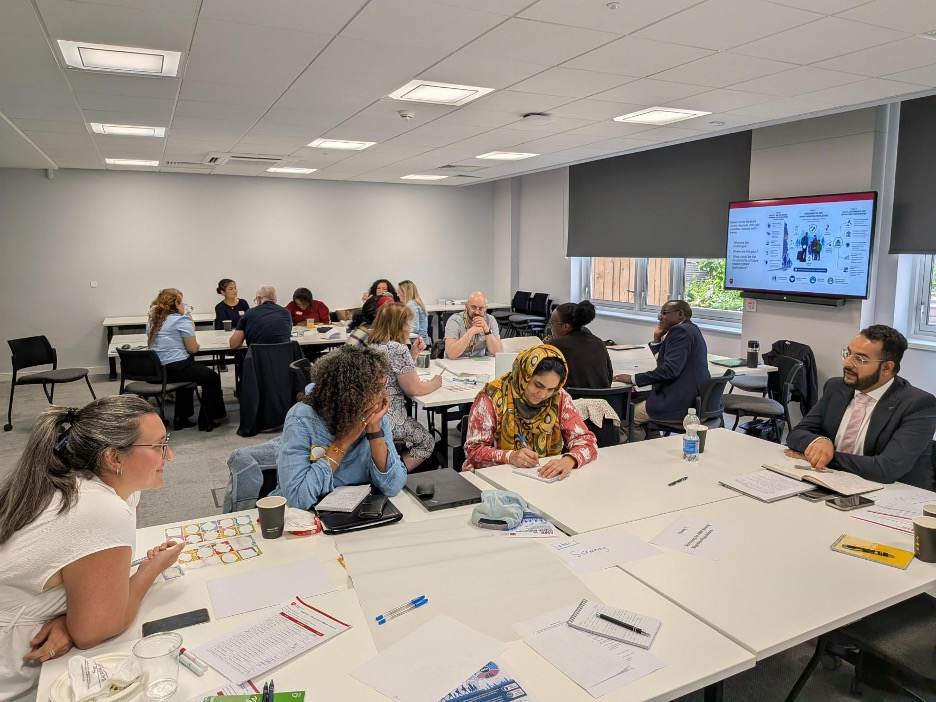
Workshop participants in group discussions to identify research priorities, evidence gaps, and future directions for AMR and migration research
Theme 3: Policy, governance and enforcement
Discussions were centred on how nationalism and political discourse are exacerbating tensions between NHS, migration, and public health systems. Additionally, participants raised concerns about the limited integration of data systems, fragmented governance structures, and inconsistent service delivery within the UK. Participants underscored the importance of learning from best practices of other jurisdictions, noting that effective responses require collaboration across One Health sectors, disciplines and NHS Trusts.
The discussions also explored existing regulatory initiatives that have been introduced to address the barriers faced by undocumented and forcibly displaced migrants when accessing healthcare. It was highlighted that the ineffective implementation of these regulatory initiatives has caused the ongoing challenges preventing migrants from receiving timely and appropriate treatment.
In conclusion, AMR and migration should not be viewed through a narrow lens. Rather than simply stating that migrant populations increase AMR, researchers, clinicians, practitioners and academics must focus on the structural conditions that shape vulnerability amongst them. This shift in perspective towards understanding the more social determinants of health encourages more equitable, evidence-informed, and person-centred approaches to antimicrobial stewardship. This calls for multilingual communication strategies, community-based outreach, co-production approaches and stronger culturally specific competencies. Participants at the workshop committed to generating stronger evidence to address the identified critical gaps and develop research agendas and interventions that align with both national and international priorities while remaining grounded in migrant community experiences.
The authors and workshop organisers wish to thank NTU for funding this event through the UK Research Partnership Fund, and all of the speakers and participants for their contributions.
If you are interested in collaborating, we would be keen to hear from you. Please get in touch by contacting Haneeq Ahmed, Dr Jonathan Gorry, Dr Azhin Omer, Dr Moses Mukuru and Dr Jody Winter