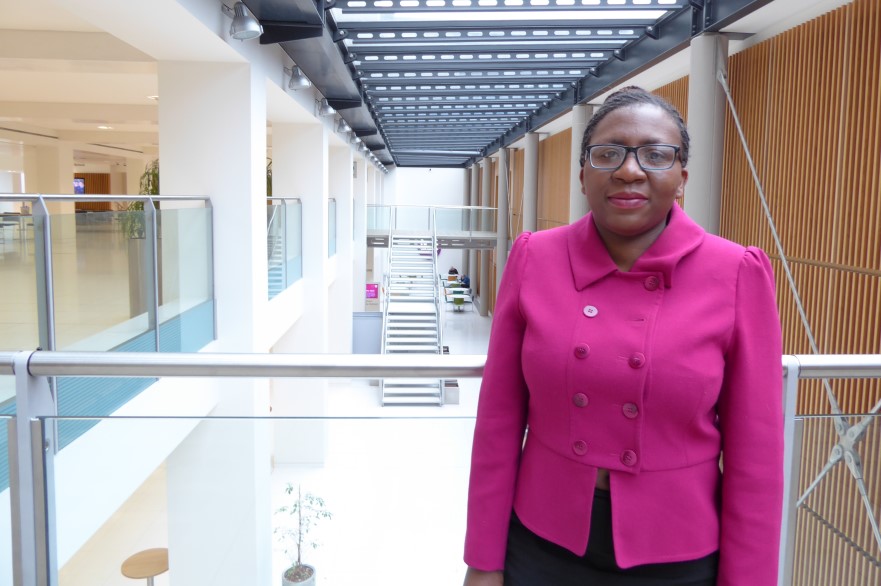
I felt that NBS offered the right combination of academic support, research opportunities and an international environment in which I could develop as an independent researcher.
More about Mengdi
Mengdi is completing her PhD in Business (Accounting and Finance) at Nottingham Business School.
What motivated you to pursue a PhD and why did you choose Nottingham Business School (NBS)?
I have always had a strong academic curiosity and a desire to develop my knowledge beyond the level of taught study. For me, pursuing a PhD was a natural continuation of my academic journey and an opportunity to develop deeper expertise in my research area. I wanted to challenge myself intellectually, contribute to academic knowledge, and ultimately pursue a career that combines research and teaching.
I chose Nottingham Business School because I had previously completed my MSc Finance at Nottingham Trent University and had a very positive experience there. I particularly valued the quality of teaching, the supportive learning environment, and the structure and content of the programmes. I also developed strong relationships with academic staff during my previous studies, and their encouragement and recommendations played an important role in my decision to continue my academic journey at NBS.
Having already experienced the academic environment at Nottingham Trent University, I felt that NBS offered the right combination of academic support, research opportunities and an international environment in which I could develop as an independent researcher.
How has the PhD programme at NBS impacted your career progression and personal growth?
The PhD programme at NBS has had a significant impact on both my career progression and personal development. Academically, it gave me the opportunity to develop from a student into an independent researcher, particularly through designing and conducting quantitative research, presenting my work to academic audiences, publishing research, and engaging critically with the wider literature.
The teaching experience I gained during my PhD was also particularly valuable. Alongside my doctoral research, I had the opportunity to teach and engage with students, which helped me develop my teaching, communication and classroom-management skills. This experience gave me an early understanding of the responsibilities of an academic role and helped me become more confident in explaining complex concepts in an accessible and engaging way.
The programme also helped me develop greater confidence in communicating my research, responding to constructive criticism, working independently and managing the challenges associated with long-term research projects.
Most importantly, the PhD provided a strong foundation for my current career trajectory. I will be joining KEDGE Business School as an Assistant Professor in Corporate Finance, with a balanced profile and research interests in sustainable finance and green finance. The research expertise, teaching experience, academic service and professional network I developed during my PhD have all been important in preparing me for this transition into a full-time academic career.
Overall, the combination of research training, teaching experience, academic conferences, international exposure and networking gave me a much broader understanding of what an academic career involves and prepared me well for my transition into a faculty position.
What is your current job title and responsibilities?
I will be joining KEDGE Business School as an Assistant Professor in Corporate Finance, with a balanced profile and research interests in sustainable finance and green finance this September 2026.
My role combines research, teaching and academic service. On the research side, I will participate in the development of research activities and contribute to KEDGE Business School's positioning in the field. My teaching responsibilities will include subjects such as Corporate Finance and Sustainable Finance. I will also contribute to academic service through student supervision, participation in juries, RCM activities, thesis supervision and other service responsibilities within the institution.
What aspects of the PhD programme did you find most valuable?
One of the most valuable aspects of the PhD programme was the combination of structured research training and practical academic experience. The training provided a strong foundation for understanding research methodologies, critically evaluating academic literature and designing rigorous empirical research.
I also greatly valued the support and guidance from my supervisors, who encouraged me to develop my own research interests while providing constructive feedback throughout the PhD journey. Having a supportive supervisory relationship was particularly important during the more challenging stages of doctoral research.
The opportunity to teach during my doctoral studies was another particularly valuable aspect of the programme. It allowed me to develop my teaching and communication skills alongside my research and gave me valuable experience of working with students.
I also greatly appreciated the opportunities to participate in academic conferences and international research events. Presenting my work to different academic audiences allowed me to receive valuable feedback, improve my research and gain confidence as a researcher. These events also provided opportunities to build relationships with researchers from different institutions and countries.
Overall, the combination of research training, teaching experience, academic conferences, international exposure and networking gave me a much broader understanding of what an academic career involves and prepared me well for my transition into a faculty position.
Were there any specific skills or knowledge areas from your PhD that have been particularly useful in your career?
My PhD was particularly valuable in developing my quantitative research and digital skills. My research involved extensive empirical analysis, which gave me substantial experience with statistical and econometric techniques and research software such as Stata, EViews and Python.
Beyond technical skills, the PhD strengthened my ability to formulate research questions, critically evaluate evidence, manage and analyse large datasets, interpret empirical findings and communicate complex ideas clearly.
My teaching experience during the programme was also particularly useful in developing my ability to explain quantitative concepts to students with different levels of prior knowledge. This helped me become more confident in translating complex academic concepts into accessible and engaging teaching.
These skills are highly transferable to my academic career, particularly in corporate finance and sustainable finance, where rigorous empirical analysis, digital research skills and the ability to work with complex corporate and financial data are increasingly important.
Did you participate in any extracurricular activities or leadership opportunities during your PhD? If so, how did they contribute to your experience?
Yes. Alongside my doctoral research and teaching, I actively participated in a range of academic activities and professional service.
I presented my research at academic conferences and international research events, which helped me develop my academic communication and presentation skills and learn how to engage with researchers from different backgrounds.
I also contributed to the organisation of academic symposia and conferences and served as a conference chair at a British Academy of Management (BAM) conference session. These experiences gave me valuable exposure to the organisation and management of academic events, as well as opportunities to engage with researchers beyond my own institution.
In addition, I have undertaken peer-review activities for academic journals. Reviewing research by other scholars helped me develop a more critical perspective on research design, methodology and academic writing, while also giving me a better understanding of the peer-review and publication process.
Together, these experiences helped me develop not only as a researcher, but also as an active member of the wider academic community. They strengthened my confidence, leadership, communication and professional skills and prepared me for the responsibilities of an academic career.
How has the network you built at NBS influenced your career or professional opportunities?
The academic network I developed during my PhD has had a meaningful influence on my career development and professional opportunities.
During my time at NBS, I had several opportunities to collaborate academically with KEDGE Business School. These included multiple exchanges and collaborative activities between Nottingham Business School and KEDGE, as well as participation in an academic conference on Corporate Responsibility organised in collaboration with KEDGE and other institutions in Cambridge.
These experiences allowed me to meet academics from different institutions, understand different academic environments and develop professional relationships beyond my own university. They also gave me greater exposure to international academic communities and helped me develop a broader professional network.
This network became particularly valuable when I was considering my next academic career step. Through these collaborations, I had already become familiar with KEDGE's academic environment, international outlook and research culture. These experiences contributed to my decision to apply for an academic position there and helped me understand how my research and teaching interests could fit within the institution.
More broadly, the network I developed at NBS gave me the confidence, relationships and professional exposure to pursue opportunities within the international academic community.
What advice would you give to a prospective student considering a PhD programme?
My advice would be to make sure that you are genuinely motivated to undertake a PhD before starting the journey. A PhD is very different from a taught degree: it requires a high degree of independence, resilience, patience and self-motivation. There will inevitably be periods when progress feels slow or when the research does not develop exactly as planned.
For that reason, I believe you need both the courage to start and the determination to continue. A PhD is not simply about completing a thesis; it is about developing the ability to think independently, deal with uncertainty and contribute something original to your field.
I would also encourage prospective students to make full use of the opportunities available during the programme. Attend conferences, present your research, engage with other researchers, build your academic network and seek feedback. My own experience of teaching, presenting at conferences, participating in academic events and undertaking peer review showed me that the doctoral experience can extend far beyond the thesis itself.
Above all, choose a research topic that you genuinely care about and be prepared to persevere. A PhD requires commitment and resilience, but it can also be one of the most rewarding experiences of your academic and professional life.
Still need help?
-

STUDENT PROFILE
Richard Garforth
PhD - Research degrees at Nottingham Business SchoolUnited Kingdom
https://www.ntu.ac.uk/study-and-courses/courses/our-students-stories/business/richard-garforth
-
STUDENT PROFILE
Sue Shepherd
DBA - Doctor of Business AdministrationUnited Kingdom
https://www.ntu.ac.uk/study-and-courses/courses/our-students-stories/business/sue-shepherd
-
STUDENT PROFILE
Yanna Anne Chimwaza
PhD - Research degrees at Nottingham Business SchoolMalawi
https://www.ntu.ac.uk/study-and-courses/courses/our-students-stories/business/yanna-anne-chimwaza