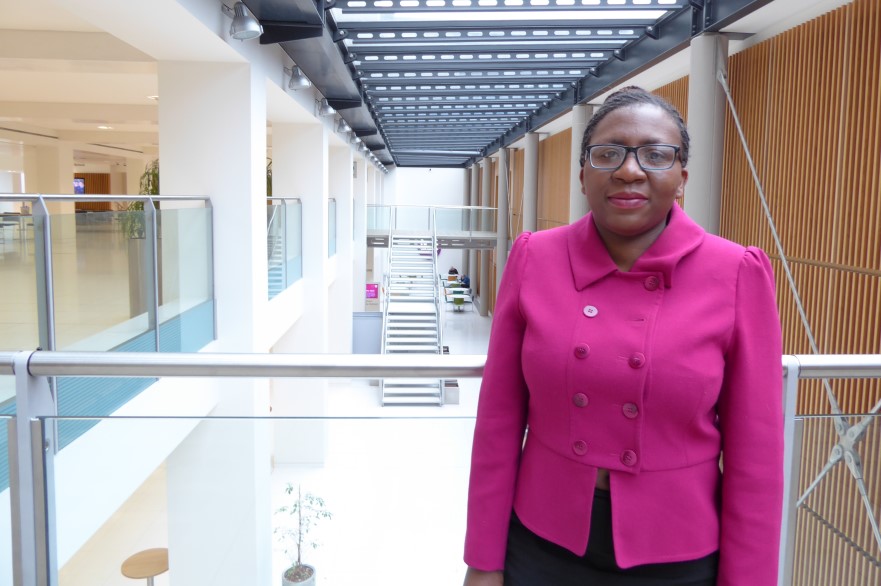
For me, one of the greatest strengths of the programme was the opportunity to combine academic rigour with practical application.
More about Richard
Richard is the founder of Human Element Maritime and is completing his Executive PhD at Nottingham Business School.
What motivated you to pursue a PhD and why did you choose Nottingham Business School (NBS)?
I was encouraged to consider Nottingham Trent University by an alumnus who spoke positively about the Professional PhD programme and the support available. At the time, I was looking for a doctoral route that would allow me to remain in full-time employment while undertaking rigorous research with practical application. Having spent more than 30 years in the maritime industry, both at sea and ashore, I had become increasingly concerned about the challenges affecting seafarer wellbeing and the tensions that existed between different stakeholder groups. The Professional PhD at NTU offered the opportunity to investigate these issues in a live organisational environment, contribute to academic knowledge, and produce findings capable of influencing industry practice. The COVID-19 pandemic further reinforced the importance of wellbeing and strengthened my desire to undertake research that could make a meaningful difference.
How has the PhD programme at NBS impacted your career progression and personal growth?
The Professional PhD at Nottingham Business School has had a profound impact on both my career and personal development. It strengthened my ability to think critically, challenge assumptions through evidence, and influence organisational decision-making through research rather than opinion. My work on seafarer wellbeing enabled me to make an original contribution to maritime knowledge while remaining embedded in industry practice.Professionally, the doctorate enhanced my credibility as an executive HR leader and provided the foundation for establishing Human Element Maritime™, where I now translate research into practical solutions that improve workforce resilience, leadership effectiveness and organisational performance across the maritime sector. The programme demonstrated how academic rigour can create meaningful business and societal impact.Personally, the five-year journey developed resilience, confidence and self-awareness. Balancing doctoral study alongside a demanding leadership career was challenging, but it proved to be one of the most rewarding experiences of my life. It changed not only how I work, but how I view leadership, wellbeing and the human element of organisational success.
I also greatly valued the support and guidance from my supervisors, who encouraged me to develop my own research interests while providing constructive feedback throughout the PhD journey. Having a supportive supervisory relationship was particularly important during the more challenging stages of doctoral research.
What is your current job title and responsibilities?
I currently serve as Head of HR at Bibby Marine Ltd, where I lead the people agenda across the organisation, with responsibility for workforce strategy, organisational development, leadership capability, employee relations, talent management, wellbeing, and HR governance. My role involves partnering with senior leaders to ensure the organisation has the capability, culture and resilience required to achieve its strategic objectives. This includes supporting both shore-based and offshore employees within a complex maritime operating environment.Alongside my corporate role, I am the Founder of Human Element Maritime™, a consultancy dedicated to improving workforce resilience, leadership effectiveness, wellbeing and organisational performance across the maritime sector. Human Element Maritime™ was established as a direct extension of my doctoral research, enabling me to translate academic insights into practical solutions for organisations seeking to strengthen the human element of business performance.Balancing these two roles allows me to combine executive leadership with independent research and consultancy. The experience gained at Bibby Marine provides valuable operational insight, while Human Element Maritime™ creates opportunities to apply evidence-based approaches across the wider maritime industry. Together, they reflect my commitment to bridging the gap between academic research and real-world practice, ensuring that people-centred leadership contributes to both organisational success and workforce wellbeing.
What aspects of the PhD programme did you find most valuable?
The most valuable aspect of the Professional PhD programme was the ability to combine academic rigour with real-world application. Unlike a traditional academic route, the programme allowed me to investigate a live organisational challenge while continuing to work in the maritime industry, ensuring the research remained relevant and impactful. This practitioner focus ultimately enabled me to translate my findings into practical frameworks and, later, the creation of Human Element Maritime™.
A particularly important factor was the support and challenge provided by my supervisors, Professor Steven Brown and Dr Ishan Jalan. They brought complementary perspectives, consistently encouraging me to think more critically, strengthen my analysis and elevate my work to doctoral level. Their guidance helped me move from being an experienced practitioner to becoming a confident researcher and scholar.I also valued the diversity of the doctoral community and the opportunity to engage with professionals from different industries and backgrounds. These interactions broadened my thinking and exposed me to perspectives that challenged my own assumptions. Most importantly, the programme taught me how to think differently. It developed my ability to evaluate evidence, question accepted practices and approach complex organisational issues with greater curiosity and critical reflection. Those skills continue to influence my role as Head of HR at Bibby Marine and underpin the work I undertake through Human Element Maritime™ today.
Were there any specific skills or knowledge areas from your PhD that have been particularly useful in your career?
One of the most valuable outcomes of the Professional PhD was the development of a consultancy mindset. The programme taught me how to move beyond solving immediate problems and instead diagnose underlying organisational issues through evidence, stakeholder analysis and critical enquiry.
Rather than asking, “What is happening?”, I learned to ask, “Why is it happening, what does the evidence tell us, and what interventions are most likely to create sustainable change?” This way of thinking now underpins both my role as Head of HR at Bibby Marine and my work through Human Element Maritime™.The PhD also strengthened my strategic thinking, research and analytical capabilities. I became far more confident in working with complex data, evaluating competing viewpoints, and translating academic theory into practical business solutions. These skills have proved invaluable when supporting executive decision-making, organisational change, leadership development and workforce resilience initiatives.
Perhaps most importantly, the programme showed me how rigorous research can be transformed into practical impact. The ability to bridge academia and industry directly influenced the creation of Human Element Maritime™, where I help organisations apply evidence-based approaches to leadership, wellbeing and organisational performance.In short, the PhD didn't just develop my knowledge, it changed how I approach problems, engage with stakeholders and create value as both an executive leader and consultant.
Did you participate in any extracurricular activities or leadership opportunities during your PhD? If so, how did they contribute to your experience?
As a part-time Professional PhD candidate, my development opportunities were closely connected to industry leadership rather than traditional campus-based activities. Throughout the programme, I continued to lead people, organisational development and wellbeing initiatives within the maritime sector, allowing me to apply and test emerging research findings in a real-world environment.
A particularly rewarding aspect of the journey was the interest the research generated across the maritime industry. Following completion of the doctorate, I engaged with organisations such as The Nautical Institute, sharing insights from my research and exploring how the findings could contribute to wider industry conversations around seafarer wellbeing, leadership and workforce resilience. This exposure allowed me to connect with senior industry professionals, academics and practitioners who were interested in applying the research in practical ways.
The growing industry interest in the research also provided the foundation for establishing Human Element Maritime™, creating an opportunity to extend the impact of the PhD beyond academia and into practice. Through presentations, networking and collaboration with maritime stakeholders, I was able to demonstrate how evidence-based research can support meaningful organisational and industry-wide change.Collectively, these experiences strengthened my confidence as a leader, researcher and consultant, while reinforcing my belief that research should not simply generate knowledge but also create practical value for the people and organisations it seeks to serve.
How has the network you built at NBS influenced your career or professional opportunities?
The network I developed at Nottingham Business School significantly broadened my professional horizons. Working alongside academics, doctoral researchers and experienced practitioners exposed me to new perspectives and challenged me to think beyond the maritime sector. The guidance and support of Professor Steven Brown and Dr Ishan Jalan were particularly influential in helping me develop as both a researcher and leader. The credibility, confidence and relationships built throughout the programme have since helped me engage with industry organisations such as The Nautical Institute and provided a platform for establishing Human Element Maritime™, where I continue to translate research into practical solutions for the maritime industry.
What advice would you give to a prospective student considering a PhD programme?
My advice would be to choose a research topic you are genuinely passionate about and one that has the potential to make a meaningful contribution. A Professional PhD is a long-term commitment, so curiosity, resilience and a clear sense of purpose are essential.
For me, one of the greatest strengths of the programme was the opportunity to combine academic rigour with practical application. If you are a working professional, embrace the chance to use your organisation and industry experience to enrich your research, whilst remaining open to having your assumptions challenged. The most rewarding learning often comes from questioning what you thought you already knew.
I would also encourage prospective students to make full use of their supervisory team. I was fortunate to be supported by Professor Steven Brown and Dr Ishan Jalan, whose guidance, challenge and encouragement were instrumental throughout my journey. They pushed me to think more critically, become a better researcher and ultimately produce work that delivered both academic and practical value.Finally, think beyond the thesis itself. A doctorate can become much more than an academic qualification. In my case, the research shaped my approach to leadership, strengthened my capabilities as an executive HR professional, and ultimately provided the foundation for establishing Human Element Maritime™.
If you approach the programme with energy, commitment and an openness to learn, the impact can extend far beyond graduation and create opportunities you may never have anticipated.
Still need help?
-

STUDENT PROFILE
Mengdi Wei
PhD - Research degrees at Nottingham Business SchoolUnited Kingdom
https://www.ntu.ac.uk/study-and-courses/courses/our-students-stories/business/mengdi-wei
-
STUDENT PROFILE
Sue Shepherd
DBA - Doctor of Business AdministrationUnited Kingdom
https://www.ntu.ac.uk/study-and-courses/courses/our-students-stories/business/sue-shepherd
-
STUDENT PROFILE
Yanna Anne Chimwaza
PhD - Research degrees at Nottingham Business SchoolMalawi
https://www.ntu.ac.uk/study-and-courses/courses/our-students-stories/business/yanna-anne-chimwaza