Research reveals mental health strain within swimming coaching
Two-thirds of UK swimming coaches report symptoms of depression and anxiety a new study has revealed.
By Dave Rogers | Published on 12 February 2026
Categories: Press office; Research; School of Science and Technology;
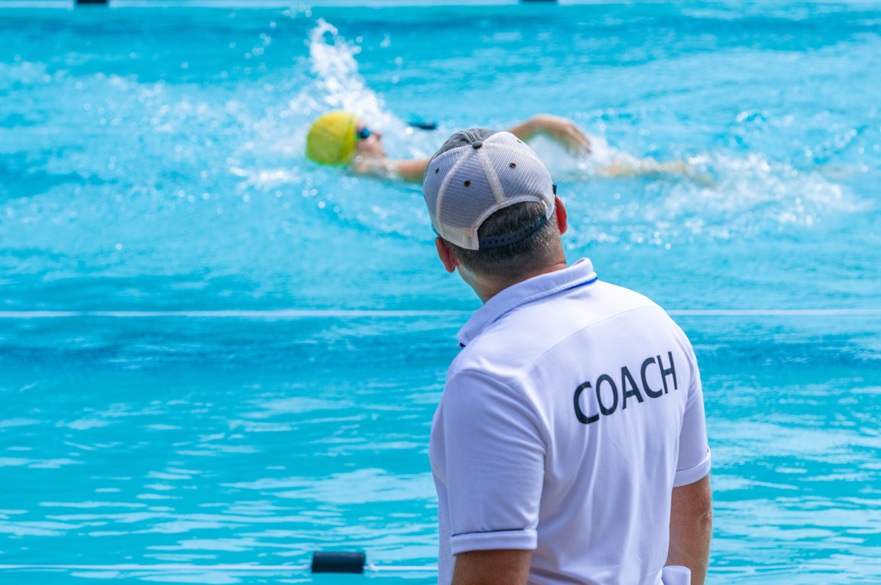
Sport and exercise psychologists at Nottingham Trent University wanted to better understand mental health and wellbeing in swimming coaches and to identify the challenges driving any stress-related health problems.
The researchers argue that, unlike some team sports, individual sports such as swimming often place distinctive demands on coaches.
With swimming, this can include disrupted sleep patterns due to early or late training sessions, significant and continuous year-round training, extensive travel for competitions, a high-performance culture and a demand for early specialisation among athletes.
Almost 150 coaches across a range of competitive levels – from senior international through to club level – completed a questionnaire as part of the study, which was funded by the British Swimming Coaches Association.
The research showed that 64% of coaches reported some form of depression, with 20% of those severe or moderately severe. A total of 67%, meanwhile, reported symptoms of anxiety, with 37% severe or moderate.
Previous studies have shown that this compares to four percent of athletes reporting severe or moderately severe symptoms of depression and five percent reporting severe or moderate symptoms of anxiety.
Coaches reported low levels of wellbeing, although overall symptoms of burnout were low.
The data revealed that coaches often felt lonely and isolated in their roles and wanted greater support (29%). Almost a third struggled with poor work-life balance and felt overwhelmed by the amount of work they were required to do (31%).
Almost a third of coaches (29%) highlighted a variety of problems related to parents and parent-led committees, such as a lack of understanding by club parents of what it takes to plan prepare and deliver effective coaching.
More than a third (38%) were not aware of any support services available to them, with the researchers suggesting that national governing bodies could enhance awareness of existing services alongside improving current provision.
Full-time coaches reported higher symptoms of depression, anxiety, burnout and lower wellbeing than those working part-time, it was found.
Anxiety and depression were both higher when coaches felt the demands of their role were high and when they felt working relationships were strained. Depression was also higher when coaches didn’t feel strong connections to colleagues.
Wellbeing was lower when coaches didn’t feel strong connections to colleagues and when coaches doubted their own ability.
Burnout was related to spending more hours working poolside, the demands of the role, strained relationships, feeling unsupported by their manager and when coaches felt they had less autonomy.
More than two-thirds of coaches (36%) said they wanted to see more education, whether formal or informal such as through forums, networks or mentoring, and almost a third (32%) would like to see a specific coaches’ welfare service.
The researchers say that their results can help inform the development of interventions to improve coaches’ mental health and wellbeing.
They argue that this could be at an individual level – such as improved mental health education, coping resources and access to services – as well as an organisational level, with better strategies to ensure manageable workloads and identify and support coaches at risk.
“Previous studies have shown how coaching in sport can be inherently stressful, but many have tended to look at team rather than individual sports,” said lead researcher Dr Ella McLoughlin, a sport and exercise psychologist in Nottingham Trent University’s School of Science and Technology.
She said: “It is clear that we need to give more attention to supporting the mental health and wellbeing of swimming coaches, particularly those working full-time as longer hours poolside was associated with higher levels of emotional exhaustion.”
The Executive Director of the British Swimming Coaches Association, Brian McGuinness, said: “The findings of this report reflect and go beyond the anecdotal evidence that led to us approaching Nottingham Trent University.
“The Association has already acted upon the recommendations, having agreements in place with the relevant national governing bodies and has initiated an employee assistance programme as a benefit of membership for BSCA members.
“We thank the team for their work & will continue to build upon the report’s recommendations going forward.”
The study is published in the journal The Sport Psychologist.
Notes for Editors
Press enquiries please contact Dave Rogers, Public Relations Manager, on telephone +44 (0)115 848 8782, or via email.
Nottingham Trent University (NTU) has been named UK ‘University of the Year’ five times in six years, (Times Higher Education Awards 2017, The Guardian University Awards 2019, The Times and Sunday Times 2018 and 2023, Whatuni Student Choice Awards 2023) and is consistently one of the top performing modern universities in the UK.
Students have voted us the best university in the UK and 1st in the UK for student employability (Uni Compare 2025).
NTU is 4th in the UK for number of undergraduate students (HESA 2023-24) with over 36,000 students and more than 4,000 staff located across six campuses. It has an international student population of 6,000 and an NTU community representing over 160 countries.
NTU owns two Queen’s Anniversary Prizes for outstanding achievements in research (2015, 2021). The first recognises NTU’s research on the safety and security of global citizens. The second was awarded for research in science, engineering, arts and humanities to investigate and restore cultural objects, buildings and heritage. The Research Excellence Framework (2021) classed 83% of NTU’s research activity as either world-leading or internationally excellent.
NTU was awarded GOLD in the national 2023 Teaching Excellence Framework (TEF) assessment.
NTU is a top 10 for sport (British Universities and Colleges Sport league table 2025) and was named as Sports University of the Year (Daily Mail University Guide 2025). It has also been ranked as 25th in the UK by the Guardian University Guide 2026.
NTU is a holder of the University Mental Health Charter recognising the commitment an institution has shown towards continuous improvement in the area of mental health and wellbeing.
NTU is the most environmentally sustainable university in the UK and third in the world (UI Green Metric University World Rankings, 2025).