Living ‘tumour on a chip’ could give best ever insight into aggressive brain cancer
Scientists are creating a glioblastoma ‘tumour on a chip’ – a tiny living system capable of mimicking the key features of the human brain and providing a deeper understanding of how the aggressive brain cancer works.
By Dave Rogers | Published on 13 May 2026
Categories: Press office; Research; School of Science and Technology;
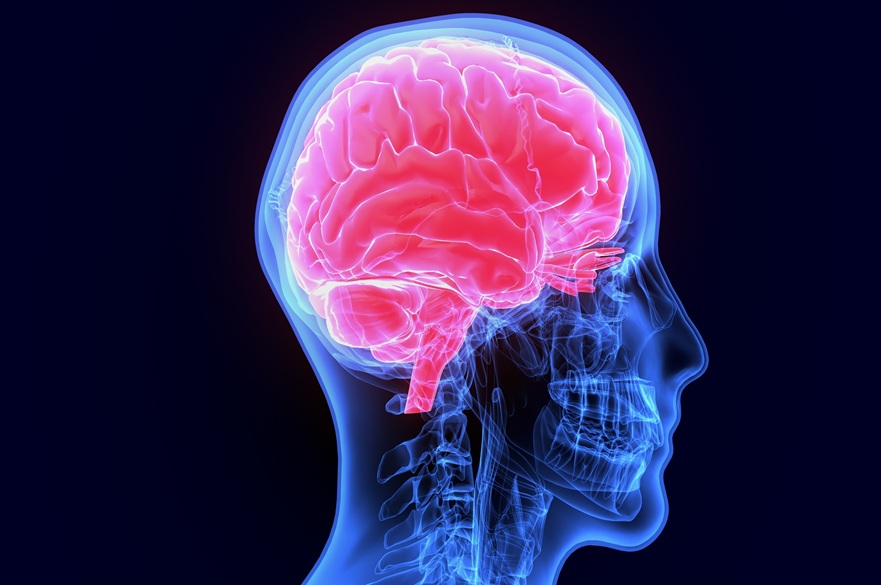
It is hoped that the Nottingham Trent University study will provide fresh insight into how glioblastoma tumours grow and how medicines can best reach them.
Glioblastoma is the most aggressive form of brain cancer in adults. It grows quickly, resists treatment and is extremely hard to target because medicines struggle to cross the brain’s natural protective shield, known as the blood–brain barrier.
Even with surgery, radiotherapy and chemotherapy, most glioblastoma patients survive just ten to 15 months after diagnosis, and fewer than 6% live beyond five years.
The research, in partnership with biotechnology company Kirkstall Ltd, involves combining human-derived cells with a microfluidic system.
Cells will be grown inside the chip to form a blood-brain barrier, before introducing glioblastoma cells to see how the tumour develops and how medicines travel through the barrier to reach them.
Fluid is able to flow through the device in the same way that blood moves through vessels and the cells behave just as they would inside the body.
By studying brain cancer more effectively the aim is to provide a more accurate, human-relevant way to test chemotherapies, paving the way for new treatments and improving the likelihood of promising drugs reaching patients.
The work could also replace the need for large numbers of animals in early‑stage glioblastoma drug studies.
It will involve using advanced imaging techniques, including microscopy, ultrasound and MRI, to monitor how the tumour develops and how well drugs penetrate the barrier and affect tumour growth.
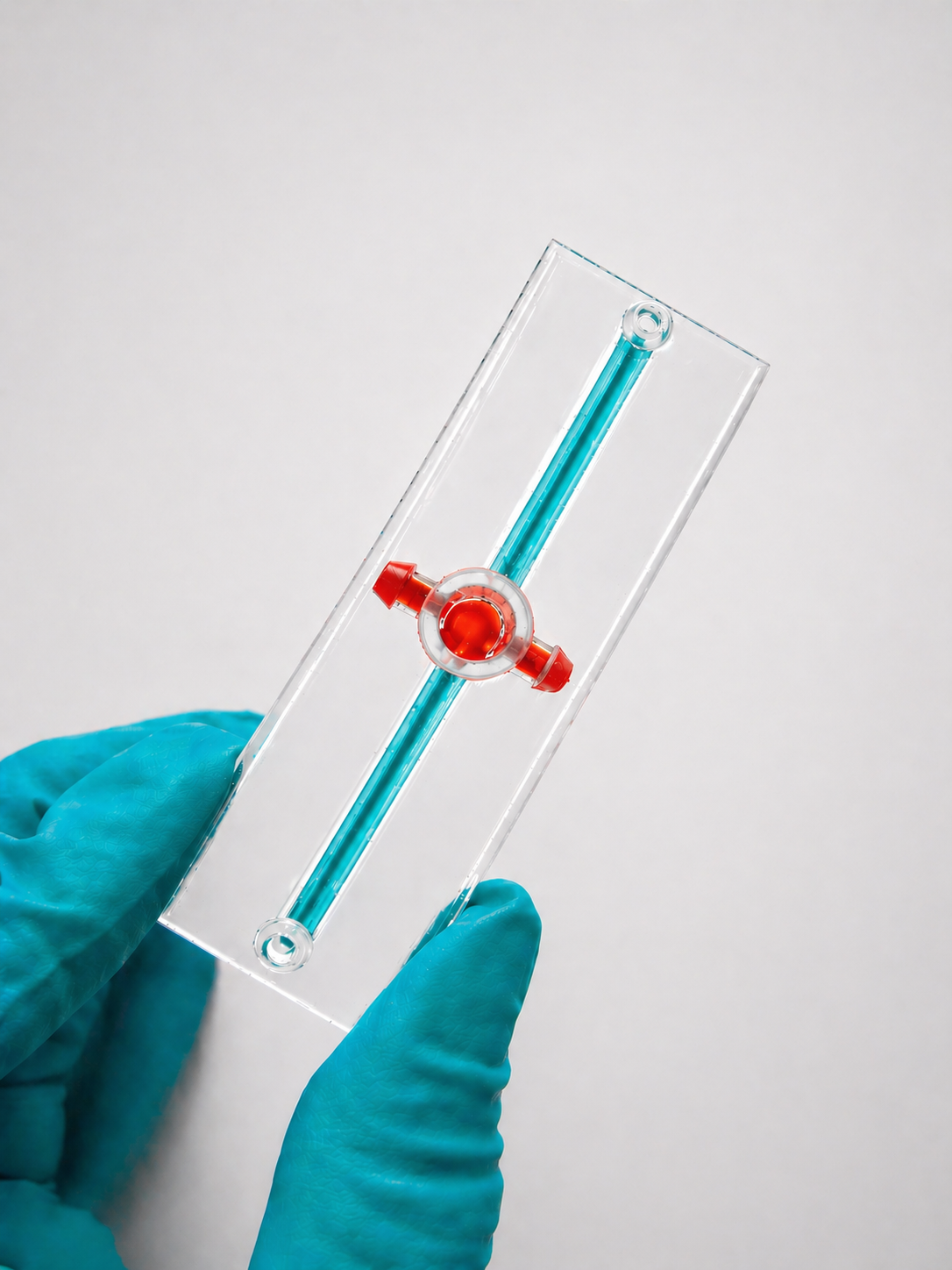
Image shows microfluidic system, with red fluid flowing through the device in the same way blood moves through the vessels in the body, while blue fluid mimics the brain environment where glioblastoma tumours grow
“There is an urgent need for better ways to test new treatments before they reach clinical trials,” said lead researcher Professor Gareth Cave, a scientist in Nottingham Trent University’s School of Science and Technology.
He said: “Current laboratory models, including those that rely on animals, often fail to accurately reflect how glioblastoma behaves in the human brain, meaning many potential drugs show promise in early testing but do not work in patients.
“We are creating a platform which more accurately reflects the human brain environment and has potential to fundamentally change how glioblastoma treatments are developed.
“This project represents an important step toward more predictive, ethical and impactful cancer research.”
Malcolm Wilkinson, Director at Kirkstall Ltd, said: “Existing preclinical models often fail to replicate the complexity of the human blood–brain barrier tumour interface, resulting in poor prediction of how drugs will behave in patients.
“This new tumour‑on‑chip platform seeks to address these weaknesses and represents a major advancement in human‑relevant cancer research. It will support the development of a next‑generation glioblastoma model that addresses urgent challenges in drug discovery while reducing reliance on animal experimentation.”
The study is part-funded by the Biotechnology and Biological Sciences Research Council (BBSRC) the National Centre for the Replacement, Refinement and Reduction of Animals in Research (NC3Rs) and Kirkstall Ltd.
It has been supported by an NC3Rs‑BBSRC Business Interaction Voucher award, a new joint funding initiative from the research councils. Learn more on the NC3Rs website.
Notes for Editors
Press enquiries please contact Dave Rogers, Public Relations Manager, on telephone +44 (0)115 848 8782, or via email.
Nottingham Trent University (NTU) has been named UK ‘University of the Year’ five times in six years, (Times Higher Education Awards 2017, The Guardian University Awards 2019, The Times and Sunday Times 2018 and 2023, Whatuni Student Choice Awards 2023) and is consistently one of the top performing modern universities in the UK.
Students have voted us the best university in the UK and 1st in the UK for student employability (Uni Compare 2025).
NTU is 4th in the UK for number of undergraduate students (HESA 2023-24) with over 36,000 students and more than 4,000 staff located across six campuses. It has an international student population of 6,000 and an NTU community representing over 160 countries.
NTU owns two Queen’s Anniversary Prizes for outstanding achievements in research (2015, 2021). The first recognises NTU’s research on the safety and security of global citizens. The second was awarded for research in science, engineering, arts and humanities to investigate and restore cultural objects, buildings and heritage. The Research Excellence Framework (2021) classed 83% of NTU’s research activity as either world-leading or internationally excellent.
NTU was awarded GOLD in the national 2023 Teaching Excellence Framework (TEF) assessment.
NTU is a top 10 for sport (British Universities and Colleges Sport league table 2025) and was named as Sports University of the Year (Daily Mail University Guide 2025). It has also been ranked as 25th in the UK by the Guardian University Guide 2026.
NTU is a holder of the University Mental Health Charter recognising the commitment an institution has shown towards continuous improvement in the area of mental health and wellbeing.
NTU is the most environmentally sustainable university in the UK and second in the world (UI Green Metric University World Rankings, 2024).