Cryopreserved sperm could help safeguard the future of endangered pupfish
Using cryopreserved sperm alongside larger breeding populations in zoos and aquaria could dramatically improve the long-term survival prospects of endangered pupfish, according to new research.
By Dave Rogers | Published on 14 September 2026
Categories: Press office; Research; School of Science and Technology;
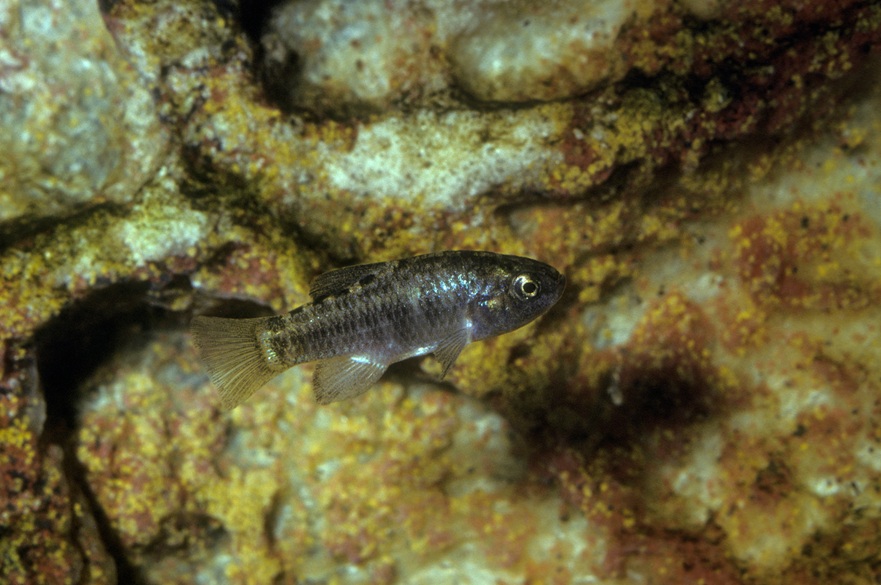
Scientists at Nottingham Trent University and Chester Zoo investigated 18 priority species of pupfish in zoos, finding that current population sizes were too small to maintain healthy levels of genetic diversity over the next century.
Pupfish are small freshwater fish, mostly found in North and Central America and the Caribbean. Many species live in isolated habitats in small numbers and are endangered due to factors such as habitat loss, water extraction, pollution and climate change.
“We found that current zoo populations of these pupfish are too small to remain genetically healthy over the next 100 years,” said lead author James Brereton, a PhD researcher in Nottingham Trent University’s School of Science and Technology and Scholar at Chester Zoo.
He said: “Without action, genetic diversity could decline very quickly. Increasing pupfish populations in collections and investing in cryopreservation and assisted reproductive technologies, could be crucial in protecting genetic diversity and improving the conservation prospects of these threatened species.”
Using population simulations, the team investigated whether stored, cryopreserved sperm could help preserve genetic diversity when introduced into future breeding programmes.
Their modelling showed that relying on existing zoo populations alone would require collections to expand substantially to meet the widely acknowledged target of retaining 90% of genetic diversity over 100 years.
Depending on the breeding scenario, this could require an average of between almost 1,600 and 9,500 fish across the priority species.
Introducing cryopreserved sperm into just ten percent of breeding attempts, however, could dramatically reduce the number of fish needed, their modelling suggested.
Under the most favourable scenario, just 150 individuals could be needed to maintain genetic diversity.
Genetic diversity is essential for species survival because it helps populations adapt to environmental change and reduces the risks associated with inbreeding.
The researchers say their findings suggest that combining cryopreservation with strategic breeding management could provide zoos with a practical way to strengthen the long-term viability of endangered fish populations while reducing the need for very large captive collections.
Dr Elena Hunter, the Director of Studies for the research in Nottingham Trent University’s Medical Technologies Innovation Facility, said: “This research showed that there are ways to preserve genetic diversity in species that require fewer animals in zoos by using a combination of natural breeding and cryopreserved sperm samples. Our research in pupfish priority species in zoos demonstrated the potential of such an approach.”
Dr Sue Walker, Head of Science at Chester Zoo, said: “The broader purpose of James’ work is to show that cryopreservation has a place in conservation, and this study clearly demonstrates that building cryopreservation into species conservation planning could improve outcomes for endangered populations.”
The study was also conducted in partnership with Dublin Zoo and the European Association of Zoos and Aquaria.
It is published in the journal Animal Conservation.
Notes for Editors
Press enquiries please contact Dave Rogers, Public Relations Manager, on telephone +44 (0)115 848 8782, or via email.
About Nottingham Trent University:
Nottingham Trent University (NTU) has been named UK ‘University of the Year’ five times in six years, (Times Higher Education Awards 2017, The Guardian University Awards 2019, The Times and Sunday Times 2018 and 2023, Whatuni Student Choice Awards 2023) and is consistently one of the top performing modern universities in the UK.
Students have voted us first in the UK for course quality, top five in the UK for employability and third best University in the UK (Uni Compare 2027). We are ranked in the top 25 universities in the country (The Guardian University Guide 2026).
We have over 35,000 students and more than 4,000 staff located across five campuses. It has an international student population of over 5,000 and an NTU community representing over 160 countries.
NTU owns two Queen’s Anniversary Prizes for outstanding achievements in research (2015, 2021). The Research Excellence Framework (2021) classed 83% of NTU’s research activity as either world-leading or internationally excellent.
NTU was awarded GOLD in the national 2023 Teaching Excellence Framework (TEF) assessment.
NTU is a top 10 for sport (British Universities and Colleges Sport league table 2025) and was named as Sports University of the Year (Daily Mail University Guide 2025).
NTU is a holder of the University Mental Health Charter, recognising the commitment an institution has shown towards continuous improvement in the area of mental health and wellbeing.
NTU is the most environmentally sustainable university in the UK and third in the world (UI Green Metric University World Rankings, 2025).