Textiles education can play a vital role in helping young people understand fashion's environmental impact
As concerns grow about waste, resource use and the effects of fast fashion, schools have an important role to play in helping young people understand how the fashion industry works and the choices available to consumers. Research by Dr Sarah Davies and Dr Naomi Braithwaite explores the role of textiles education in developing sustainability knowledge and skills.
By Dr Sarah Davies, Dr Naomi Braithwaite | Published on 3 November 2026
Categories: Press office; Research; School of Art & Design; Nottingham Institute of Education; School of Social Sciences;

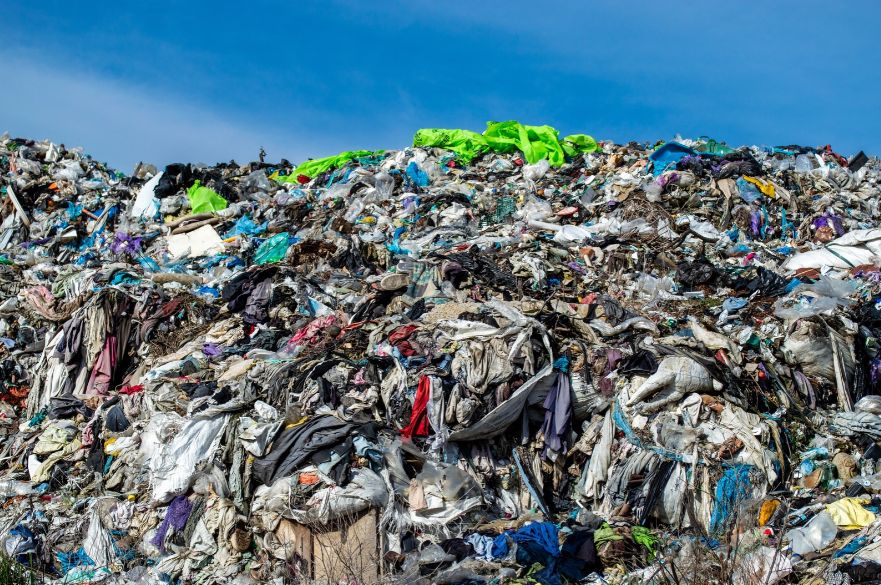
Fashion is one of the world's most environmentally damaging sectors. Textile production generates around 1.2 billion tonnes of greenhouse gas emissions each year, 85% of all textiles produced globally are sent to landfill, and the washing of synthetic garments releases an estimated 500,000 tonnes of microfibres into the world's oceans.
This is an industry that secondary-age (11-16) pupils interact with every day through their clothing choices.
As schools continue to explore how sustainability can be embedded across the curriculum through Education for Sustainable Development initiatives, textiles education is in a unique position to help young people understand environmental and social issues through practical, hands-on learning.
However, our research suggests that this potential is far from being fully realised.
Reviewing sustainable fashion education
Our study examined sustainable fashion education through a review of existing research alongside an analysis of England's current Design and Technology curriculum – the first time a study of this kind has been carried out.
The research is part of a larger curriculum development project funded by The All Saints Education Trust, which aims to translate academic findings into practical resources for teachers and curriculum designers.
We wanted to understand how sustainability currently appears within textiles education, what opportunities exist, and what barriers are preventing schools from making sustainability a more meaningful and consistent part of pupils' learning.
One of the clearest findings from the literature is that textiles provides particularly rich opportunities for sustainability education. Unlike many other subjects, textiles enables pupils to engage directly with materials, production methods and consumption choices.
Pupils can explore where fibres come from, how garments are manufactured, how clothing is cared for and repaired, and what happens when it reaches the end of its life. Concepts such as circular design, material responsibility and lifecycle thinking become tangible because students can see and work with the products themselves.
Research consistently highlights the value of experiential and project-based learning in helping young people develop sustainability knowledge and skills. Through designing, making, evaluating and adapting products, pupils can learn not only about environmental issues but also about problem-solving, critical thinking and responsible decision-making.
The evidence also suggests that textiles learning can extend beyond the classroom. A review by the Textiles Skills Centre found that 60% of secondary pupils reported applying textiles learning outside school, often through activities related to repair, reuse and waste reduction.
This suggests that effective textiles education can influence everyday habits and help young people develop ‘sustainability agency’ - the ability and willingness to act sustainably in their own lives.
Barriers to sustainable textiles education
Textiles occupies an unusual position within the secondary curriculum. At Key Stage 3 it sits within Design and Technology, while at Key Stage 4 it increasingly appears within Art and Design pathways.
This dual identity creates unique challenges. Teachers must work across different subject cultures, teaching approaches and assessment systems. As a result, sustainability is not always approached consistently across the curriculum.
One of the most significant challenges identified by our review concerns teacher confidence and professional development. The Textiles Skills Centre review suggests that many textiles teachers are enthusiastic about sustainability and recognise its importance.
However, teachers frequently report gaps in their knowledge of contemporary manufacturing processes, new materials, fibre science and lifecycle thinking. They also highlight limited access to high-quality curriculum resources and specialist training.
This reflects a wider issue within sustainability education. Climate change and sustainability have traditionally been taught primarily through science and geography. Although recent government strategies have highlighted the importance of sustainability education, much of the professional development support has focused on these subjects.
As a result, teachers in other disciplines, including textiles, can find themselves expected to teach sustainability without receiving the same level of training or guidance.
Time is another significant barrier. The Textiles Skills Centre review also found that pupils receive, on average, just 53 hours of textiles education across Key Stage 3, often delivered on termly rotations. Sustainability learning benefits from repeated engagement, reflection and the gradual development of understanding. Limited curriculum time can make that difficult to achieve.
Understanding the curriculum
To understand how sustainability is currently reflected within the curriculum itself, we analysed the Design and Technology programmes of study at Key Stages 3 and 4.
Using the GreenComp framework, developed by the European Commission, we examined how well current curriculum documents support twelve key sustainability competences. These include areas such as valuing sustainability, critical thinking, systems thinking, envisioning future challenges and acting for sustainability.
Some competences are present, particularly at Key Stage 4. Areas such as systems thinking, critical thinking and problem framing feature in requirements that encourage pupils to evaluate design decisions and consider wider impacts. Sustainability and ethics are also referenced more explicitly than at Key Stage 3.
However, many important sustainability competences remain weak or are entirely absent. Competences associated with envisioning sustainable futures receive little representation, while those related to acting for sustainability, including political agency, collective action and individual initiative, are not represented in either stage of the curriculum.
Sustainability education is about more than understanding environmental challenges, it also involves helping learners consider how change happens and what role they can play within that process. A curriculum that focuses primarily on awareness risks missing opportunities to develop confidence, agency and action.
Support for teachers
Our analysis suggests that much of the sustainability learning currently taking place depends heavily on individual teachers. Where sustainability is delivered effectively, it is often because teachers have chosen to make it a priority rather than because the curriculum explicitly requires it. This can lead to significant variation between schools and classrooms.
The ongoing curriculum review in England therefore represents an important opportunity. There is growing recognition that sustainability should be embedded across school subjects, and textiles is particularly well placed to contribute. The subject combines practical making, creative thinking and real-world relevance in ways that align closely with the aims of education for sustainable development.
If sustainability is to become a consistent and meaningful part of textiles education, teachers will also need access to training, resources and professional development that build confidence and subject expertise.
Assessment frameworks and accountability systems like Ofsted must also support the kinds of reflective, values-based learning experiences that sustainability education requires.
Turning research into action
Building on this research, we have secured further support from the All Saints Educational Trust to develop the next phase of our work in fashion and textiles sustainability education.
The second stage of the project will focus on creating and piloting a Subject Knowledge Enhancement course for trainee and early-career Design & Technology teachers.
This aims to address the lack confidence in specialist areas such as sustainable fashion, textile production and circular design by providing both the pedagogical foundations and practical skills needed to teach these topics with confidence.
Over the next three years, we will pilot the programme through both face-to-face and online delivery, helping us understand how best to support teachers in different contexts. The long-term ambition is to develop a freely accessible resource that can be used by Design & Technology teachers across the country.
For sustainability to become a meaningful and consistent part of textiles education, teachers need the knowledge, training and support to translate complex issues into engaging classroom experiences.
By investing in teacher development, we can help ensure that sustainability is embedded not only in the curriculum, but also in everyday teaching practice – giving young people the skills to understand and navigate a move towards more sustainable fashion.
Dr Sarah Davies, Senior Lecturer in the Nottingham Institute of Education, Children and Youth, School of Social Sciences, and Dr Naomi Braithwaite, Associate Professor in Fashion and Material Culture, Nottingham School of Art and Design.
Read the full paper Fashion, Sustainability and Textiles Education in England: A Scoping Review, Curriculum Analysis and Evidence Base for Reform