Reimagining Outdoor Learning: The Outdoor Agency Toolkit for Early Years
About the toolkit
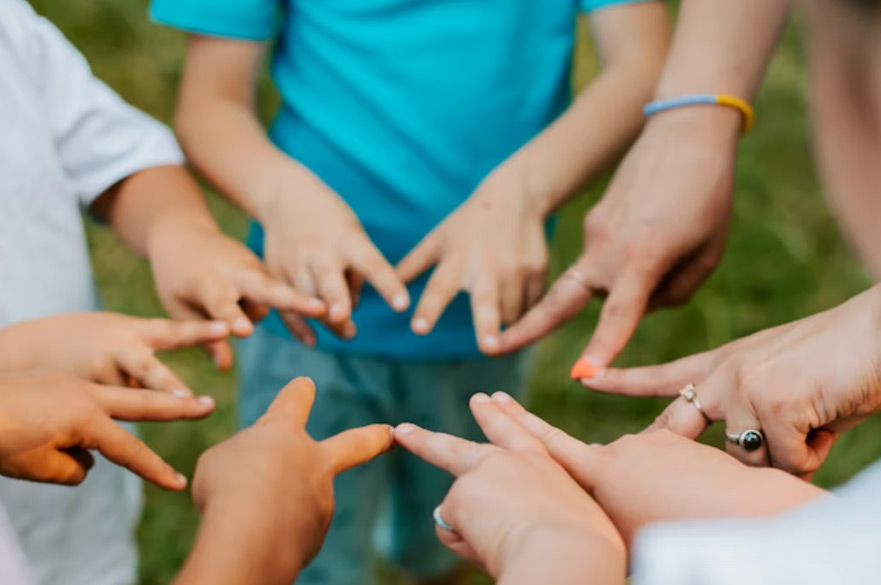
Outdoor learning is more than taking the indoors outside. It is a powerful context where children test ideas, take risks, move freely, and express themselves in ways that are often less visible indoors. Early childhood education is built on a profound belief that children are capable, curious, and active participants in their own learning. Nowhere is this more visible than outdoors, where children move freely, test ideas, take risks, and express themselves with a confidence that often exceeds what we see indoors.
The Outdoor Agency Toolkit, developed by Rebekah Gear through close-to-practice research in an English EYFS setting, is designed to help practitioners create outdoor spaces where children’s choices are honoured and their independence is actively nurtured. Rooted in children’s own photographs, comments, and reflections, this toolkit bridges research and practice to offer concrete ways to strengthen agency outdoors.
The Outdoor Agency Model
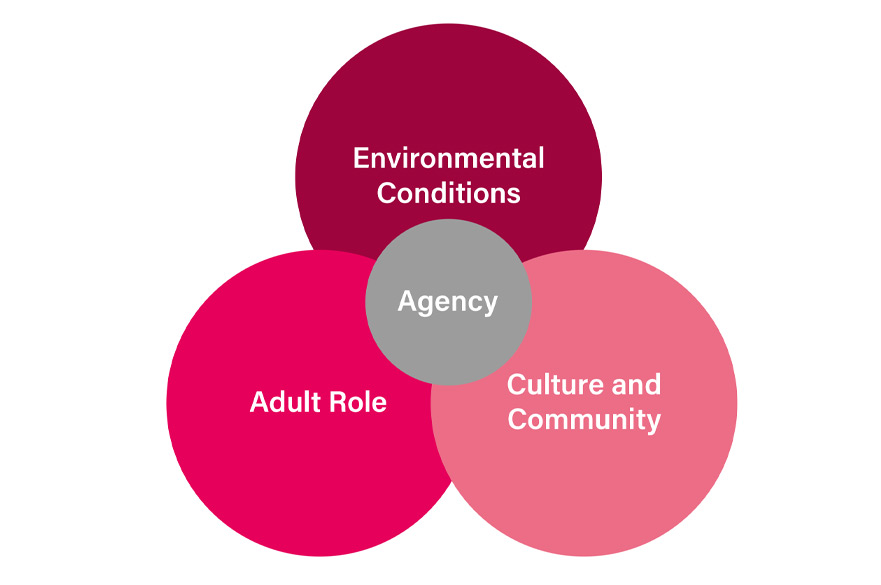
At the heart of the toolkit is the Outdoor Agency Model, which brings together three interconnected elements:
- Environmental conditions – how the physical space invites choice, challenge, and independence
- Adult role – how language, stance, and presence either enable or restrict agency
- Culture and community – how home, school, and shared values shape what children feel “allowed” or confident to do
The toolkit explores how environments can be choice-rich, open-ended, flexible, risk-enabled, and designed for independence. When children can access materials themselves, rearrange spaces, and return to meaningful places, their play becomes more sustained, creative, and self-directed. The toolkit hope to reimagine the environment not simply as a backdrop, but as an active partner in learning.
Alongside environment, the toolkit reframes the adult role outdoors. Rather than defaulting to supervision and control, practitioners are invited to act as facilitators, co-learners, observers, and risk supporters. Practical language examples and role cards help adults step back at the right moments, notice children’s initiatives, and use risk-positive language that builds confidence instead of fear.The toolkit also recognises that children do not arrive as blank slates. Their outdoor choices are deeply influenced by home expectations and experiences—from attitudes to mess, to rules about climbing, to comfort with physical challenge. Dedicated sections support practitioners to build home–school alignment, share their approach with families, and scaffold children who may have learned to avoid risk or outdoor play.
Toolkit contents
Inside the downloadable PDF, you’ll find:
- The Outdoor Agency Model explained in accessible, practitioner-friendly language
- Research stories and child voice that illuminate how children experience risk, choice, and independence
- Practitioner tools, including Photo-Voice prompts, conversation stems, and reflection templates
- Adult role cards to support CPD and team discussion
- Risk-positive resources to reframe how challenge and safety are talked about
- Environment enhancers to review and redesign your outdoor space
- Home–school alignment tools to share with families
- An action research toolkit to help settings iteratively test, reflect, and refine their outdoor practice
Whether you are a teacher, early years educator, leader, or support staff, this toolkit is designed to be flexible, adaptable, and grounded in real practice. You can dip into it for quick ideas, use it to structure staff meetings, or embed it within a longer-term improvement plan for outdoor learning.
Access the toolkit
Download the Outdoor Agency Toolkit below and use it as an invitation: to listen more closely, to step back more often, and to trust more deeply in children’s capabilities outdoors.