
Working closely with other designers, architects, lighting consultants, and HVAC specialists has also been very eye-opening and has helped me understand more about the interior design process and my role within it.
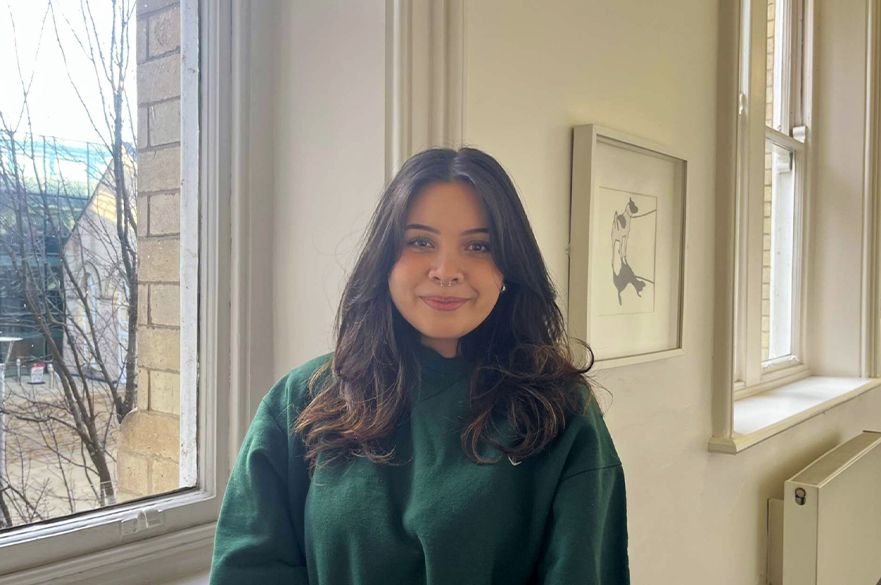
Oliwia tells us about her placement year
Why did you decide to do a placement?
I decided to do a placement year after seeing how much it benefited students in the year above me. It seemed like an amazing opportunity to develop my software skills, gain industry experience, and better understand how design works in real-world scenarios.
How did you go about finding your placement, did you have any help from NTU?
I received a lot of support from NTU throughout the process. The employability team reviewed my CV on several occasions, and lecturers from my communication module gave feedback on my portfolio and helped prepare me for interviews. I found my placement through the MyEmployability platform, and once I secured an interview, my lecturers supported me with portfolio and interview preparation, which made me feel much more confident.
Tell us a bit about your placement...
I am currently working at Philip Watts Design as a Junior Interior Designer. My main responsibility is producing detailed drawing packs for a large national restaurant chain, Greggs. This is a very technical role, involving drawings that include ducting, lighting, and joinery details. I also specify wall and floor finishes and ensure each design aligns with the client’s branding and design principles. To date, I have worked on approximately 15 Greggs sites, including a high-profile bespoke project located within a major London train station.
What has been the most interesting or enjoyable thing about your placement so far?
One of the most interesting things has been understanding how designs are created in the real world. Unlike university projects, the designs I work on are built, used, and must meet safety and performance requirements - they aren’t conceptual. Learning how different elements work together, and how much detail goes into designing and constructing a space, has been valuable. Working closely with other designers, architects, lighting consultants, and HVAC specialists has also been very eye-opening and has helped me understand more about the interior design process and my role within it.
Other than the work itself, the placement has also been a great social experience. I’ve really enjoyed meeting like-minded people and working closely with them daily. Supplier events, lunch and learn sessions, and other work events have all been very fun, and they’ve helped me build confidence. The social side of the placement has been both rewarding and fun, and it has played a big part in making the overall experience so positive.
Have you been able to use what you’ve learned on your course in your placement role?
Yes, particularly in terms of software skills, which have been extremely helpful. I use software that I was taught during my lectures daily, making the transition into industry much smoother. General design skills have also been useful, such as preparing presentations, technical drawing knowledge, and overall digital competence. Creativity and an understanding of visual balance and aesthetics have also helped me significantly in my role.
What do you hope to do when you graduate and how do you think your placement will support your career goals?
After graduating, I hope to find a role within the interior design industry where I can continue to build on the skills and experience that I’ve gained during my placement year and university. In the longer term, I would like to complete a master’s degree to get more knowledge and experience, allowing me to apply for more senior roles.
My placement has been incredibly helpful in supporting these goals. Attending industry events while on placement, I have built valuable contacts with local companies and suppliers that I would not have had access to otherwise. This has also given me an understanding of what employers are looking for and areas I need to work on more.
What advice would you give to other students considering a placement or internship?
I would advise students to thoroughly research the companies they apply to. Consider whether they are more technically or materials and aesthetics focused. Tailor your portfolio to suit the company and their style. It’s also important to think carefully about the type of placement you want. If you are more interested in colour, materials, and finishes, a more technical role may not be right for you.
Apply to placements through MyEmployability but also look for self-sourced opportunities. It’s important to be patient give yourself options. Not every company will respond to you, some will reject you, and that’s okay. Don’t let it discourage you.
Be approachable, show your personality, ask questions, and demonstrate genuine interest in the company. Most importantly, show your passion for what you do. Employers want to see enthusiasm, and that you want to learn. Securing a placement requires effort but showing that you are hardworking and motivated can be what gets you one.
Still need help?
-

STUDENT PROFILE
Alexandra Evans
ArchitectureUnited Kingdom
https://www.ntu.ac.uk/study-and-courses/courses/our-students-stories/architecture-design-built-environment/alexandra-evans2
-
STUDENT PROFILE
Annie Lattimore
Architectural TechnologyUnited Kingdom
https://www.ntu.ac.uk/study-and-courses/courses/our-students-stories/architecture-design-built-environment/annie-lattimore
-

STUDENT PROFILE
Anthony Freeman
Civil EngineeringUnited Kingdom
https://www.ntu.ac.uk/study-and-courses/courses/our-students-stories/architecture-design-built-environment/antony-freeman