Expert blog: UK needs leadership on adapting to climate change impacts which can’t be undone
Those in our communities who currently live with the greatest social and health inequalities are most at risk of the impacts from our changing climate. Professor Rowena Hill MBE, Professor of Resilience, Emergencies and Disaster Science, and Rich Pickford, Nottingham Civic Exchange manager, explain how their work on adaptation and climate security can help the UK adapt to a changing climate, and why leaders and key organisations need to take notice.
By Helen Breese | Published on 15 July 2024
Categories: Press office; Research; School of Social Sciences;
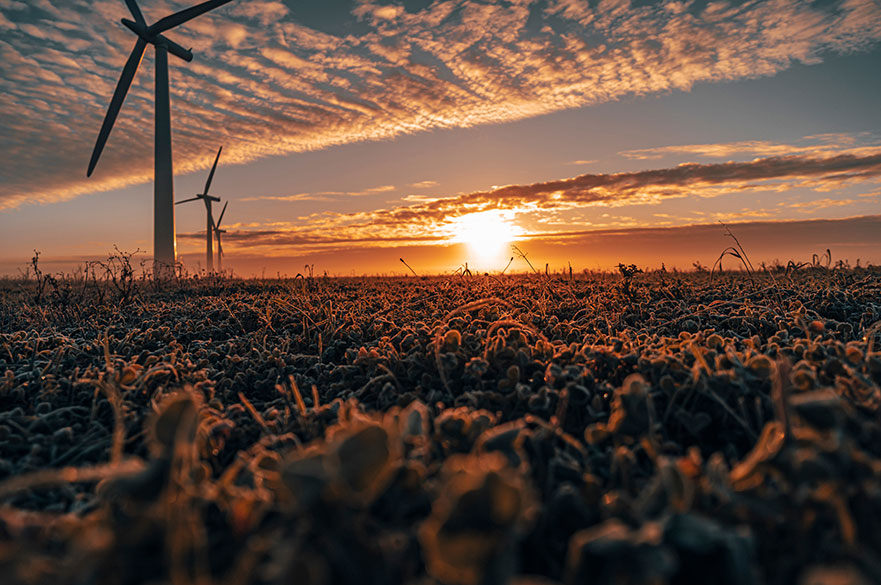
There is now demonstrable evidence that our climate is changing beyond natural variation and as a result of human lifestyles.
There has been consistent engagement, but at times changing, with issues related to mitigation, what most people think of as net zero or how we stop contributing to the problem by reducing our carbon emissions.
However, we have observed an absent relationship with adaptation - how we prepare for the changes that cannot be undone due to our changing climate.
Through our research engagement with the Climate Security National Foresight Group we are led to believe that political leaders of the future will have to lead both our appetite to change, through legislation or incentives, and also our discussions of the need for adaptation to a changed climate.
We have not seen much discussion of adaptation in any of our political leaders to date and we understand why. This is a tricky message to land as it is one of permanent change, whereas mitigation is a message of hopeful actions to reduce our contribution.
We know from our research and the evidence base of other researchers that holding a conversation with an electorate about a threat is problematic and easy to misstep, we have plenty of examples to illustrate that including the Covid-19 pandemic and recent attempts to get the UK to be prepared for emergencies.
Disasters and emergencies present highly complex problems; they are multi-dimensional and rely on a web of connected people, strategies and organisations to work coherently together at the right time and respond in the right way and need our support.
Our research has highlighted the gaps in these systems affect those most at risk in communities in additional ways.
Those in our communities who currently live with the greatest social and health inequalities are most at risk of the impacts from our changing climate and whilst we must ensure everyone is supported to prepare this group needs particular attention.
We think a new approach is required from our elected leaders to engage and lead the public debate on how we prepare, respond and recover from climate related emergencies.
We can already see that more drought, flooding, heatwaves, complex wind events (like three storms in a weekend), climate migration, changing priorities of resources as some natural resources become scarcer, all have impacts on some (or all) of our public services and infrastructure.
And yet, the debate so far is absent and requires political attention.
We hope with a new administration that our work on climate security and research into the needs of civil contingencies systems and staff continue to receive support and if possible gather more support.
Through our work with the Climate Security National Foresight Group, we are exploring ways to understand and capture the impact of our changing climate on our services and systems, how we can think through solutions for these impacts, how we can respond to these challenges with a research-based, holistic approach to what we call horizontal policy making (or working across organisations, government departments and key bodies to set the right agenda and action).
This aims to reach across traditional remits and silos to ensure that our communities have the best chance of being resilient and recovering from these challenges when and if they occur.
Over the last year we have seen a significant interest in adaptation needs from our partners across government and other partners and look forward to continuing this important work through the rest of 2024 and beyond.
Our hope is that key agencies and organisations are supported to improve systems, procedures, and communication for climate adaptation at a government policy level, and locally that the implementation of these benefits reaches everyone in a way that means something for them and their communities.
Professor Rowena Hill, Professor of Resilience, Emergencies and Disaster Science, School of Social Sciences
Rich Pickford, Nottingham Civic Exchange manager