Nano approach to plant feed will improve crop productivity, farm profitability and sustainability
Cutting-edge nanotechnology will drive a new generation of fertilisers aimed at addressing UK food security by improving the nutritional value, performance and health of crops and plants.
By Dave Rogers | Published on 22 September 2025
Categories: Press office; Research; School of Science and Technology;
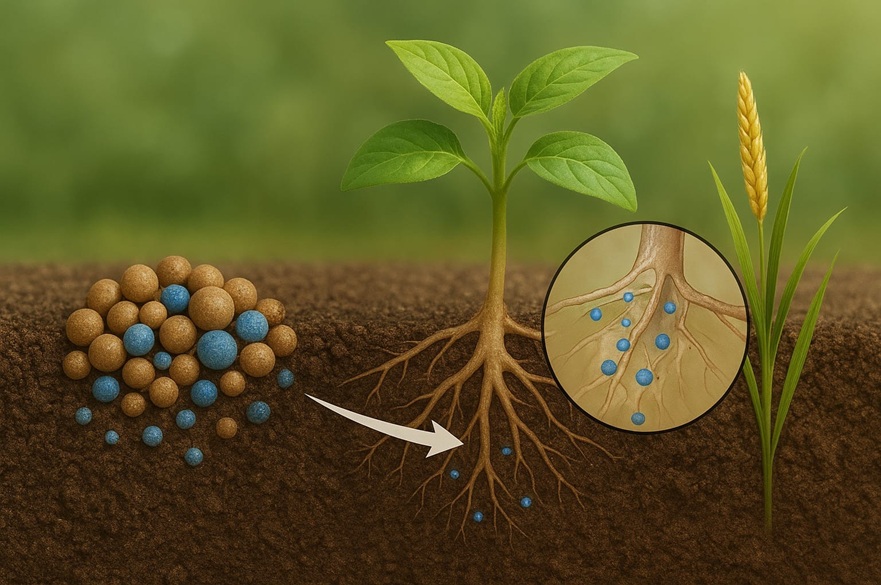
Scientists at Nottingham Trent University are working with the company Micromix Plant Health as part of the three-year knowledge transfer partnership, being funded by Innovate UK.
It will involve incorporating nanotechnology-enhanced formulations to plant feed, allowing targeted and increased absorption of essential nutrients directly into plant roots and through the leaves.
This ‘precision agriculture’ approach is expected to result in increased yields, reduced harvest times, and prevent against pests, as well as reducing reliance on imported chemicals often used in less effective traditional fertilisers.
The work will involve embedding advanced nanotechnology expertise initially developed at Nottingham Trent University for the pharmaceutical industry into commercially viable plant feed and will benefit UK commercial agriculture and horticulture sectors.
It is thought to be the first time commercially accessible plant biostimulant has been produced using bespoke nanotechnology that has the capacity to correct trace mineral deficiencies as a way of improving both crop productivity and nutrition.
The project will also address two major environmental challenges in modern agriculture by minimising fertiliser waste and reducing environmental runoff containing possible pollutants.
In turn this will also help improve the farmers’ profitability with a reduced cost of treatment to achieve the yield increases required to maintain commercial viability.
Nano-minerals will be synthesized and new fortified plant feed will be formulated in both powder and liquid form before a series of plant performance trials across the UK.
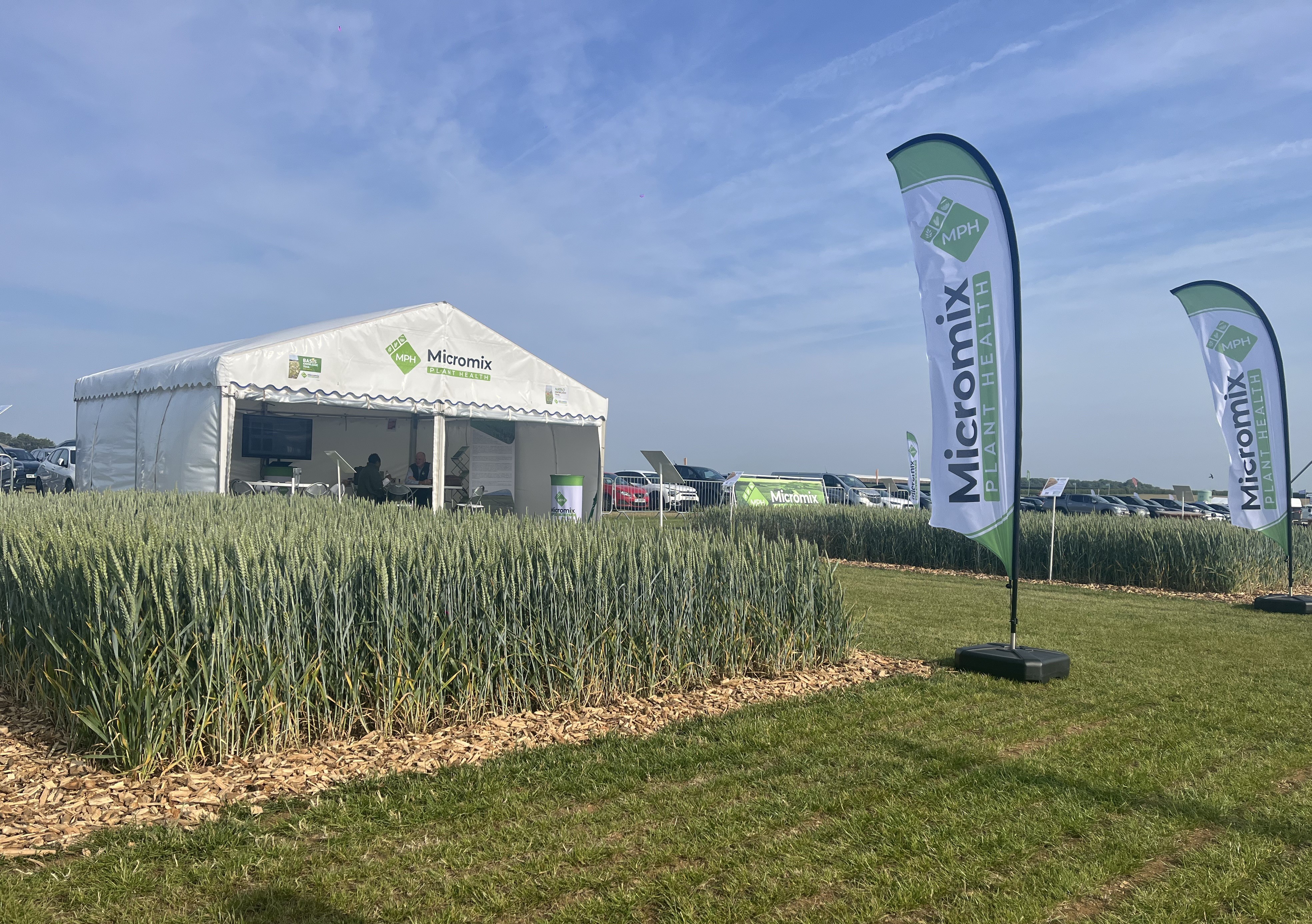
“This work will tackle general inefficiencies inherent in traditional fertilisers and will benefit both farmers and gardeners,” said principal investigator Gareth Cave, Professor in Advanced nanotechnology and sustainable chemistry in Nottingham Trent University’s School of Science and Technology.
He said: “Our technology can help drive agricultural productivity and resilience by accelerating crop growth and yield, strengthening plant defences against environmental pressures, and reducing vulnerability to pests.
“This precision-targeted approach to nutrient delivery will ensure controlled release directly to plant roots, optimising absorption while preventing excess leaching into ecosystems.
“The result is healthier soil, reduced environmental impact and a shift towards more sustainable farming practices.”
Tom Mawhood, Director of Micromix Plant Health, said: “We are excited to commence work with Gareth and his team both to develop new products but also to improve the effectiveness of our existing products.
“Farmers face considerable financial and practical challenges and we anticipate that these enhanced nano-products will materially improve quality, yield and profitability.
“There are already some interesting developments we are pursuing for each of cereal crops, oilseeds, potatoes and sugar beet.”
Notes for Editors
Press enquiries please contact Dave Rogers, Public Relations Manager, on telephone +44 (0)115 848 8782, or via email.
More on Micromix Plant Health Ltd can be found here: https://micromix.com/
Nottingham Trent University (NTU) has been named UK ‘University of the Year’ five times in six years, (Times Higher Education Awards 2017, The Guardian University Awards 2019, The Times and Sunday Times 2018 and 2023, Whatuni Student Choice Awards 2023) and is consistently one of the top performing modern universities in the UK.
Students have voted us the best university in the UK and 1st in the UK for student employability (Uni Compare 2025).
NTU is 4th in the UK for number of undergraduate students (HESA 2023-24) with over 36,000 students and more than 4,000 staff located across six campuses. It has an international student population of 6,000 and an NTU community representing over 160 countries.
NTU owns two Queen’s Anniversary Prizes for outstanding achievements in research (2015, 2021). The first recognises NTU’s research on the safety and security of global citizens. The second was awarded for research in science, engineering, arts and humanities to investigate and restore cultural objects, buildings and heritage. The Research Excellence Framework (2021) classed 83% of NTU’s research activity as either world-leading or internationally excellent.
NTU was awarded GOLD in the national 2023 Teaching Excellence Framework (TEF) assessment.
NTU is a top 10 for sport (British Universities and Colleges Sport league table 2025) and was named as Sports University of the Year (Daily Mail University Guide 2025). It has also been ranked as 25th in the UK by the Guardian University Guide 2026.
NTU is a holder of the University Mental Health Charter recognising the commitment an institution has shown towards continuous improvement in the area of mental health and wellbeing.
NTU is the most environmentally sustainable university in the UK and second in the world (UI Green Metric University World Rankings, 2024).