How many insects are there – and why do we need them?
There are an estimated 10 quintillion insects alive on Earth at any given time. That’s 10,000,000,000,000,000,000 individual insects. But how many species are there, why do we need them, and what would happen if their numbers continued to fall? Dr Alex Dittrich, a zoologist at Nottingham Trent University, explains why these small creatures play such a big role in keeping our planet functioning.
By Dr Alex Dittrich | Published on 21 October 2026
Categories: Press office; Research; School of Animal, Rural and Environmental Sciences;
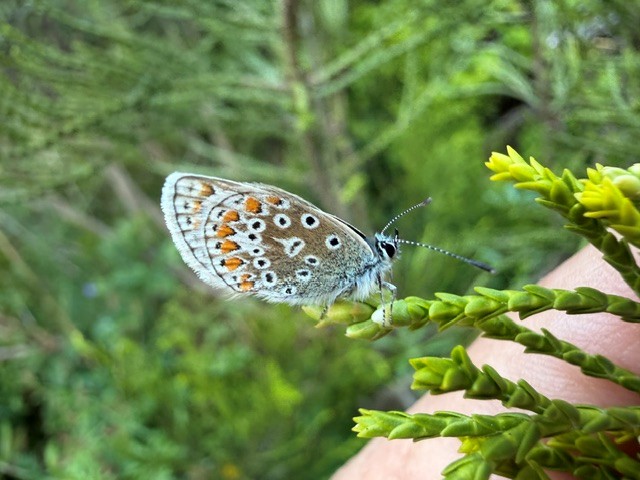
What you need to know
- More than a million insect species have been described, but the total number could be more than 5.5 million
- Insects pollinate crops, help control pests and break down waste.
- Insect numbers are declining, with climate change, pesticides, habitat loss and pollution among the contributing factors.
- Giving insects space and reducing the threats they face could help populations recover.
How many insects are there?
To borrow the words of Douglas Adams, “Space is big. You just won't believe how vastly, hugely, mind-bogglingly big it is...”
While science fiction and entomology rarely occupy the same conversation, this sentiment is surprisingly familiar to entomologists. Replace the vastness of space with the sheer abundance of insects, and the comparison becomes remarkably apt.
More than a million insect species have been described, but there are many more left to discover. Estimates of the total number of insect species range from 5.5 million to over 7 million.
To put that into perspective, there are around 6,500 mammal species – the group that includes humans. In comparison, the number of insect species is enormous.
The numbers become even more mind-boggling when we consider individual insects rather than species. The commonly cited estimate is that around 10 quintillion individual insects are alive on Earth at any given time.
That is 10,000,000,000,000,000,000 insects.
With more than eight billion people on the planet, that works out at approximately 1.2 billion insects for every person.
That is a lot of insects. But why do we need so many?
Why do we need insects?
Insects are not simply abundant; they are integral to the complex web of ecosystems that keeps the planet functioning.
They provide food for other animals, recycle waste and help keep pest populations under control, preventing potential disease outbreaks.
For humans, these benefits are known as ecosystem services. One of the best-known examples is pollination.
A vast number of our crops depend on insects for pollination, helping to ensure good yields and a secure food supply. Insects can also help maintain a healthy balance of pest species that might otherwise damage those crops.
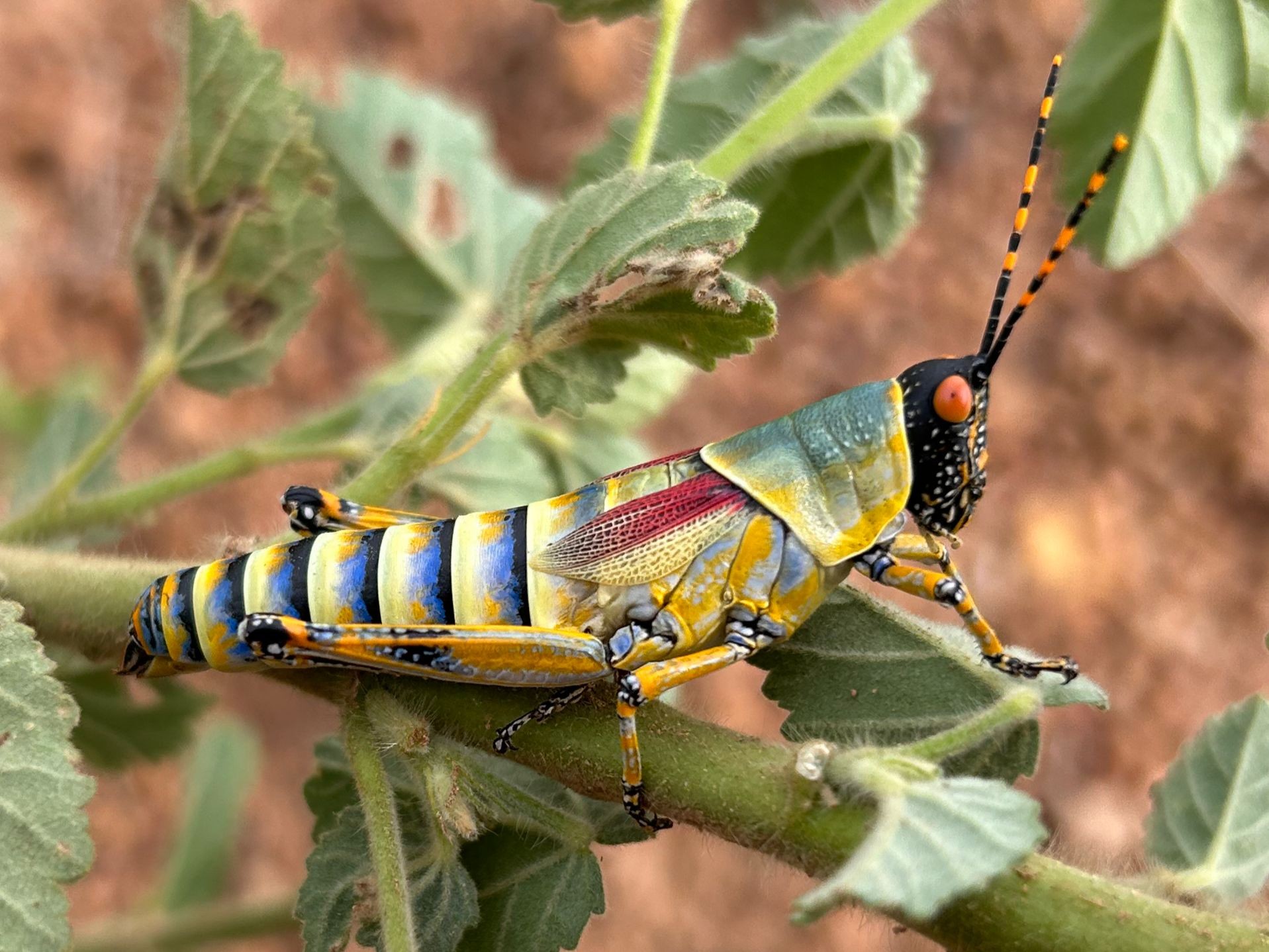
Elegant grasshopper (Zonocerus elegans). Image: Dr Alex Dittrich
How did insects and flowering plants become connected?
Some insects, including bees, have co-evolved with flowering plants. As insects visit flowers to collect nectar, they transfer pollen between them.
This relationship developed long before humans existed.
Primitive insects were feeding on pollen and plant secretions before flowering plants became dominant on Earth. When flowering plants diversified around 140–100 million years ago, they provided reliable food resources in the form of pollen and nectar.
This created a selective pressure favouring insects that could efficiently find and exploit flowers. In return, plants benefited from insects transferring pollen between individual plants.
The relationship remains an important example of how insects support the natural world – and our own food supply.
How do insects help control pests?
Not all insects have a beneficial relationship with other organisms. Many are parasites, including a group known as parasitoids.
Parasitoids rely on other animals to reproduce, laying their eggs in or on a host. Their young then emerge and kill the host.
Although this may sound gruesome, it provides an important ecosystem service. Many parasitoids help keep insect crop pests below the levels at which they would become a serious problem for agricultural yields.
Without these natural controls, crops could become more vulnerable to pest damage.
Why are insects important for breaking down waste?
Death and decay are natural parts of life. When organisms die, microorganisms such as bacteria and fungi break down their remains. Some of these microorganisms have the potential to cause disease.
Insects also play a role in this process by feeding on dead and decaying material. This helps break down organic waste and can reduce the potential for disease-causing bacteria to accumulate in the environment.
Many fly species, for example, depend on dead flesh to complete their life cycles.
Insects therefore help maintain the natural processes on which ecosystems depend.
Are insect numbers declining?
In recent years, there have been alarming reports of insect losses around the world.
These figures highlight the scale of the challenge facing insect populations and the importance of understanding what is driving their decline.
What would happen if insect numbers fell?
Given the abundance of insects and the many roles they perform, a substantial loss of insect life would have serious consequences – not just for humans, but for the planet as a whole.
Crops that depend on insect pollination could fail, potentially contributing to a food crisis. Crops that remained could also face greater damage from pest species if natural controls, including parasitoids, were lost.
Waste management could become another problem. Without insects helping to break down organic material, the processes of decomposition could be disrupted, potentially allowing disease-causing bacteria to flourish.
The consequences would extend well beyond the insects themselves. Their loss would affect the wider ecosystems in which they live, including the animals and plants that depend on them.
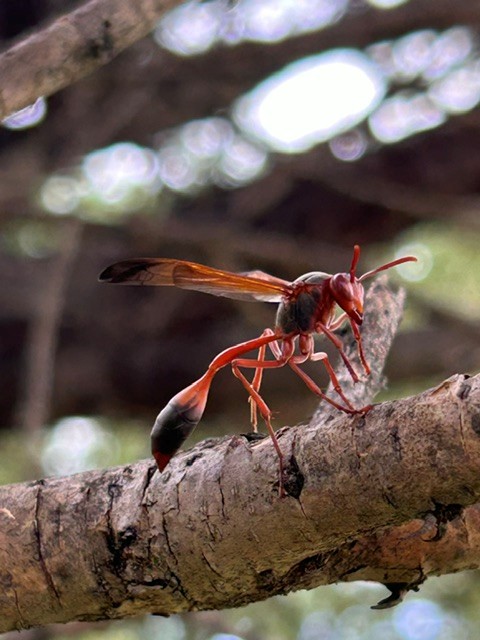
Polistes a genus of wasp common in South Africa (Image: Dr Alex Dittrich)
Why are insect numbers declining?
There are many reasons why insect populations are declining. Some have direct effects on insects, while others affect them by changing their habitats or the resources they depend on.
The main factors include:
Climate change
Rising temperatures and changing weather patterns can disrupt insect life cycles, alter where species can live and create mismatches between insects and the plants or other resources they depend on.
Pesticides
The widespread use of pesticides can kill both target pests and other insect species. Pesticides can also affect insect behaviour, reproduction and survival.
Land-use change
Agriculture, urbanisation and infrastructure development can cause habitat loss and fragmentation. This reduces the availability of suitable places for insects to live and makes it harder for populations to remain connected.
Pollution
Chemical, light and atmospheric pollution can damage habitats, contaminate food resources and interfere with important biological processes, including navigation, development and reproduction.
Together, these pressures pose significant challenges for insect survival.
Can insect populations recover?
One important characteristic of insects is their ability to reproduce quickly. This is part of the reason they are so abundant, and many species can produce multiple generations in a single year, even in temperate climates.
This reproductive capacity offers hope for recovery.
Giving insects space and reducing the threats they face could help populations rebuild.
However, this depends on addressing the pressures contributing to their decline and allowing insects the conditions they need to survive and reproduce.
How can we help insects?
The first step is changing how we think about insects and recognising their importance.
Many people are drawn to larger, more familiar or charismatic animals. But insects can be just as remarkable.
From the beautiful golden scarab beetle Chrysina resplendens in Costa Rica to the violet ground beetle Carabus violaceus, which can be found in UK gardens, there are striking insects all around us. Sometimes, all that is needed is a shift in perspective.
We can also make changes to the environments around us. More wildlife-friendly gardening, allowing space for plants to grow wild and reducing the chemicals and pollutants entering the environment can all help support insect populations.
Understanding the serious threats insects face, including climate change, is also essential.
Insects may be small, but their importance is enormous. They pollinate crops, help control pests and contribute to the natural processes that keep ecosystems functioning.
We need to recognise their value and act quickly to give them a better chance of survival.
Dr Alex Dittrich is a Senior Lecturer in Zoology in Nottingham Trent University’s School of Animal Rural and Environmental Sciences, with research interests in insect ecology, conservation and biodiversity. His work focuses particularly on insects and their role in ecosystems, and he has experience researching and communicating issues around species conservation and animal behaviour.