Narrow streets flanked by tall buildings may trap pollution, study shows
By Chris Birkle | Published on 9 September 2025
Categories: Press office; Research; School of Architecture, Design and the Built Environment;
Narrow streets flanked by tall buildings may trap pollution, study shows
Narrow streets in city centres which are flanked by tall buildings may be trapping pollution and leading to poor air quality, a study shows.
Research by Nottingham Trent University (NTU) shows that streets which are narrower than 20 metres experience irregular and often dangerously high spikes in particulate matter (PM).
A survey in London analysed PM10 and PM2.5, which are known to cause respiratory and cardiovascular diseases and are classified as carcinogenic by the World Health Organization (WHO).
The researchers - who conducted a walking survey from Finsbury Square to Undershaft Street – found the highest pollution spikes in narrow corridors like Wilson Street (14m wide) and Eldon Street (13m), where PM10 levels peaked above the WHO’s recommended daily thresholds.
The surrounding tall buildings were believed to inhibit air circulation, creating ‘urban canyons’ where emissions from vehicles and local activities accumulate with little dispersion. In contrast, wider streets like Bishopsgate (24m) and Camomile Street (20m) recorded more stable and lower pollution levels.
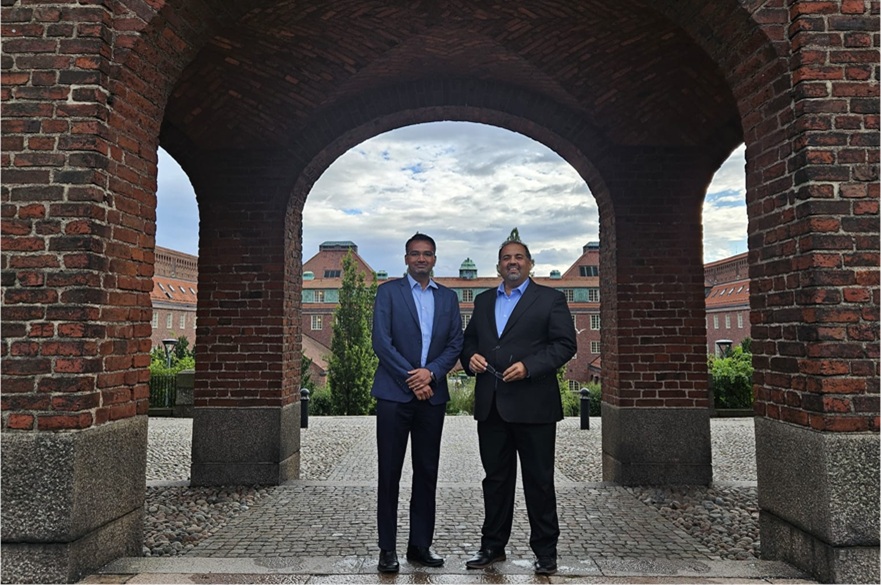
The study – which was recently presented at the Nordic Energy Informatics Academy Conference 2025 conference in Sweden - suggests that improved airflow on these roads allows pollutants to dissipate more effectively, aided by more consistent traffic flow and fewer idling vehicles.
"London's iconic streets may be beautiful, but invisible smog traps which prevent pollution from dispersing may be silently harming public health," said Professor Amin Al-Habaibeh, a professor of intelligent engineering systems, who oversaw the study.
"Our findings show a clear link between narrow roads, tall buildings, and air quality spikes—especially for pedestrians and cyclists who are the most exposed."
The study also found that streets which are at a 45 degree angle to the wind are least likely to be ventilated naturally by gusts of wind, creating further entrapment of pollution.
The findings come amid concern about urban air quality in the UK. A 2025 report by Friends of the Earth found 95% of neighbourhoods in England and Wales have harmful air pollution levels. Another report by Friends of the Earth in 2022 showed that 127 neighbourhoods in London had twice the recommended level of both NO2 and PM2.5.
The study references the tragic case of nine-year-old Ella Adoo-Kissi-Debrah, the first person in the UK to have air pollution officially listed as a cause of death, who lived near the South Circular Road in Lewisham, south-east London.
While the researchers say measures like the Ultra Low Emission Zone (ULEZ) and the Congestion Charge Zone have contributed to improvements, the study highlights the need for more targeted interventions.
Recommendations include of the study include:
- Vertical green walls being installed and trees planted in streets to capture particulates
- An expansion of AI-driven traffic management to smooth traffic flow and reduce idling
- The promotion of active travel (walking, cycling, micro-mobility) with green mobility corridors
- Stricter controls on wood-burning stoves and non-electric vehicles in high-risk zones
“There’s a temptation to think of ULEZ and electric vehicles as silver bullets,” said PhD researcher Nikhil Ravindra, of NTU’s School of Architecture, Design and the Built Environment.
“But our data show that volume of traffic, road layout, building height, and wind direction all play a role in air quality. A greener and smarter approach is urgently needed.
“The value of artificial intelligence also has a part to play in managing electric vehicle charging and traffic flow, as AI-enabled systems could reduce carbon emissions by up to 40 per cent annually per vehicle.”
Notes for Editors
Press enquiries please contact Chris Birkle, Public Relations Manager, on telephone +44 (0)115 848 2310, or via email.
Nottingham Trent University (NTU) has been named UK ‘University of the Year’ five times in six years, (Times Higher Education Awards 2017, The Guardian University Awards 2019, The Times and Sunday Times 2018 and 2023, Whatuni Student Choice Awards 2023) and is consistently one of the top performing modern universities in the UK.
Students have voted us the best university in the UK and 1st in the UK for student employability (Uni Compare 2025). NTU is 4th in the UK for number of undergraduate students (HESA 2023-24) with over 36,000 students and more than 4,000 staff located across six campuses. It has an international student population of 6,000 and an NTU community representing over 160 countries.
NTU owns two Queen’s Anniversary Prizes for outstanding achievements in research (2015, 2021). The first recognises NTU’s research on the safety and security of global citizens. The second was awarded for research in science, engineering, arts and humanities to investigate and restore cultural objects, buildings and heritage. The Research Excellence Framework (2021) classed 83% of NTU’s research activity as either world-leading or internationally excellent.
NTU was awarded GOLD in the national 2023 Teaching Excellence Framework (TEF) assessment.
NTU is a top 10 for sport (British Universities and Colleges Sport league table 2025) and was named as Sports University of the Year (Daily Mail University Guide 2025).
NTU is a holder of the University Mental Health Charter recognising the commitment an institution has shown towards continuous improvement in the area of mental health and wellbeing.
NTU is the most environmentally sustainable university in the UK and second in the world (UI Green Metric University World Rankings, 2024).