Expert Blog: Paramedics and Allied Health Professions are key to NHS reform – but where is their leadership?
Dr Carl Webster, of NTU's Institute of Health and Allied Professions, discusses the UK’s new 10-year health plan for England
By Dr Carl Webster | Published on 6 October 2025
Categories: Press office; Research; School of Social Sciences;
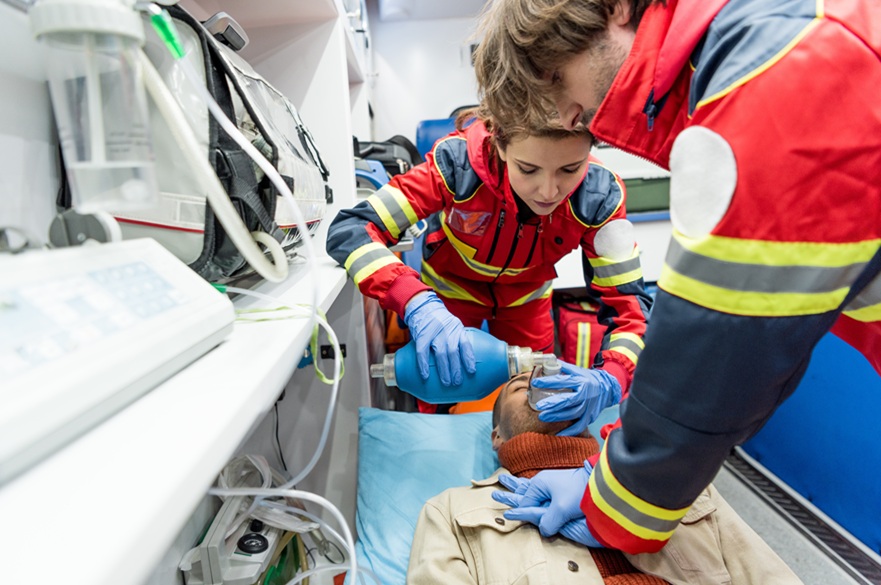
The UK’s new 10-Year Health Plan for England sets out a bold vision for transforming the NHS. It promises a shift from hospital to community care, from analogue systems to digital infrastructure, and from reactive treatment to proactive prevention. Yet while the plan is ambitious, it offers limited detail on the role and leadership of Allied Health Professionals (AHPs), a diverse group of clinicians that includes (but is not limited to) physiotherapists, occupational therapists, speech and language therapists, radiographers, and paramedics.
These professionals have enormous potential in delivering the plan’s ‘three shifts,’ yet their strategic positioning remains unclear. Without a coherent leadership framework, the NHS risks underutilising some of its most versatile and community-embedded professionals. Among them, paramedics represent a particularly compelling opportunity, not only because of their clinical versatility, but also because of their unique positioning in urgent and community care.
The impact on patients is potentially significant. When paramedics and other AHPs are excluded from decision-making forums, the system misses out on their insights into patient needs, especially in urgent and community settings. This can lead to fragmented care, slower response times, and missed opportunities for early intervention; all of which affect patient outcomes and experience as well as underminding the very goals the Plan sets out to achieve.
AHPs have long been champions of integrated, person-centred care. Their influence was visible in the NHS Long Term Workforce Plan (2019) which emphasised multidisciplinary working, flexible deployment, and advanced practice. The 10-Year Plan builds on this by proposing expanded roles for AHPs, particularly in community and preventative care. Yet despite this recognition, structural gaps persist. Not all Integrated Care Boards (ICBs) – regional bodies that decide how health services are planned and funded in each area – have AHP leadership, and there is no national strategy to ensure consistent representation across regions. The plan’s ambition to reconfigure ICBs and align them with strategic authorities offers an opportunity, but only if AHPs are embedded in governance and commissioning decisions.
Paramedics: a healthy supply, but an unclear future
Paramedics occupy a distinctive space within the NHS. Unlike other healthcare professionals, they are not typically based in hospitals or community clinics. Instead, they respond to urgent needs in patients’ homes and increasingly contribute to triage, preventative care, and the management of long-term conditions. The 10-Year Plan rightly identifies paramedics as one of the key contributors to the shift toward community-based care. With access to Single Patient Records, remote clinical support, and AI-enabled triage tools, they are well-equipped to deliver timely, personalised interventions outside of hospital settings.
There is no shortage of opportunity. The NHS continues to have a strong supply of paramedics and oversubscribed AHP training programmes. Job satisfaction among these professionals is often high, especially when they are empowered to work at the top of their training and skills. The shift to community care, virtual wards, and digital hospitals creates new roles for paramedics and AHPs, not just in delivering care, but in designing and leading it.
For newly qualified paramedics, the traditional route through ambulance services remains a vital and rewarding entry point. These roles offer immediate exposure to urgent care, rapid decision-making, and diverse clinical scenarios. As the NHS embraces the ‘three shifts’, the clinical breadth and adaptability of more experienced paramedics make them are well-suited for advanced roles in this evolving system. However, to fully capitalise on the paramedic profession’s potential, leadership representation must keep pace. The current landscape is uneven: not all trusts have AHP leadership, and paramedics are often excluded from strategic forums. While the plan calls for regional innovation and earned autonomy, it lacks clarity on how paramedics (and AHPs more broadly—will influence delivery at scale. Without intentional investment in leadership pathways, the NHS risks overlooking the very professionals who are best placed to drive its transformation.
A question for the future
So how do paramedics and AHPs influence regional delivery in a system where leadership is uneven and structures are still evolving? If the NHS is serious about transformation, it must answer this question. It must invest in leadership development, embed AHPs and paramedics in commissioning, and ensure their voices are heard in every region. The 10-Year Plan offers a compelling vision. But without clear leadership pathways for paramedics and AHPs, it risks becoming another top-down reform that fails to harness the full potential of the frontline. As the government develops its 10-Year Workforce Plan, it is now inviting views from across the health and care sector. This is a vital opportunity for paramedics, AHPs, and their professional bodies to shape the future of NHS leadership.
Dr Carl Webster is an academic in NTU's Institute of Health and Allied Professions in the School of Social Sciences
Links