Scientists develop green alternative for light-emitting materials used in display technologies
Scientists have paved the way to create a green alternative for the light-emitting materials often used in TV, smartphone and other display technologies.
By Dave Rogers | Published on 6 November 2025
Categories: Press office; Research; School of Science and Technology;

The research, led by a team at the Center for Green Chemistry and Green Engineering at Yale University in the US and involving Nottingham Trent University, aimed to address the challenge of ‘photoluminescent’ solid-state materials, which often rely on non-renewable resources and toxic metals.
These materials are also often made in multi-step processes that produce a lot of chemical waste which can be hazardous.
Photoluminescent solid-state materials work by absorbing UV light and re-emitting it as visible light, providing an ability to glow which makes them ideal for a range of applications such as display technologies, lighting, sensors, security inks, biomedical imaging through to glow in the dark toys.
The challenge for researchers has been to develop these materials from sustainable sources that are environmentally-friendly and in a way that is less wasteful and less hazardous.
As part of the study the team took lignin – a by-product of the wood pulping and paper industry and a natural substance found between and in the cell walls of plants and trees – and combined it with histidine, a simple amino acid, finding they could produce a range of solid-state materials that fluoresce under UV light.
In addition to easily tuneable photoluminescent material properties, the preparation of the materials only uses green solvents in the form of water and acetone.
The fluorescence, or lighting, effect relies on specific parts of the lignin – ‘phenolic groups’ – which become energised when they absorb the light.

Viewed under ambient light (Chem / Dr Ho-Yin Tse, Center for Green Chemistry and Green Engineering, Yale University)
In this energised state they release protons to the histidine in the solid structure, a process known as ‘excited state proton transfer’ (ESPT).
As the lignin relaxes back to its normal state it releases light which can shine at room temperature. In some cases, the materials continued to glow very briefly even after the UV light was turned off.
“The concept of ESPT isn’t new, it is well known in pure phenolic molecules,” said first author Dr Ho-Yin Tse, a researcher from the Center for Green Chemistry and Green Engineering at Yale University.
“But what is interesting is that lignin’s natural phenolic structures - present throughout the macromolecule - can inherently support this kind of photoacid behaviour and this effect has rarely been examined in this context.”.
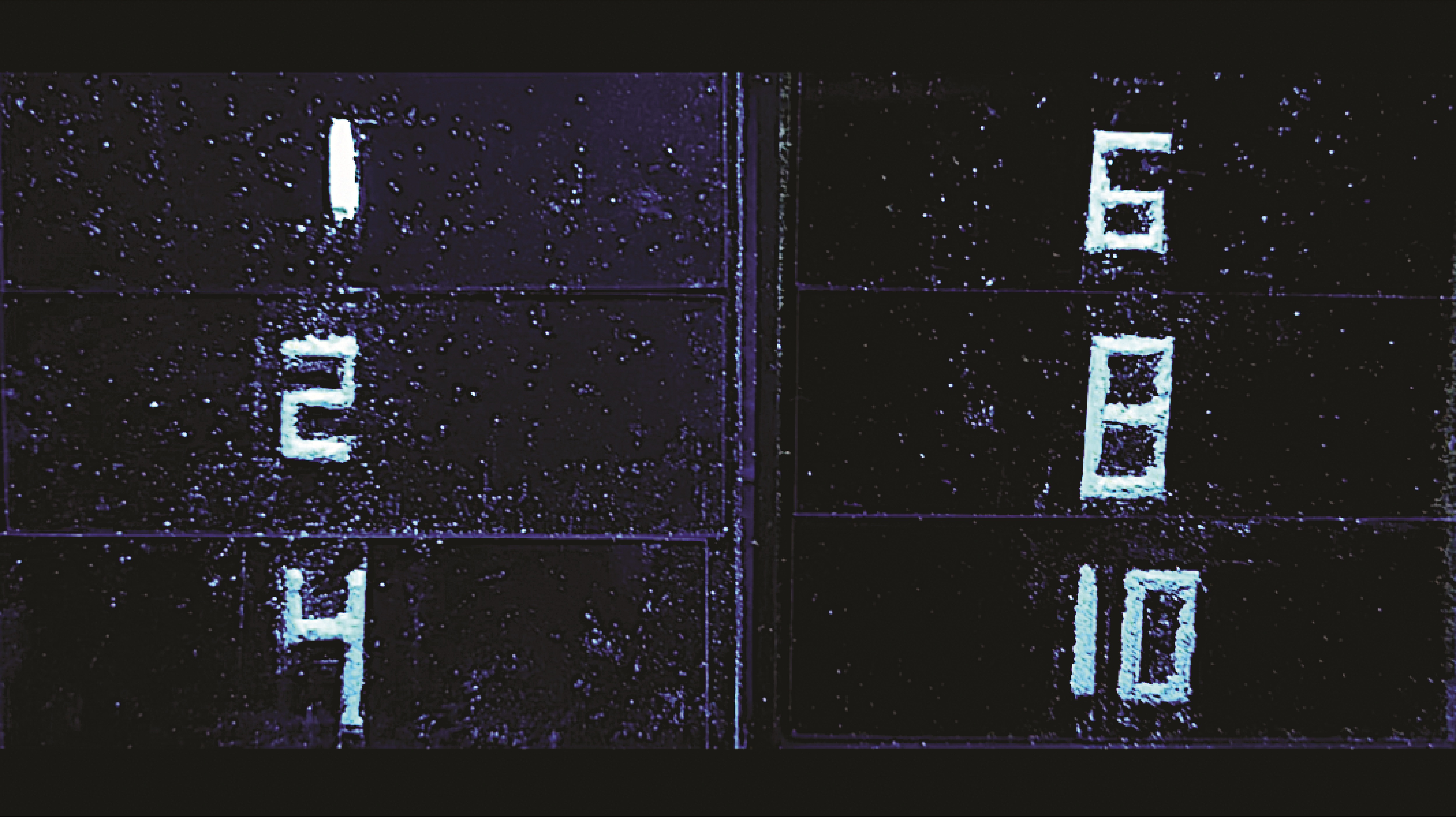
When excited by UV-light showing the fluorescence effect from ESPT (Chem / Dr Ho-Yin Tse, Center for Green Chemistry and Green Engineering, Yale University)
“This is an excellent example of green and sustainable chemistry,” said study co-author Dr Darren Lee, a researcher in sustainable chemistry in Nottingham Trent University’s School of Science and Technology.
He said: “Photoluminescent materials are vital for a range of everyday and smart technologies, but most rely on toxic metals and non-renewable resources.
“In this study we not only simplified the synthesis of these materials but also utilised abundant waste streams to produce tuneable materials in a safer way.”
“Computational modelling revealed how molecular interactions between lignin and histidine enable this unique light-driven proton transfer,” said Dr Chi-Shun Yeung, who led the computational analysis at The University of Hong Kong.
“These mechanistic insights explain how biopolymers can achieve efficient light emission without relying on metals.”
The study is published in the journal Chem.
Notes for Editors
Press enquiries please contact Dave Rogers, Public Relations Manager, on telephone +44 (0)115 848 8782, or via email.
Nottingham Trent University (NTU) has been named UK ‘University of the Year’ five times in six years, (Times Higher Education Awards 2017, The Guardian University Awards 2019, The Times and Sunday Times 2018 and 2023, Whatuni Student Choice Awards 2023) and is consistently one of the top performing modern universities in the UK.
Students have voted us the best university in the UK and 1st in the UK for student employability (Uni Compare 2025).
NTU is 4th in the UK for number of undergraduate students (HESA 2023-24) with over 36,000 students and more than 4,000 staff located across six campuses. It has an international student population of 6,000 and an NTU community representing over 160 countries.
NTU owns two Queen’s Anniversary Prizes for outstanding achievements in research (2015, 2021). The first recognises NTU’s research on the safety and security of global citizens. The second was awarded for research in science, engineering, arts and humanities to investigate and restore cultural objects, buildings and heritage. The Research Excellence Framework (2021) classed 83% of NTU’s research activity as either world-leading or internationally excellent.
NTU was awarded GOLD in the national 2023 Teaching Excellence Framework (TEF) assessment.
NTU is a top 10 for sport (British Universities and Colleges Sport league table 2025) and was named as Sports University of the Year (Daily Mail University Guide 2025). It has also been ranked as 25th in the UK by the Guardian University Guide 2026.
NTU is a holder of the University Mental Health Charter recognising the commitment an institution has shown towards continuous improvement in the area of mental health and wellbeing.
NTU is the most environmentally sustainable university in the UK and second in the world (UI Green Metric University World Rankings, 2024).