We all fall for it - how online narratives shape war, politics and everyday life offline
Conflict is no longer confined to battlefields. Dr Tine Munk explores how online narratives can quietly shape what people believe, who they trust and how they view one another - with consequences that can extend far beyond the screen.
By Dr Tine Munk | Published on 17 December 2025
Categories: Press office; Nottingham Civic Exchange; Research; School of Social Sciences;
Western intelligence agencies are no longer vague about the nature of modern conflict.
MI5 has recently warned MPs and parliamentary staff that foreign intelligence services are attempting to recruit people with access to sensitive information through online platforms such as LinkedIn.
At the same time, the new MI6 chief, Metriweli (2025), has cautioned that modern conflict increasingly unfolds in the space between peace and war, where influence, perception and information manipulation matter as much as tanks or missiles.
When online narratives become real-world beliefs
This is not an abstract security concern, but something most of us encounter daily, on our phones, in our feeds, and in our conversations. The ideas we encounter digitally shape how we interpret war, trust institutions, and respond to political crises in everyday life.
Our belief is formed mainly within a continuous loop between screens and streets. This is the online–offline continuum approach, and it helps explain why information campaigns are so effective and why none of us is immune to them.
We still tend to talk about the Internet as if it were separate from ‘real life’. But digital content does not stay on screens. For example, a meme shared in one country can shape how a distant war is understood elsewhere. A short video of a political leader can trigger admiration or outrage within hours.
Repeated online narratives about threats or betrayal can harden attitudes long before any physical confrontation happens. Belief does not switch off when we close an app; it travels with us into everyday life, shaping how we interpret events, who we empathise with and where we place blame.
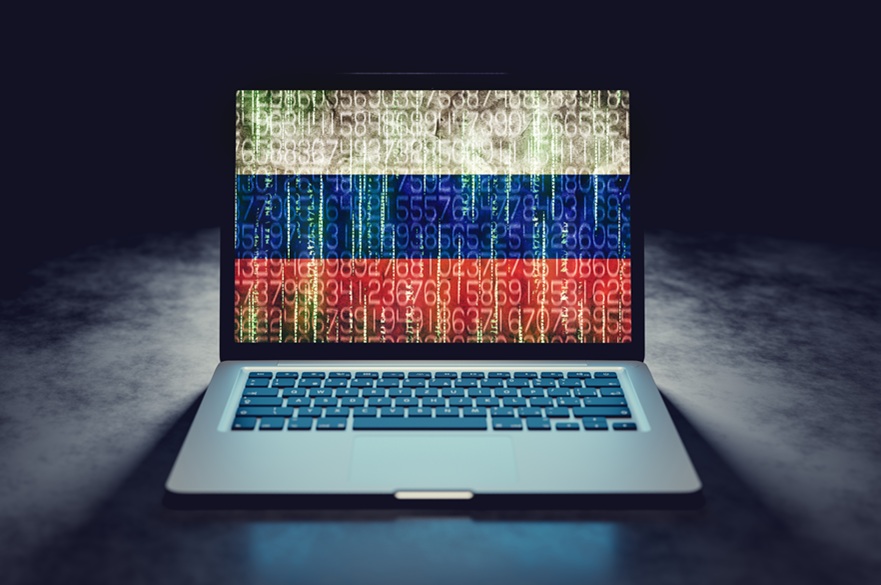
Russia’s information disorder campaigns aim to erode trust and deepen division in Ukraine and beyond.
The information battlefield
The war in Ukraine illustrates this dynamic with particular clarity. Alongside conventional military operations, Russia’s information disorder campaigns aim to erode trust and deepen division in Ukraine and beyond, using uncertainty, irony and repetition rather than outright falsehoods.
As intelligence leaders have warned, such influence operations now sit at the core of modern conflict, operating below the threshold of open warfare, meaning: Influence operations are not a side effect of war; they are a strategic component of it.
War intensifies emotion, uncertainty and moral pressure. Under such conditions, people naturally seek clarity and meaning. Online spaces respond instantly, flooding feeds with images, slogans, memes and emotionally charged narratives.
Some offer solidarity and resistance. Others aim to enrage, exhaust, confuse or disengage. Simplified frames, hero versus villain, inevitability versus uselessness, offer emotional shortcuts when reality feels overwhelming. This vulnerability is not ideological or intellectual; It is human.
From online narratives to political division
The same dynamics that shape wartime belief also promote political populism. Simplified narratives divide the world into ‘the people’ and ‘the enemy’, ‘truth’ and ‘corruption', and are intensified by online platforms because they provoke strong reactions.
Over time, repetition turns slogans into common sense. What begins as digital rhetoric does not remain that way: it shapes voting behaviour, public debate and trust in democratic institutions. When identity is constantly reinforced online, compromise offline can begin to feel like betrayal.
Memes sit at the centre of these information campaigns because they move effortlessly across the online–offline divide. They compress complex geopolitical realities into emotionally resonant images that spread easily across borders and languages. Sharing a meme rarely feels like political action; it feels social. Yet each share reinforces narratives, normalises frames and signals belonging to particular groups.
This is the logic of memetic warfare: influence spreads through everyday participation rather than overt persuasion. Ordinary users become participants not because they are deceived, but because the content feels familiar, meaningful or morally obvious. Importantly, the same tools are also used in civic resistance.
Pro-Ukraine memes have been used to ridicule authoritarian power, counter information disorder, and sustain morale. The format itself is not the problem; the ethical intent behind it is.
When online beliefs have offline consequences
The consequences of online belief increasingly unfold offline. Narratives circulating online shape how societies respond to war, how migrants and refugees are perceived during crises, and how democratic institutions are trusted or rejected.
The shift from online exposure to offline impact is rarely dramatic. It builds slowly over time: a joke becomes an assumption, a slogan becomes common sense, a repeated frame becomes reality.
As MI5 and MI6 have warned, modern conflict no longer targets only territory or infrastructure, but public trust, perception and cohesion, turning everyday online behaviour into part of a wider information battleground.
In a hybrid conflict, media literacy is less about spotting ‘fake news’ and more about recognising influence as it happens. Resisting information disorder does not require constant vigilance or perfect judgment.
It requires awareness, reflection and a willingness to slow the flow of content designed to weaken trust, empathy and democratic resilience. When encountering content about Ukraine and the war, it can help to pause and consider a few simple questions:
Question | Explanation |
What reaction is this trying to provoke? | Russian information disorder campaigns often rely on emotional intensity, shock, outrage, despair or cynicism. Strong emotional reactions are a cue to slow down, not share quickly. |
Does this frame the war as pointless or unknowable? | Narratives suggesting that ‘everyone is corrupt’, ‘nothing can be done’, or ‘the truth is impossible to know’, ‘both sides are guilty’, are common tactics designed to erode solidarity and disengage audiences. |
Is humour or irony doing the work? | Memes, satire and ‘just asking questions’ posts can still persuade. Laughter does not make content neutral. |
Am I seeing this repeatedly? | Repetition across platforms can create a sense of inevitability or consensus. Familiarity should not be mistaken for accuracy. |
Why do I feel drawn to share this? | Sharing is often about identity, values and belonging. Noticing this does not make sharing wrong; it simply makes influence visible. |
Can I step back or revise without shame? | Choosing not to highlight something, or correcting yourself later, is part of responsible participation online. |
None of us is immune
No one stands outside the online–offline continuum. Journalists, academics, policymakers, activists and everyday users all navigate the same attention-driven systems. Information disorder campaigns succeed not because people are irrational or malicious, but because they exploit ordinary human responses in environments built for speed, emotion and visibility.
Recognising this shared vulnerability is not a weakness; it is the foundation of democratic resilience. As intelligence agencies have made clear, the struggle over information is now part of how wars are fought.
In that context, the most meaningful resistance often begins with something deceptively small: the decision to pause, reflect, and choose what not to share.
Dr Tine Munk, Senior Lecturer in Criminology, School of Social Sciences
Nottingham Civic Exchange
Nottingham Civic Exchange has been established by Nottingham Trent University to maximise research, policy and practical impact by bringing together university expertise with partners seeking to address the needs of communities. Nottingham Civic Exchange acts as a resource to look at social and economic issues in new ways. This means facilitating debate, acting as a bridge between research and policy debates, and developing practical projects at a local, city and regional level.
Visit our website, LinkedIn or contact us.