How our changing environment can influence shark activity
Dr Nicholas Ray, researcher in great white shark population dynamics, discusses the recent spate of shark attacks in Australia – and how environmental conditions could be playing significant part
By Dr Nicholas Ray | Published on 27 January 2026
Categories: Press office; Research;
When I see a great white shark, I am in awe of the enigmatic, powerful apex predator. My life has been dedicated to trying to know everything about sharks and immersing myself in their world. Most people when they see ‘shark attack’ automatically think of white sharks (Carcharodon carcharias) and Jaws.
It is disturbing to hear of the recent spate of shark attacks in Australia in such a short space of time this month.
While the news headlines read “shark attack”, the reality beneath the surface is far more complex and more often than not has very little to do with white sharks at all. Not all sharks are the same, and not all shark bites tell the same story. Research consistently shows that public perception of sharks is dominated by a handful of large species, particularly the great white. People in the media often report all shark incidents into a single narrative of danger, despite the fact that Australia has more than 180 shark species that have very different behaviours and habitats.
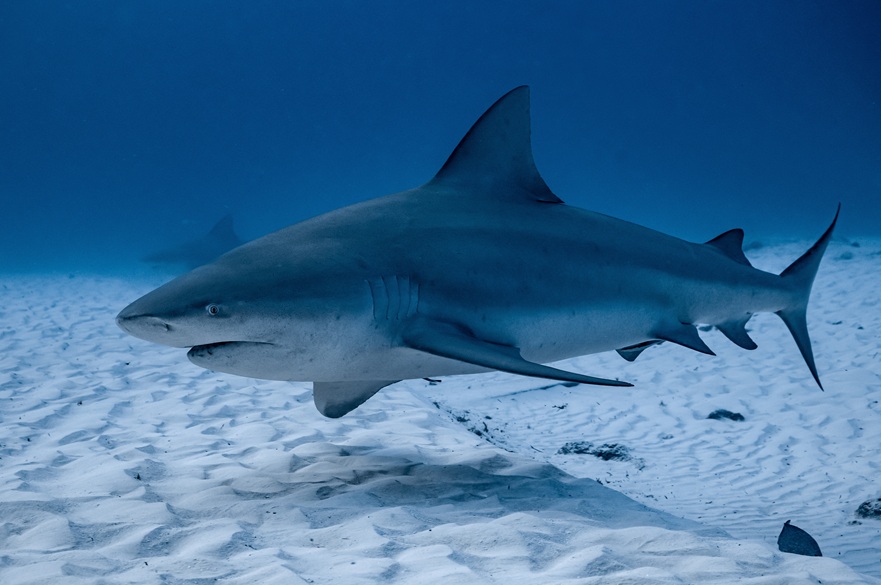
Analyses of shark bite data from recent tragic events indicate that many of the incidents have occurred close to shore, particularly near estuaries and around Sydney Harbour after heavy rainfall. The reports point to bull sharks (Carcharhinus leucas) rather than great whites. Bull sharks are uniquely adapted to turbid, low-visibility waters and are well known for entering rivers and urban waterways. They make the ideal ‘evolved’ shark as they can cope with freshwater, brackish and seawater, something the large majority of over 500 species of sharks, cannot.
White sharks, by contrast, are visual ambush predators and the better the visibility the better the attack rate on their prey. Decades of tagging and observational studies show white sharks prefer cooler, clearer coastal waters where they hunt seals, sea lions and fish. Murky floodwaters, filled with debris and freshwater runoff, are not optimal environments for great whites.
Climate scientists and marine ecologists agree that extreme weather events are becoming more frequent and intense due to climate change. Increased rainfall leads to flooding, which in turn alters salinity, temperature and visibility in coastal ecosystems.
Studies of bull shark movements show that these sharks are attracted to flooded systems because their prey species are displaced. Nutrient-rich runoff can draw baitfish into new areas, and the bull sharks follow. Research conducted in eastern Australia has documented Bull sharks spending extended periods in places such as Sydney Harbour during warmer months, coinciding with rising water temperatures and increased freshwater inflow.
Conversely, white sharks are also responding to environmental change, but in different ways. Satellite tagging studies indicate that great white movements are closely linked to prey distribution and oceanographic conditions such as temperature fronts. As oceans warm, researchers have observed shifts in the seasonal presence of great whites in some regions .
However, scientists are clear: an increase in shark presence does not equate to an increase in number. To put it simply, great whites are not suddenly increasing in number or turning into warm-water animals. Instead, warming oceans are changing where and when suitable conditions exist, so these sharks are adjusting their movements, timing, and locations. The underlying factor here is often just that they are following their prey, therefore, it can make them seem more common in some places and absent in others.
Decades of behavioural research on sharks demonstrate that one of the most persistent myths that sharks intentionally hunt humans is not the case at all. Most shark bites are classified as cases of mistaken identity or exploratory behaviour. To conflate matters, in low-visibility conditions, sharks rely on senses such as electroreception and vibration rather than sight.
Great whites are well documented to exhibit “bite-and-release” behaviour. Research based on bite patterns and survival rates shows that many encounters involve a single bite followed by disengagement. Tragically, the size and power of great whites mean that even non-predatory bites can be fatal .
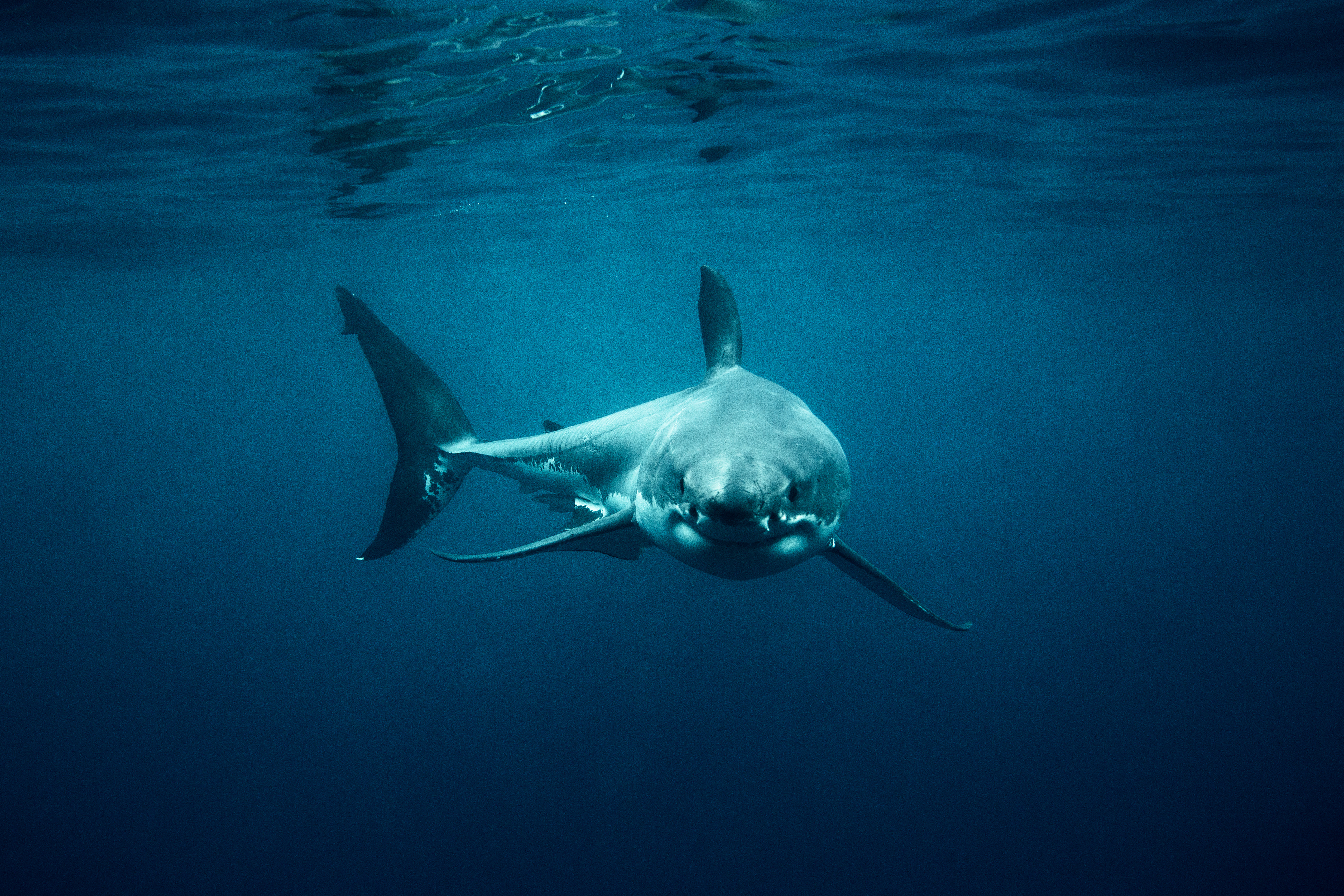
Public perception of sharks is dominated by a handful of large species, particularly the great white
Bull sharks, which often share shallow coastal and estuarine habitats with humans, are more likely to encounter people simply due to overlap in space. It needs to be emphasised that this increased overlap explains risk far more effectively than any claims of aggression. Add to that the murky waters from runoff, the extreme rainfall and flooding, and the risk just got much higher.
Ignoring the natural climatic incidents, the role of land-based human activity is also influencing shark presence near beaches. Urban runoff, altered river systems, sewage overflows and fishing activity all influence where prey species aggregate. Studies show that fishing bait, discarded catch and nutrient runoff can attract a plethora of fish to nearshore waters, particularly after heavy rainfall. Sharks follow these prey movements, so swimming or surfing near river mouths after floods has been repeatedly identified by researchers as a high-risk activity.
Therefore, shark bites are the outcome of complex interactions between climate change, ecosystem dynamics and human behaviour. It can be argued that the number of unprovoked shark attacks are on the increase since records began but this is simply because the human population has grown and more people are entering the ocean. In essence, when adjusted for the size of the global population, the rate of unprovoked shark attacks per million people remains relatively flat and very low.
If we continue to frame every shark bite as proof that sharks are “turning on us”, we fail to ask more meaningful questions: what environmental conditions were present, how have we altered coastal systems, and how can we reduce risk without demonising wildlife?
Perhaps instead of hearing the Jaws theme when we read the words “shark attack”, we should hear a different message altogether: the ocean is changing, and our relationship with its top predators must change with it. It is us that can make the changes, it is us that have a responsibility.