Families invited to trial new ADHD sleep tool as research shows gaps in clinician training
Clinicians working with children diagnosed with ADHD feel under prepared to identify and manage sleep problems which affect many of the patients they support, according to research from Nottingham Trent University.
By Helen Breese | Published on 12 March 2026
Categories: Press office; Research; School of Social Sciences;
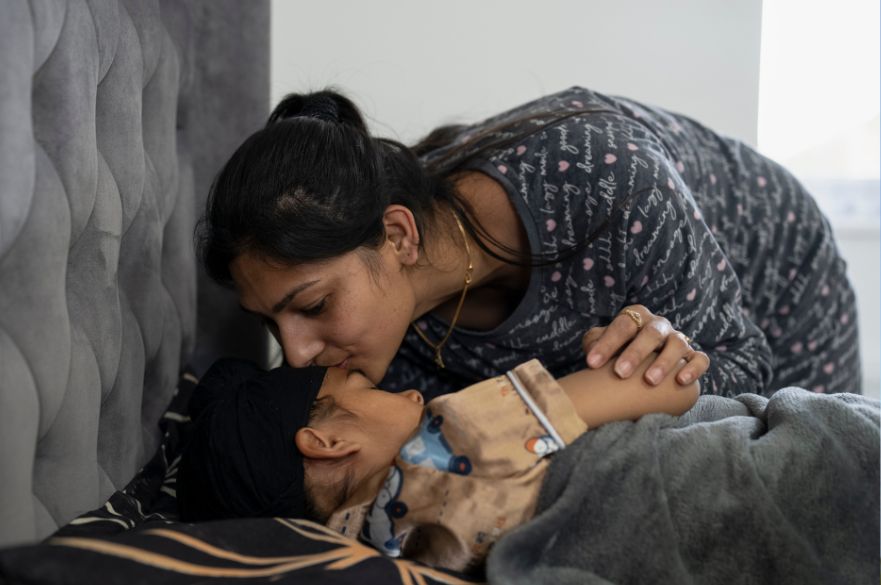
Almost two‑thirds of children with ADHD experience significant sleep difficulties, such as taking a long time to fall asleep, waking frequently through the night or waking very early.
Researchers interviewed 15 specialist clinicians across the UK, who described sleep as a reoccurring problem in their daily practice and reported significant impacts on children’s behaviour, school performance, family wellbeing and parent mental health.
They also identified a lack of formal training, limited access to evidence‑based resources, and difficulties distinguishing ADHD symptoms from sleep‑related issues. Many said they had to learn on the job, drawing on lay knowledge or the experiences of families rather than structured clinical guidance.
The findings of the study Mind the Gap! Sleep problems in children with ADHD will now play a key role in the creation of an online screening tool and training programme to support healthcare professionals in diagnosing sleep problems and identifying the most effective treatments.
The research and tool forms part of a £2.2m DISCA project funded by the National Institute for Health and Care Research (NIHR). It is led by researchers at the University of Southampton, the Southampton Clinical Trials Unit and University Hospital Southampton NHS Foundation Trust.
This project also includes Sleep Buddy; a digital support resource currently being trialled with families of children aged six to 12 years old with ADHD.
The Sleep Buddy website has been developed by sleep experts in partnership with parents and carers of children with ADHD and gives information and advice about tried and tested ways to help sleep.
The website is being evaluated in a nationwide study, and researchers are looking for around 350 families to join up, particularly from communities who are often under-represented in research such as children in foster care and those from ethnic minority backgrounds.
Researchers will follow up at three and six months to see if there are lasting improvements to the child’s sleep, behaviour and ability to concentrate. They will also investigate the wider effects of better sleep on families, for example by allowing a parent to return to work.
Professor David Daley is head of Applied Psychological Practice at NTU’s School of Social Sciences and co‑author of the Mind the Gap! study, he also led on the development of the Sleep Buddy questionnaire. “Clinicians were very candid about the lack of formal training and the pressures they face. Their insights highlighted that families need consistent guidance and that clinicians themselves would benefit from better tools,” said Professor Daley.
“The Sleep Buddy project is a valuable opportunity for families to get involved and to help address this gap - hopefully transforming how ADHD‑related sleep issues are approached and treated in the future.”
Parents and carers who are interested in finding out more about the Sleep Buddy study can visit the website - https://www.discasleep.org.uk/get-involved
The team also includes researchers in the Southampton Primary Care Research Centre with expertise in digital health interventions and is working closely with colleagues at King’s College London, Newcastle University, University of Nottingham, and national ADHD and foster care charities.
Notes for Editors
Press enquiries please contact Helen Breese, Public Relations and Research Communications Manager, on telephone +44 (0)115 848 8751, or via email.
About Nottingham Trent University
Nottingham Trent University (NTU) has been named UK ‘University of the Year’ five times in six years, (Times Higher Education Awards 2017, The Guardian University Awards 2019, The Times and Sunday Times 2018 and 2023, Whatuni Student Choice Awards 2023) and is consistently one of the top performing modern universities in the UK.
Students have voted us the best university in the UK and 1st in the UK for student employability (Uni Compare 2025).
NTU is 4th in the UK for number of undergraduate students (HESA 2023-24) with over 36,000 students and more than 4,000 staff located across six campuses. It has an international student population of 6,000 and an NTU community representing over 160 countries.
NTU owns two Queen’s Anniversary Prizes for outstanding achievements in research (2015, 2021). The first recognises NTU’s research on the safety and security of global citizens. The second was awarded for research in science, engineering, arts and humanities to investigate and restore cultural objects, buildings and heritage. The Research Excellence Framework (2021) classed 83% of NTU’s research activity as either world-leading or internationally excellent.
NTU was awarded GOLD in the national 2023 Teaching Excellence Framework (TEF) assessment.
NTU is a top 10 for sport (British Universities and Colleges Sport league table 2025) and was named as Sports University of the Year (Daily Mail University Guide 2025). It has also been ranked as 25th in the UK by the Guardian University Guide 2026.
NTU is a holder of the University Mental Health Charter recognising the commitment an institution has shown towards continuous improvement in the area of mental health and wellbeing.
NTU is the most environmentally sustainable university in the UK and second in the world (UI Green Metric University World Rankings, 2024).
About the NIHR
The mission of the National Institute for Health and Care Research (NIHR) is to improve the health and wealth of the nation through research.
We do this by:
- funding high quality, timely research that benefits the NHS, public health and social care
- investing in world-class expertise, facilities and a skilled delivery workforce to translate discoveries into improved treatments and services
- partnering with patients, service users, carers and communities, improving the relevance, quality and impact of our research
- attracting, training and supporting the best researchers to tackle complex health and social care challenges
- collaborating with other public funders, charities and industry to help shape a cohesive and globally competitive research system
- funding applied global health research and training to meet the needs of the poorest people in low and middle income countries
NIHR is funded by the Department of Health and Social Care.
Our work in low and middle income countries is principally funded through UK international development funding from the UK government