New £1.2m project will unite art, science and business to make climate research more accessible
A new project will place artists directly into climate research teams so they can turn scientific findings into creative work that helps the public better understand and engage with the climate crisis.
By Helen Breese | Published on 13 April 2026
Categories: Press office; Business; Environment and sustainability; Research; School of Art & Design; Nottingham Business School;

Entrepreneurship, Art, and Science for Environmental Sustainability (EASE) is a £1.2 million initiative funded by UK Research Innovation (UKRI).
Nottingham Trent University (NTU) will play a pivotal role in the project, working directly with artists, scientists and entrepreneurs to make climate research relatable, emotionally meaningful and easier to understand.
Experts from Nottingham Business School and the Nottingham School of Art & Design will lead an Artist Venturing Lab, which places artists directly alongside scientists during fieldwork and early idea‑development.
This will allow them to work together to rapidly create and test early versions of new tools, such as digital exhibitions or immersive artworks based on local environmental data and history.
NTU will also design and trial a transferable model to ensure that the learning, skills and new business approaches developed within the project can be shared widely across the UK’s creative and research sectors.
This includes developing structured training to support artists in turning their climate‑focused work into stable ventures, helping them to secure long‑term income through exhibitions, digital platforms, collaborations, public engagement activities and community‑based initiatives.
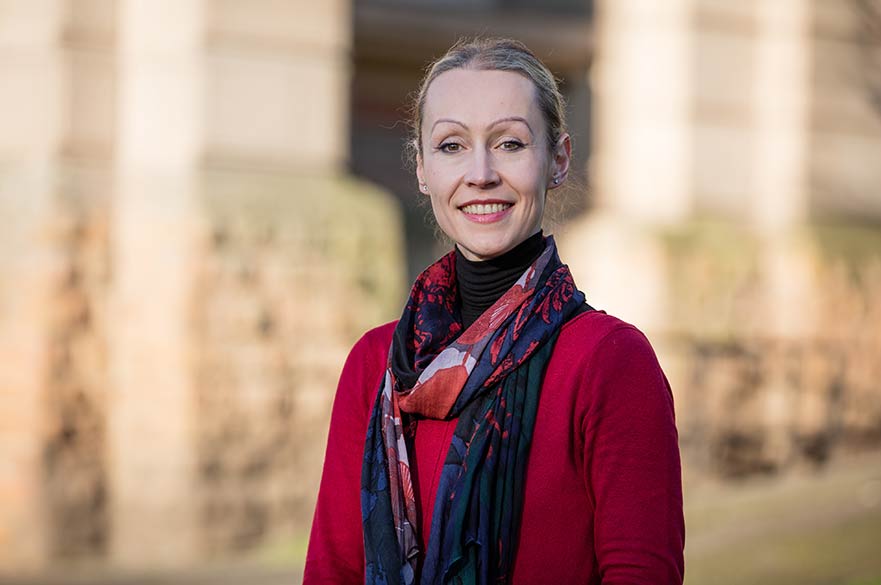
Dr Iryna Kuksa, Senior Research Fellow in the Nottingham School of Art & Design and project co-lead, said: “Although climate science is widely reported, many people still find it too technical or overwhelming to fully engage with. The EASE project will use art to close that gap, creating room for emotion, storytelling and shared understanding.
“We are moving the artist’s role beyond simply illustrating scientific data and recognising them as key partners in generating new knowledge. This is not just about producing or selling art, it’s about giving artists the skills and support they need to build sustainable careers and make a lasting, measurable difference to society.”
This synergy is the driving force behind the existing STEAM Founder Programme at Nottingham Business School’s Centre for Business and Industry Transformation (CBIT) which helps researchers across Science, Technology, Engineering, Art, and Mathematics translate complex findings into scalable, fundable impact.
Project co-lead and Director of CBIT, Professor Xiao Ma, said: “This is not a pilot. It is a proven approach being applied to one of the most urgent challenges of our time.
“EASE is built on a tested research practice which treats creative practitioners as founders, scientific insight as a product pipeline, and climate communication as a suite of sustainable services.
“It will have a vital role in transforming the creative industry, demonstrating that when artists, scientists, and entrepreneurs work together from day one, the outputs are not just more innovative. They are more durable, more scalable, and more impactful.”
EASE complements the government’s commitment to make Britain the world’s leading destination for creative industries and AI innovation simultaneously, and to ensure that creative practitioners are rewarded, genuinely empowered, and central to the UK’s economic future.
The project also builds on NTU’s long‑standing interdisciplinary strengths, combining business expertise, design thinking, and environmental research to create practical, impact‑driven solutions.
Professor Richard Emes, Pro Vice-Chancellor for Research and International, Nottingham Trent University, added: “At NTU, we have deliberately built a research environment and culture where interdisciplinary collaboration is not the exception, it is the expectation. EASE is a product of that culture.
“It brings together business, art and design, and environmental science in a way that produces something none of those disciplines could achieve alone. These are exactly the kinds of projects that demonstrate what an interdisciplinary research powerhouse looks like in action: not just generating knowledge but generating real-world impact.”
Notes for Editors
Press enquiries please contact Helen Breese, Public Relations and Research Communications Manager, on telephone +44 (0)115 848 8751, or via email.
About Nottingham Trent University
Nottingham Trent University (NTU) has been named UK ‘University of the Year’ five times in six years, (Times Higher Education Awards 2017, The Guardian University Awards 2019, The Times and Sunday Times 2018 and 2023, Whatuni Student Choice Awards 2023) and is consistently one of the top performing modern universities in the UK.
Students have voted us the best university in the UK and 1st in the UK for student employability (Uni Compare 2025).
NTU is 4th in the UK for number of undergraduate students (HESA 2023-24) with over 36,000 students and more than 4,000 staff located across six campuses. It has an international student population of 6,000 and an NTU community representing over 160 countries.
NTU owns two Queen’s Anniversary Prizes for outstanding achievements in research (2015, 2021). The first recognises NTU’s research on the safety and security of global citizens. The second was awarded for research in science, engineering, arts and humanities to investigate and restore cultural objects, buildings and heritage. The Research Excellence Framework (2021) classed 83% of NTU’s research activity as either world-leading or internationally excellent.
NTU was awarded GOLD in the national 2023 Teaching Excellence Framework (TEF) assessment.
NTU is a top 10 for sport (British Universities and Colleges Sport league table 2025) and was named as Sports University of the Year (Daily Mail University Guide 2025). It has also been ranked as 25th in the UK by the Guardian University Guide 2026.
NTU is a holder of the University Mental Health Charter recognising the commitment an institution has shown towards continuous improvement in the area of mental health and wellbeing.
NTU is the most environmentally sustainable university in the UK and second in the world (UI Green Metric University World Rankings, 2024).