Raft of targeted conservation efforts may help boost leopard numbers in sub-Saharan Africa, study suggests
There could be fewer leopards living across sub-Saharan Africa than previously believed, according to a new study which has analysed suitable habitat and conditions.
By Dave Rogers | Published on 6 July 2026
Categories: Press office; Research; School of Animal, Rural and Environmental Sciences;
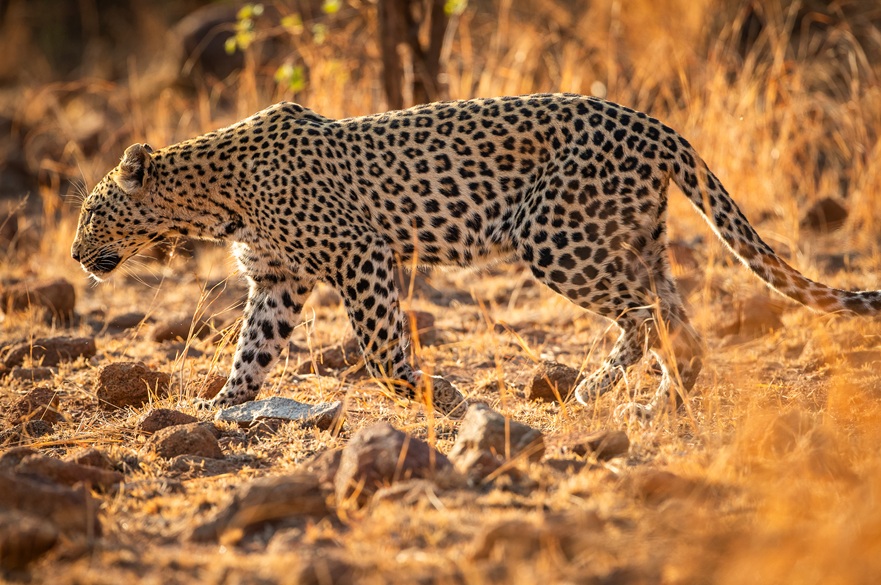
It is hoped that the research, led by conservation scientists at Nottingham Trent University, could be used to help plan vital recovery efforts and focus conservation where it is most needed.
Leopard numbers are falling due to factors such as habitat loss, lack of prey and trophy hunting, and they have disappeared from more than 41% of areas where they once lived – but there is a lack of reliable information on how many remain across their full range.
As part of the study the team gathered a range of previous data on leopard populations across sub-Saharan Africa.
They then used that information to develop a model to predict leopard numbers today based on current habitat quality and human pressures – along with how many could potentially exist if conditions improved.
The researchers predict that there could be 45,000 to 143,000 leopards in the wild – lower than previous estimates – but that, encouragingly, Africa could potentially support up to 176,000 leopards within their historical range if appropriate conservation steps are taken.
The team caveats that their numbers are not the same as a population count, however, because a lot of the data relates to protected areas which tend to have healthier ecosystems for leopards than areas where people live and farm.
Leopards were less common in areas with high levels of human activity, the study showed, particularly where livestock numbers were high, settlements were nearby and the landscape was dominated by agriculture.
They were greater in areas with healthy populations of prey, particularly ungulates, such as deer, and wild pigs.
The study also raises serious concerns regarding trophy hunting, with currently international leopard hunting quotas exceeding what is considered sustainable in more than half of the countries assessed – indicating how hunting could be contributing to leopards’ decline.
Only a small fraction of adult male leopards – roughly 2,800–8,700 – live outside protected areas in countries where trophy hunting is allowed, the research suggested.
The study makes it possible to identify where conservation efforts such as habitat protection, prey recovery, or reduced conflict with people would have the greatest benefit.
The researchers argue that there is a need to urgently review and revise hunting quotas in several countries.
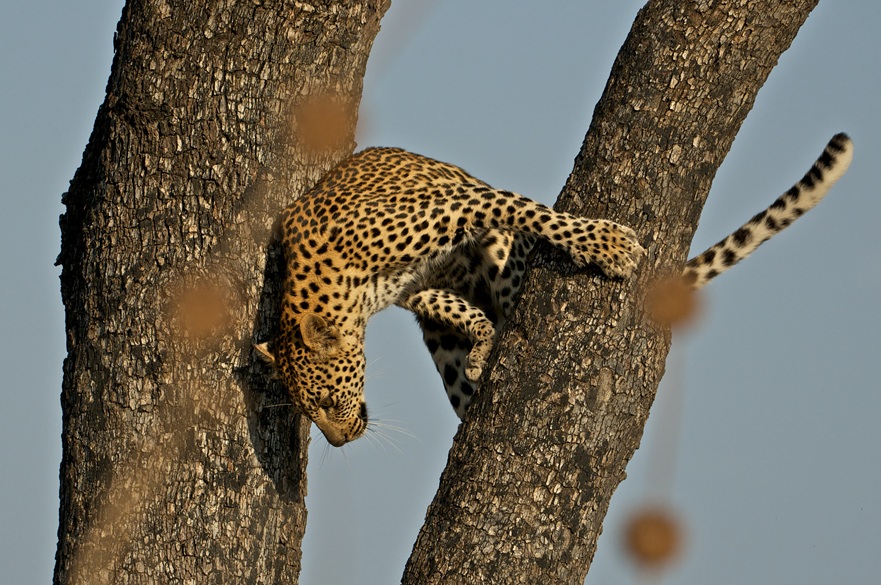
A young female leopard climbs down a tree in Kruger National Park, South Africa (Image Julien Fattebert)
“A lack of reliable numbers makes it hard for governments and conservation organisations to plan effective protection and recovery efforts,” said Dr Antonio Uzal, Associate Professor of Conservation Biology in Nottingham Trent University’s School of Animal, Rural and Environmental Sciences.
He said: “Our work provides practical guidance for conservation and clear, location-specific targets for leopard recovery. It shows where protection efforts will work best and can support countries in focusing their work both inside and outside protected areas.
Co-author, Dr Julien Fattebert, Research Professor at the Vilnius University, Lithuania and Research Associate at the Nelson Mandela University, South Africa, said: “We also raise serious concerns about leopard trophy hunting, as current hunting quotas are based on outdated and overestimated population figures.
“We are calling for hunting quotas to be urgently reviewed using up-to-date information, alongside regular field surveys, to avoid further population declines and support long-term leopard conservation.”
In areas outside protected areas, where it is less clear how many leopards still survive, targeted camera trapping and habitat restoration should be prioritised, the researchers say, and reintroductions considered where appropriate.
First author Kalpapran Patowary, a doctoral student at the Department of Forestry and Environmental Conservation at Clemson University in the US, and who was at NTU at the time of the study, said: “Our main goal was to get an idea of leopards’ status in terms of possible numbers across the spatial spread of sub-Saharan Africa. We argue that time and resources should be focused on regions where leopards may still be present but are underrepresented – this is particularly the case in Western African countries.”
The research is published in the Journal of Applied Ecology.
Notes for Editors
Press enquiries please contact Dave Rogers, Public Relations Manager, on telephone +44 (0)115 848 8782, or via email.
Nottingham Trent University (NTU) has been named UK ‘University of the Year’ five times in six years, (Times Higher Education Awards 2017, The Guardian University Awards 2019, The Times and Sunday Times 2018 and 2023, Whatuni Student Choice Awards 2023) and is consistently one of the top performing modern universities in the UK.
Students have voted us first in the UK for course quality, top five in the UK for employability and third best University in the UK (Uni Compare 2027). We are ranked in the top 25 universities in the country (The Guardian University Guide 2026).
We have over 35,000 students and more than 4,000 staff located across five campuses. It has an international student population of over 5,000 and an NTU community representing over 160 countries.
NTU owns two Queen’s Anniversary Prizes for outstanding achievements in research (2015, 2021). The Research Excellence Framework (2021) classed 83% of NTU’s research activity as either world-leading or internationally excellent.
NTU was awarded GOLD in the national 2023 Teaching Excellence Framework (TEF) assessment.
NTU is a top 10 for sport (British Universities and Colleges Sport league table 2025) and was named as Sports University of the Year (Daily Mail University Guide 2025).
NTU is a holder of the University Mental Health Charter, recognising the commitment an institution has shown towards continuous improvement in the area of mental health and wellbeing.
NTU is the most environmentally sustainable university in the UK and third in the world (UI Green Metric University World Rankings, 2025).