Funding for project to improve pregnancy monitoring with new placenta research
Scientists have received funding for a new project to investigate the dynamic interactions between the mother, placenta and fetus in pregnancy, with the aim of developing a monitoring tool that can be used in a range of settings, including at home to help detect complications earlier.
By Dave Rogers | Published on 10 September 2026
Categories: Press office; Research; School of Science and Technology;
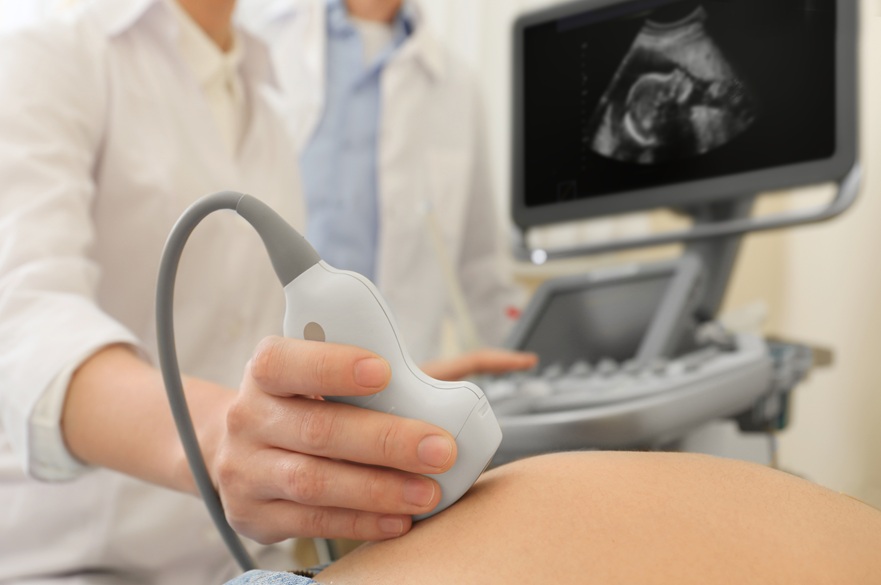
The project will integrate cutting-edge biology, advanced imaging, and novel monitoring technologies to reveal new insights into healthy and high-risk pregnancies and allow early detection of problems.
A team led by the University of Nottingham, and involving Nottingham Trent University, has received a Wellcome Discovery Award for the work.
During pregnancy, the fetus depends on an intimate physiological relationship with its mother, which from the second trimester, is increasingly mediated by the placenta. While long-term adaptations to changes in supply and demand are well described, short-term interactions are less examined.
Professor Penny Gowland from the School of Physics and Astronomy at the University of Nottingham is leading the project, she said: “There are no comprehensive investigations into how fetal-placental–maternal communication varies with circumstance, or whether it can reveal an inability to respond physiologically under stress. We think that impaired adaptive responses may contribute to unexplained stillbirths, particularly at late gestation.”
The team which also brings together experts from Makerere University in Uganda, , the University of Manchester, and the Essential Baby Company, will characterise the dynamic interactions across different settings (including high and low-resourced contexts) in both apparently healthy and compromised pregnancies.
Physiological data will be gathered using the novel Pregnancy Activity Monitor (PAM- recording fetal heart rate, fetal movement, placental and uterine contractions and placental oxygenation), MRI and ultrasound.
The team will also develop a dynamic mathematical model of placental function, uncover the key drivers of placental dysfunction, identify new early-warning biomarkers and generate individualised estimates of placental efficiency.
Dr Qimei Zhang, a researcher in Nottingham Trent University’s School of Science and Technology, said: “Pregnancy is a dynamic process, yet much of our current monitoring provides only snapshots in time. Optical fibre sensing offers an exciting new opportunity to change this by enabling highly sensitive, continuous and non-invasive monitoring of physiological changes during pregnancy.
“Our ambition is to harness this technology to better understand placental function and fetal movement, ultimately opening new possibilities for earlier detection of changes and more personalised care for mothers and their babies.”
Professor Penny Gowland continues: “Advances in MRI technologies is allowing us to push the boundaries of what is possible with imaging, we have already revealed new insights into placental contractions in pregnancy and by further characterising the function of the placenta and integrating new technologies and modelling we can build an even fuller picture that we can translate into new tools to effectively monitor pregnancy and identify problems sooner.
“The findings will ultimately enable the creation of an at home version of PAM that provides real time monitoring to identify at risk pregnancies and improve prenatal care worldwide.”
Notes for Editors
Press enquiries please contact Dave Rogers, Public Relations Manager, on telephone +44 (0)115 848 8782, or via email.
About Nottingham Trent University:
Nottingham Trent University (NTU) has been named UK ‘University of the Year’ five times in six years, (Times Higher Education Awards 2017, The Guardian University Awards 2019, The Times and Sunday Times 2018 and 2023, Whatuni Student Choice Awards 2023) and is consistently one of the top performing modern universities in the UK.
Students have voted us first in the UK for course quality, top five in the UK for employability and third best University in the UK (Uni Compare 2027). We are ranked in the top 25 universities in the country (The Guardian University Guide 2026).
We have over 35,000 students and more than 4,000 staff located across five campuses. It has an international student population of over 5,000 and an NTU community representing over 160 countries.
NTU owns two Queen’s Anniversary Prizes for outstanding achievements in research (2015, 2021). The Research Excellence Framework (2021) classed 83% of NTU’s research activity as either world-leading or internationally excellent.
NTU was awarded GOLD in the national 2023 Teaching Excellence Framework (TEF) assessment.
NTU is a top 10 for sport (British Universities and Colleges Sport league table 2025) and was named as Sports University of the Year (Daily Mail University Guide 2025).
NTU is a holder of the University Mental Health Charter, recognising the commitment an institution has shown towards continuous improvement in the area of mental health and wellbeing.
NTU is the most environmentally sustainable university in the UK and third in the world (UI Green Metric University World Rankings, 2025).