Scientists find small gardens are a big barrier to supporting nature – but better planning could protect UK wildlife
Fewer than 40% of people are willing to make their gardens more wildlife friendly, a new study has revealed – but according to scientists, better policies could help protect biodiversity.
By Dave Rogers | Published on 17 September 2026
Categories: Press office; Research; School of Animal, Rural and Environmental Sciences;
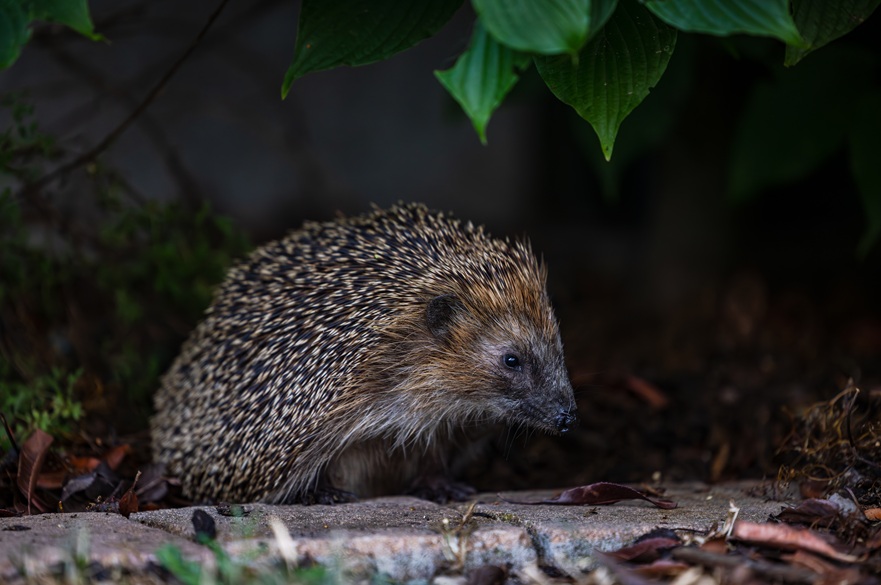
A new study by Chester Zoo and Nottingham Trent University scientists revealed that just over a third (38%) of more than 230 householders in Cheshire and North Wales were willing or able to introduce more wildlife-friendly features to their gardens.
The study, recently published in People and Nature, analysed responses from people asked if they would incorporate ponds, ‘overgrown’ areas, hedgehog highways and other features to support wildlife, on top of any already created.
An estimated 88% of UK residents have access to a garden, and as towns and cities expand, these spaces are becoming increasingly important to the survival of native plants and animals.
Lead researcher Kelly Hitchcock, a PhD student in Nottingham Trent University’s School of Animal, Rural and Environmental Sciences, and one of Chester Zoo’s Conservation Scholars said:
“With the amount of promotion you see of these features, like ponds and hedgehog homes, I expected people would be happy to do these things. It was quite surprising how many people weren’t, even when they were pro-nature. There are barriers – sometimes out of their control – which stop them.”
While many studies evidence the positive impact of wildlife-friendly features and products, this is a rare attempt to investigate whether people are implementing them, and if not, why not.
The questionnaire asked people how likely they were to add ten specific wildlife features including log piles, bird baths and compost heaps. The authors analysed why respondents might be reluctant to include them, looking at their capability, opportunity and motivation.
The study showed the biggest barriers were lack of space, concerns about pets and worries about how to build or maintain the feature, while the features least likely to be adopted were compost heaps and ponds. People were most often willing to sow wildflowers.
“Even if someone wants to rewild their garden it really restricts them if they don’t have the space, and current trends toward hyper-dense housing may be contributing to this,” said Kelly.
“The data suggests we can’t rely on individuals to make wildlife friendly changes at the scale that’s needed. These features need to be built into urban planning and policy.”
Dr Leah Williams, Lead Conservation Scientist at Chester Zoo and co-author of the paper, said multi-level policy changes were needed to tackle urban biodiversity loss, which also has physical and mental health implications for humans.
She said: “We’d still encourage people to do what they can, whether that’s planting wild native flowers in a window box, or creating a mini-pond with a bucket will make a difference.
“You can also look into community schemes, like the Networks for Nature project which aims to link up habitats in Cheshire. Interconnectivity is really important to species and biodiversity should be factored in at every level.”
Notes for Editors
Press enquiries please contact Dave Rogers, Public Relations Manager, on telephone +44 (0)115 848 8782, or via email.
About Chester Zoo
- Chester Zoo is a world-leading conservation and education charity that’s committed to preventing extinction and dedicated to raising awareness of key conservation and environmental challenges.
- The zoo’s 130-acre site in Chester, which is home to more 500 threatened species, is where this species-saving work is made possible.
- As a not-for-profit, the zoo ploughs everything into its conservation mission, both here in the UK and around the world.
- It works with more than 3,000 species globally, including 140 international animal conservation breeding programmes, which are ensuring the survival of species on the very brink of extinction. It’s also home to five national plant collections, comprising of more than 1,000 species.
- Experts from the zoo are recognised by governments and NGOs across the world as leaders within the global conservation community. Currently, the zoo is saving species on behalf of the Bermudan, Spanish and Portuguese governments, among others.
- The zoo works with over 100 partners in more than 20 countries to recover threatened wildlife and restore habitats, including orangutans in Bornean rainforests, elephants and tigers in Indian grasslands, lemurs and frogs in Malagasy forests, rare fish in Mexican lakes and a host of species here in the UK.
- The zoo influences policy both in the UK and internationally, engaging with governments worldwide to take action to halt the biodiversity crisis.
- Its millions of annual visitors and huge online communities are part of the educational, scientific and conservation jigsaw, empowering them to be part of solutions for wildlife, creating a future where nature can survive and thrive.
- Chester Zoo lives and breathes conservation – from its animal and plant care, to its scientific breakthroughs, to its policy work and its vital role in inspiring and educating people about the natural world and the impact humans have on it – creating and nurturing the conservationist in us all.