Academics to pioneer new methods to protect architectural heritage in India
Researchers at Nottingham Trent University (NTU) will apply new laser-scanning techniques to help protect architectural heritage sites in India that are prone to earthquakes.
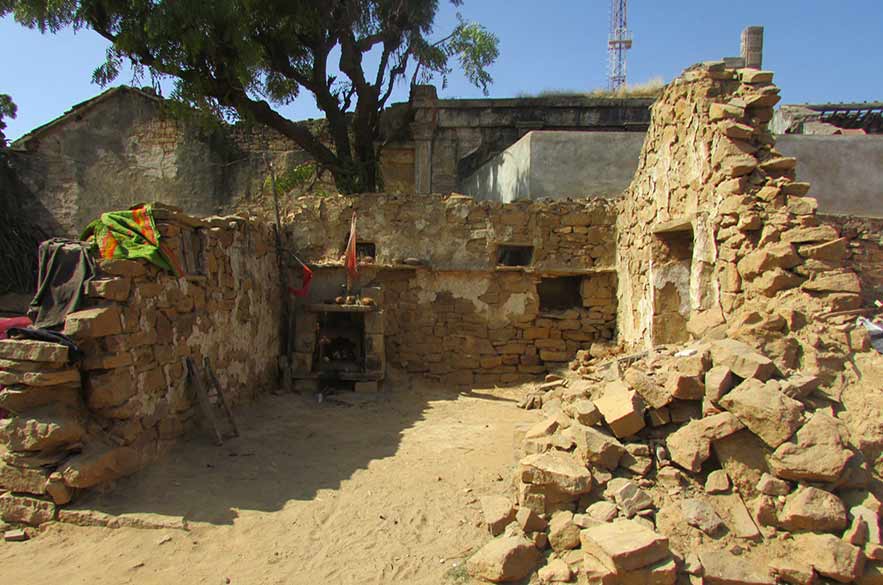
Researchers at Nottingham Trent University (NTU) will apply new laser-scanning techniques to help protect architectural heritage sites in India that are prone to earthquakes.
Academics in the Centre for Architecture, Urbanism and Global Heritage (CAUGH) and partners have been awarded more than £126,000 to investigate the use of Light Detection and Ranging (LiDAR) to scan heritage buildings in Gujarat so that they can be repaired and re-constructed following a natural disaster.
The funding was awarded by the Arts and Humanities Research Council (AHRC) and by the Department for Digital, Culture, Media and Sport (DCMS). Project partners include the Centre for Heritage Conservation (CHC), CEPT Research and Development Foundation (CRDF) in Ahmedabad; the International Centre for the Study of the Preservation and Restoration of Cultural Property (ICCROM) in Rome; and the Hunnarshala Foundation in India.
Principal Investigator Dr Bernadette Devilat, of the School of Architecture, Design and the Built Environment at NTU, said: “We will tackle post-earthquake housing re-construction of heritage areas by developing a novel approach using state-of-the-art LiDAR technologies. It is a fast, affordable and scalable method to break the unsustainable cycle of buildings' replacement and subsequent heritage erasure.
"Our aim is to build future resilience and local capacity of seismic-prone heritage areas of India by offering a digital platform to enable the design of mitigation and re-construction plans, damage and technical assessments, enhancing the re-use and repair of housing and virtually preserving its culture embedded as the record of living heritage.”
The centre’s Director Professor Gamal Abdelmonem added: “At the CAUGH, we have built up the capacities and expertise needed to face the persistent challenges of protecting heritage and supporting vulnerable people in the improvement and valuation of their built environment.”
The project will last 11 months and is expected to set the basis for future collaborations in India. The project’s launch will be open to the public on Microsoft Teams between 11am and 1pm on 11 December.
NTU academics working on this project will take part in two field trips to India next year to collect on-site LiDAR data and then work with it as a participatory strategy with local communities, academics and authorities.
A comprehensive guidance document to aid post-earthquake re-construction in heritage areas of Gujarat will be delivered as one of the research outcomes, as well as local training on the technology, workshops, presentations and publications.
Dr Devilat said: “This project is relevant because after earthquakes, heritage is not often a priority and is usually left in stand-by mode until specific solutions are developed, which may take several years, as occurred with the historic centre of L'Aquila after the 2009 earthquake; the heritage area of Amandola after the 2016 earthquake - both in Italy; or Zúñiga after the 2010 earthquake in Chile. In India, after the 1993 and 2001 earthquakes, some heritage villages were destroyed and their population was relocated, implying the forced displacement of people and communities.
"Damaged dwellings cannot be immediately reinforced to continue inhabitation, repairs are usually costly and large numbers of affected constructions make damage assessment difficult, leading to slow and sometimes out-of-context responses. Our aim is thus to exploit new uses of technology to enhance the number and quality of buildings conserved, mitigate future risks to buildings and human lives, and further impact public policies.”
The research team includes NTU Research Fellow Dr Felipe Lanuza; Co-Investigator Dr Jigna Desai, Executive Director of the CHC at CRDF; and Co-Investigator Dr Rohit Jigyasu, Project Manager Urban Heritage, Climate Change & Disaster Risk Management from ICCROM. The Hunnarshala Foundation will support with community participation and provide key networks and local knowledge.
The project - A sustainable re-construction method for seismic-prone heritage areas of India based on advanced recording technologies - has been funded by the UKRI AHRC and DCMS under the joint call AHRC Global Challenges Research Fund (GCRF) Urgency Grants highlight notice for Proposals Addressing Impacts on Cultural Heritage resulting from Natural Disasters and Climate Change.