Unsafe and illegal e-scooter riding linked to lack of rule knowledge
E-scooter riders are less likely to ride dangerously or illegally if they know the rules and regulations, according to a new research report by Nottingham Trent University (NTU) which calls for better access to training programmes to reduce collisions.
With around 14.5 million e-scooter trips recorded in the UK between July 2020 and the end of December 2021, recent crash data indicated that the number of incidents involving e-scooters is rising, with 1437 casualties in collisions involving e-scooters in 2022, compared to 1352 during the previous year.
The report by NTU psychologists brings together three research projects which assess the profile of e-scooter riders and non-riders, their riding habits, self-reported aberrant riding behaviour, and their understanding of current legislation across various riding scenarios.
The first study featured an extensive questionnaire which explored the demographics of 380 e-scooter users (193) and non-users (187) and their behaviour. E-scooters riders were found to be younger than non-riders, with a significant proportion being single.
Among these users, men are more likely to ride e-scooters frequently, and most users – more than 50% - only ride for short distances. Predominant reasons for use included to replace walking, for leisure and to replace public transport or car journeys.
When asked about their riding behaviour more than 50% of users indicated that they have ridden on pavements and with another person on board. Men reported using their phones and riding through red lights more often than women. Less than 15% said they wore a helmet.
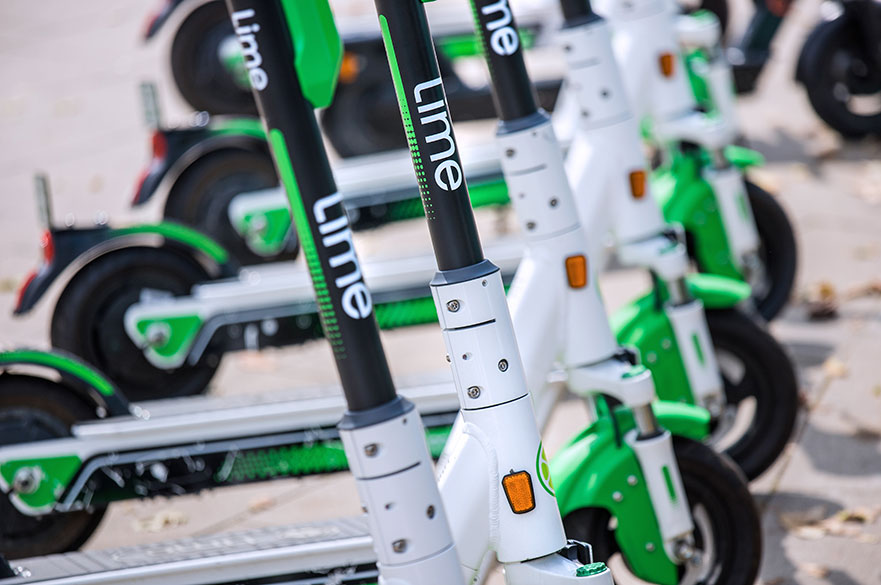
As the number of e-scooters rises, so does the amount of reported incidents
In contrast, when non-users were asked to provide hypothetical answers on how they would behave, less than 5% indicated they would use their phone or go through a red light while riding an e-scooter. Equally, less than 5% indicated they would ride on pavement. In contrast to the e-scooter users, 35% of non-users indicated they would wear a helmet.
Study two saw 132 riders and non-riders answer questions on scenarios which assessed their understanding and application of four key aspects of e-scooter regulations: bicycle lanes, e-scooter parking, speeding or adherence to speed limits, and riding on main roads.
The results revealed that both rider and non-rider groups had little knowledge of the rules across all categories, most noticeably for permitted speed limits and designated parking areas. Findings also indicated that some participants assume they are allowed to ride e-scooters on pavements.
For the third study, 52 riders and 59 non-riders were presented with 12 scenarios filmed on UK roads and asked whether each situation was legal and if they would ride on that road themselves. At the end of the experiment, participants were informed about current e-scooter legislation.
Around 46% of riders reported that they would not participate in any illegal riding behaviours when they were aware of the rules, while just over that 9% of riders admitted they would still engage in illegal riding practices even if they were aware of their illegality.
Percentages were only slightly lower for non-riders, with 6.6% indicating they would engage in inappropriate riding behaviour despite knowing it was against the rules, while 37.6% would follow the law if they were aware of it.
Lead researcher and senior lecturer at NTU’s School of Social Sciences, Dr Petya Ventsislavova, said: “E-scooters are still a relatively new phenomenon in the UK but ongoing trials have seen an increase in use – they have also seen an increase in accidents.
“Our studies have shown how a lack of awareness and understanding of the current e-scooter rules has a direct impact on riding behaviour, potentially leading to poor and illegal riding practices. This is exacerbated by the fact that e-scooter riders are generally younger, often around the age of 16 or without driving licenses and may have limited familiarity with traffic rules.
“We see that riders who have better knowledge of the rules demonstrate more consistent and law-abiding behaviour which means that access to training programmes, raising awareness of the rules and promoting safer riding practices could ultimately reduce collisions.
“Introducing these measures could also attract more users of different ages and move e-scooting from a mainly recreational activity to a legitimate mode of transport.”
The project has received funding from the British Academy to explore and develop training programmes.
The full report Still the new kid on the transport block! Assessing e-scooter legislation knowledge and illegal riding behaviour. Petya Ventsislavova, Thom Baguley, Josceline Antonio, and Daniel Byrne, Nottingham Trent University, can be read in the journal Accident, Analysis and Prevention: https://authors.elsevier.com/a/1i89wLDR91FK