Children should not be banned from using social media
Dr Mark Griffiths, Distinguished Emeritus Professor of Behavioural Addiction, reacts to UK government plans for a ban on social media use for children under the age of 16, due to come into force in 2027.
By Distinguished Emeritus Professor Mark Griffiths | Published on 18 June 2026
Categories: Press office; Research; School of Social Sciences;
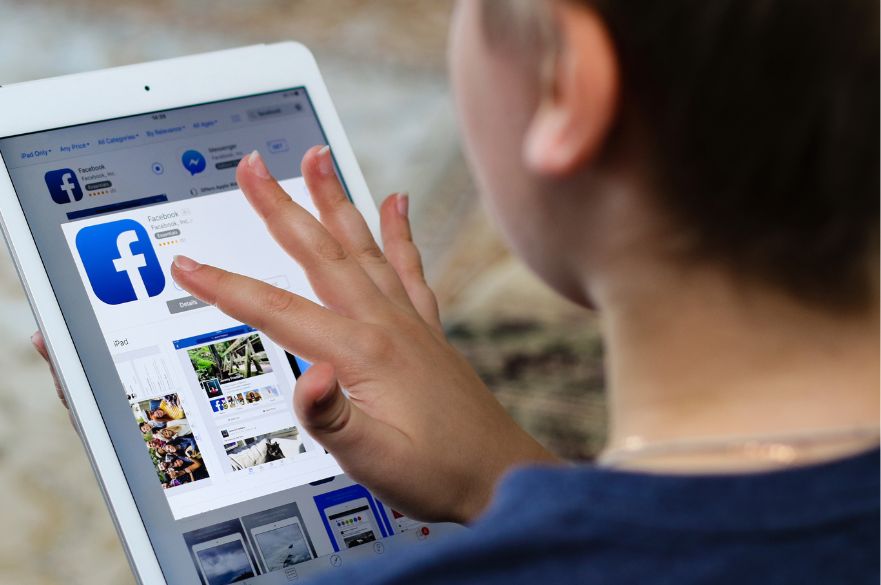
The UK government has announced that children under the age of 16 years are to be banned from using social media including Instagram, TikTok, YouTube, Facebook, X, and Snapchat.
In doing so, the UK has followed Australia who introduced a similar ban in December 2025. In a televised statement, Starmer said: “A full ban is the right choice... I am not prepared to compromise on the safety and happiness of our children”.
I have been researching problematic social media use for over 15 years and have written about the potential dangers in numerous academic papers as well as populist articles. Many might assume that having written and researched on the topic that I would welcome such a ban, but I don’t.
The proposal is a ‘sledgehammer to crack a nut’, and even that is an understatement. It is simply not proportionate. There is no evidence that a blanket ban would work and it may also have unintended consequences.
Jim Gamble, founding chief executive of the Child Exploitation and Online Protection Centre, said that: “For isolated, alienated children, for children with neurodiversity, with children exploring different aspects of their young lives, it’s a space and place where they can build positive networks”. I totally agree. There is also a high likelihood that children will search out the risker and less regulated sites on the internet.
According to the UK’s media regulator Ofcom, British children (aged 8-14 years) spend an average of at least two hours a day on social media. Children spend the most time on YouTube (23%), followed by Snapchat (18%), WhatsApp (9%,) TikTok (7%), Roblox (7%), and 36% on other social media platforms. In short, social media use has become an important part of children’s lives.
I know this not just as someone who has researched this topic but as the father of three ‘screenagers’ who are now all in young adulthood. All of my children were (and still are) daily social media users.
Back in 2012, I remember my youngest son (who was 11 years old at the time) being the only person in his class who was not on Facebook. He felt left out and ostracised so we let him set up a Facebook account (even though those under 13 years of age shouldn’t have one).
There are clearly issues surrounding some of the content that can be accessed by children on social media, and there are certainly potentially addictive features on social media sites that can keep users (adults included) on for hours and hours at a time such as endless scrolling, autoplay features, and algorithms that provide continuous content reinforcing what the social media user likes.
Navigating online content and digital literacy more generally have become an important part of an individual’s developmental process. These are transferable skills that screenagers need to learn. Banning social media may result in more unhappy and lonely children.
Although it is early days, it appears that children in Australia who really want to access their favourite social media platforms have found ways around the ban.
If the government want to ban things, it may be better to ban particular features (e.g., endless scrolling) rather than banning individuals. Government policies should be evidence-based. There is simply no evidence that banning social media for children will have the desired effect.
Dr Mark Griffiths, Distinguished Emeritus Professor of Behavioural Addiction, Nottingham Trent University School of Social Sciences.