Masters Showcase 2026 Student Showcase: Hung-Yu Hsu
Student Spotlight featuring MSc Design: Products and Technology student, Hung-Yu Hsu, and his project.
By Jon Duckworth | Published on 28 August 2026
Categories: Student Showcase; School of Architecture, Design and the Built Environment;
The project
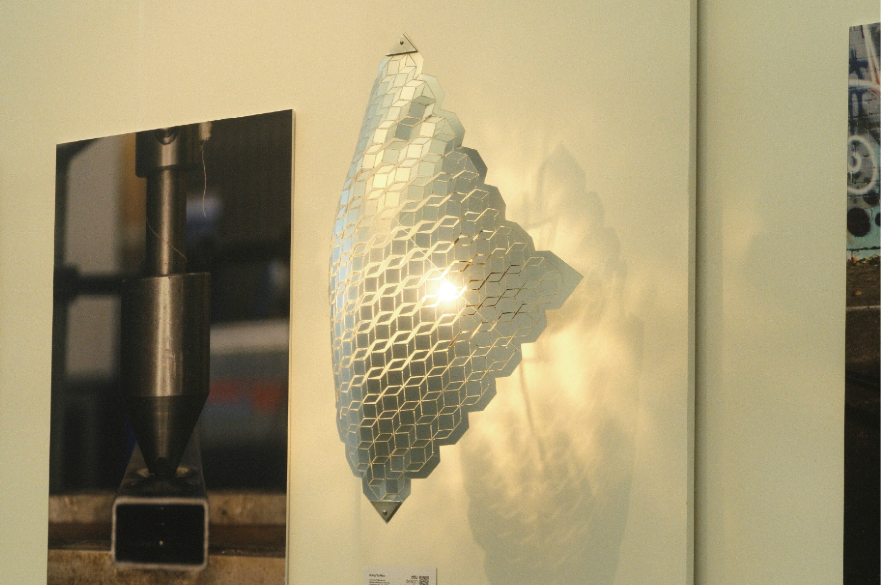
Zheng (筝) is a kinetic wall light with a laser-cut polypropylene shade. It expands and contracts like a kite in the wind. Two pairs of gears connected to a central knob drive the mesh. They synchronise its expansion and contraction at the top and bottom at the same time. Turning the knob stretches the diamond-patterned mesh outward, opening thousands of faceted cells that scatter light softly across the wall and ceiling. Pulling it closed gives a tighter, more direct beam. A spring-loaded ball detent locks each position firmly in place, so the shade holds without drifting. The mechanism housing and base are machined in metal, which gives the lamp a solid, precise feel, while the shade itself stays light and translucent. Its creator, MSc Design: Products and Technology student Hung-Yu Hsu, says Zheng is designed "for design-conscious city-dwellers who want their lighting to do more than just switch on and off".
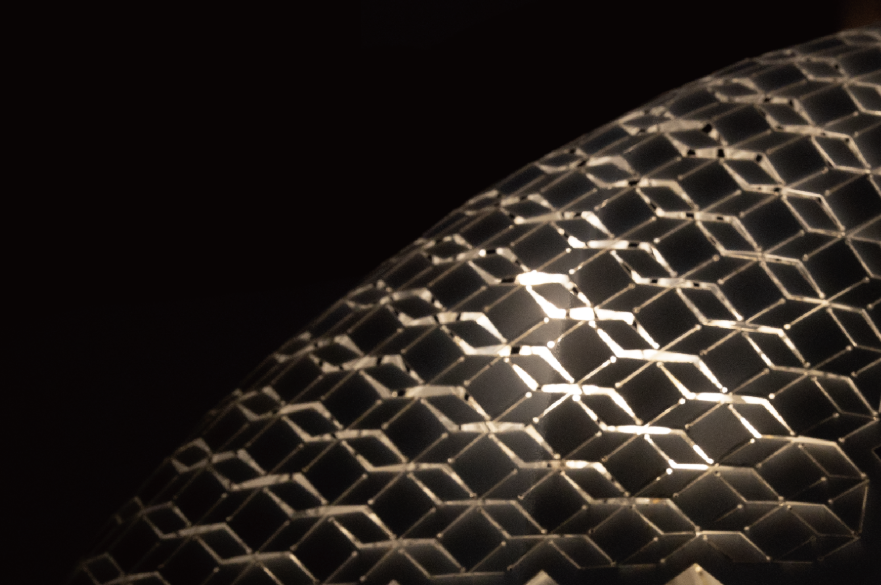
Hung-Yu wanted to create lighting for "design-conscious city-dwellers". Image by Hung-Yu Hsu..
The inspiration behind the project
Hung-Yu explains:
"The name comes from Feng-zheng, the Chinese word for kite. It's a reference to the way the mesh billows and holds its shape under tension, much like a kite skin in the wind. I used the Material Driven Design (MDD) methodology. Instead of starting from a fixed form, the design grew out of hands-on exploration of how a flat sheet of polypropylene deforms and stretches. I tested dozens of patterns and cutting strategies, first in paper, then in polypropylene. Each strategy produced a different quality of light and shadow."
The project experience
Hung-Yu describes the experience of working on Zheng to be have been "iterative and very hands-on".
"It started with paper-folding experiments to understand how the pattern behaved under tension," he says. "Then came weekly prototyping cycles, moving from paper models to laser-cut mesh. Next was designing and refining the mechanism, from a single gear-and-rack held by friction to a synchronised two-pair gear system locked by a spring-loaded ball detent. The housing and base were eventually machined in metal for a more solid feel. The project ended with exhibiting the finished lamp at New Designers 2026 in London."
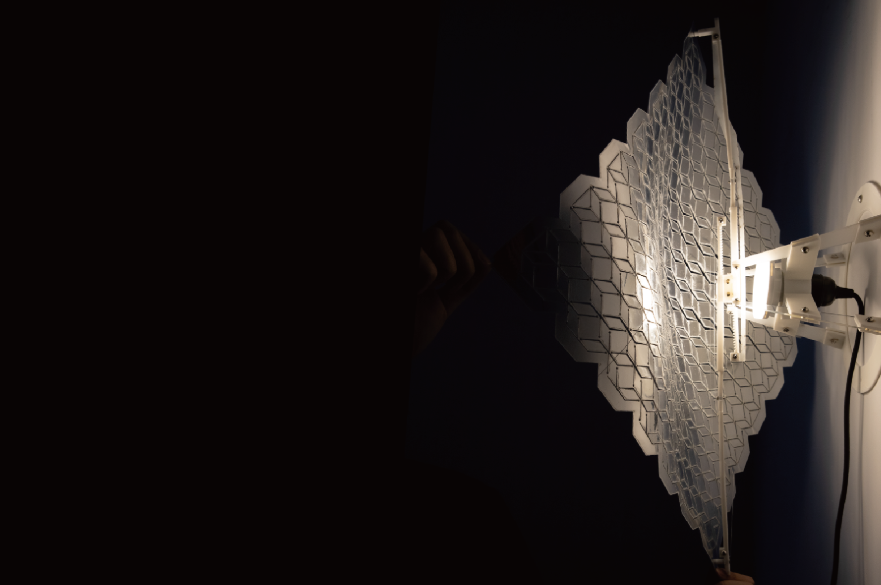
Exhibiting at UNFOLD 2026 was a course highlight for Hung-Yu. Image by Hung-Yu Hsu.
Being part of NTU
"The course allowed me to plan my own pace and shape the project around how I work best," says Hung-Yu of his time at NTU. "Cross-disciplinary and cross-cultural communication and collaboration have also been a big part of it. I worked alongside people from very different design backgrounds and cultures."
Asked to pick a standout moment, he says:
"Exhibiting at UNFOLD 2026 with Domus Academy was my most memorable moment. I was in Milan during Milan Design Week and got to see the newest design work in person. It was incredibly inspiring."
Closing remarks
For anyone considering studying Design: Products and Technology at NTU, Hung-Yu offers the following insights: "This course demands a lot of self-direction. It really challenges how deeply you research and understand your own project. In return, you get valuable feedback from industry professionals and experts across different fields. That's not something you get everywhere."
Want to find out more?
Visit the Student Showcase website and follow our Instagram account for more student features.